Continent file
Cryptids of North America
From the Pacific Northwest’s forests to the lakes of Canada and the deserts of Mexico.
North America has more cryptid reports on file than any other continent, and its geography explains a good deal of that. Vast temperate rainforests, thousands of lakes scoured out by Ice Age glaciers and the swamps of the Gulf Coast leave plenty of room for something to hide – or for a shadow to be misread. Many Indigenous nations keep traditions of wild forest people, water beings and great birds, among them the Sts’ailes Sásq’ets that gave English the word “Sasquatch,” – and settlers added tall tales and hoaxes of their own.
The modern era began in October 1958, when a California newspaper reported giant tracks at a Humboldt County road site and the name Bigfoot stuck; the Patterson–Gimlin film of 1967 made it a household word. Lake monsters such as Champ of Lake Champlain and Ogopogo of British Columbia’s Okanagan Lake became tourist mascots, while the 1909 newspaper panic over the Jersey Devil and the 1966–67 Mothman sightings in Point Pleasant, West Virginia, show how one burst of press coverage can make a legend permanent. Mexico adds far older figures, from the Aztec water beast Ahuizotl to the weeping ghost La Llorona.
Scientists note that no carcass, skeleton or confirmed DNA sample has ever surfaced for any of these animals. Black bears standing on their hind legs, sturgeon and floating logs, owls and herons account for many reports, and hoaxes are well documented – from the carved wooden feet that Ray Wallace’s family revealed after his death in 2002 to the frozen “body” of the Minnesota Iceman.
Choose a country
Cryptids of North America
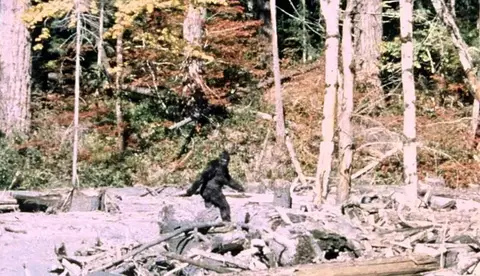
Bigfoot
North America’s most famous cryptid: a huge, hairy, upright ape-like being reported from the Pacific Northwest to Florida since the 1958 “Bigfoot” tracks. Widely reported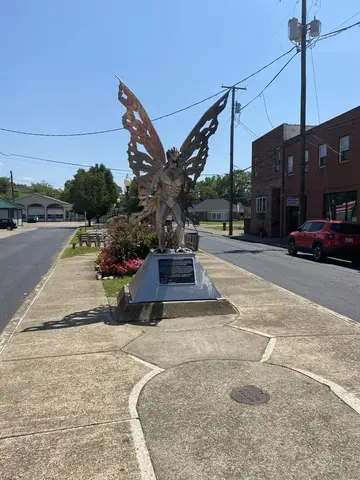
Mothman
A man-sized winged figure with glowing red eyes reported around Point Pleasant, West Virginia, in 1966–67 – now a festival, museum and steel statue. Regional legend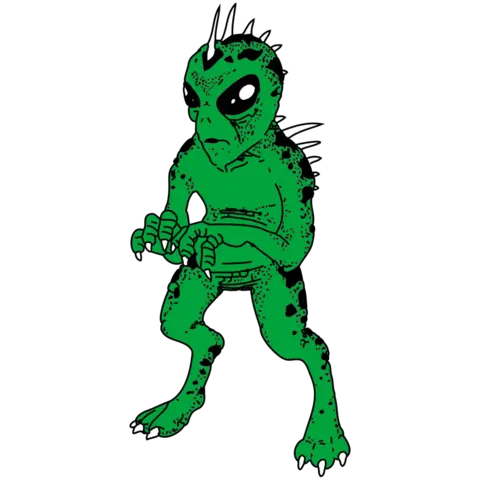
Chupacabra
The “goat-sucker” of 1990s Puerto Rico: a spiny, bloodsucking beast blamed for livestock deaths that spread across Latin America and Texas. Widely reported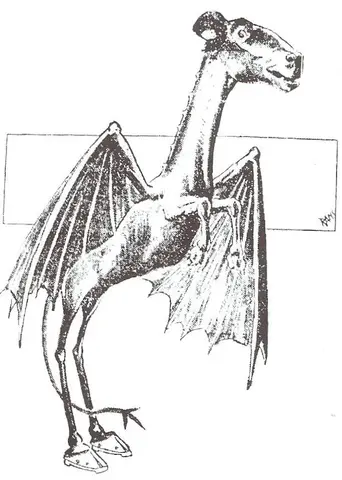
Jersey Devil
A winged, hoofed devil said to have been born to “Mother Leeds” in the Pine Barrens, and the star of a week of panic across South Jersey in January 1909. Regional legend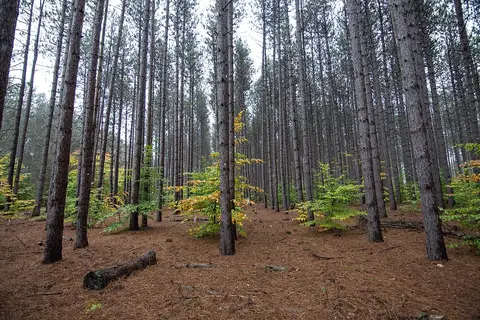
Michigan Dogman
A seven-foot, dog-headed creature said to walk upright through northern Michigan’s forests – a legend born from a 1987 April Fools’ radio song. Regional legend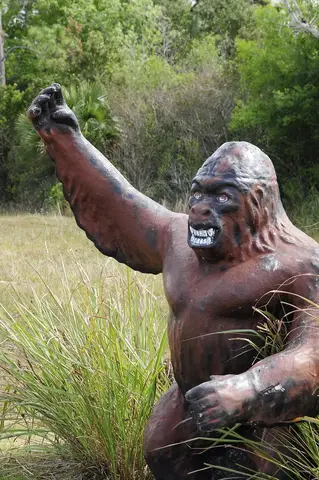
Skunk Ape
Florida’s answer to Bigfoot: a shaggy, foul-smelling ape-man said to roam the Everglades and Big Cypress Swamp, reported since the 1970s and before. Widely reported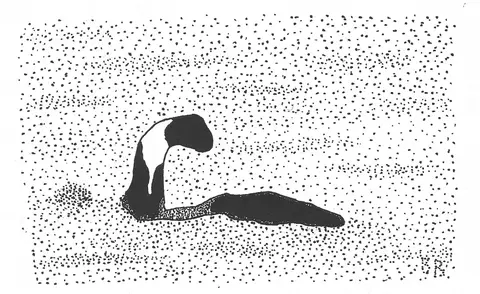
Champ
A long-necked monster said to live in Lake Champlain, made famous by Sandra Mansi’s 1977 photo and protected by local and state resolutions in the 1980s. Regional legend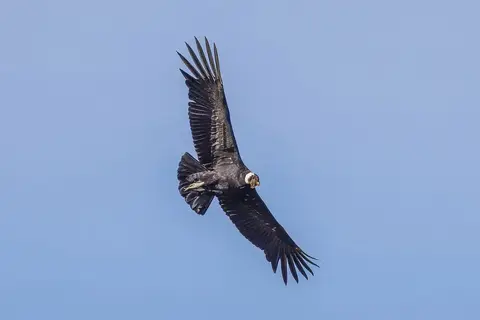
Thunderbird
A giant bird with a wingspan said to rival a small plane, reported over Pennsylvania’s Black Forest and blamed for lifting an Illinois boy in 1977. Regional legend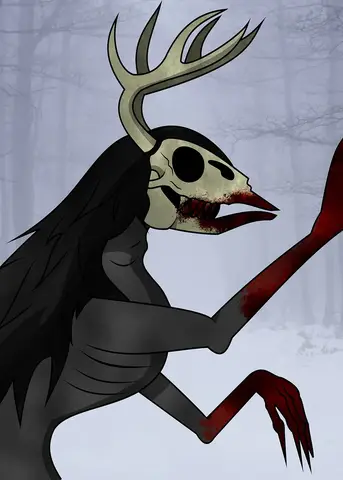
Wendigo
A being of winter, hunger and greed from Algonquian traditions – Ojibwe, Cree, Innu and others – whose teachings warn against selfish excess. Folklore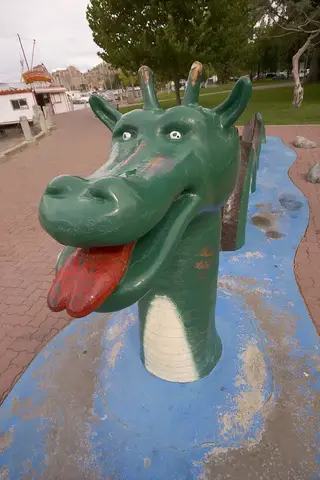
Ogopogo
Canada’s most famous lake monster: a long, humped serpent said to swim Okanagan Lake, rooted in the Syilx being nx̌aʔx̌ʔitkʷ, spirit of the lake. Widely reportedBeast of Bray Road
A wolf-headed creature that walks on two legs, reported along a farm road outside Elkhorn, Wisconsin, and made famous by reporter Linda Godfrey in 1991. Regional legend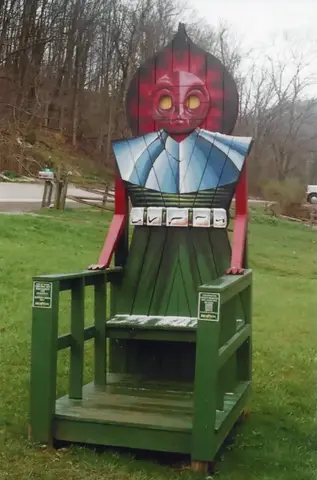
Flatwoods Monster
A ten-foot figure with a glowing face and spade-shaped hood that seven witnesses met on a West Virginia hillside after a light fell from the sky in 1952. Regional legend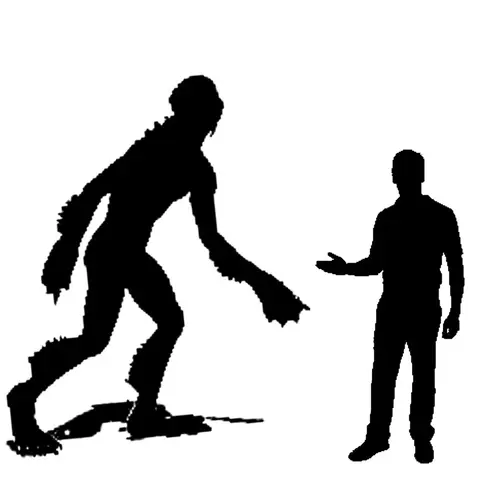
Lizard Man of Scape Ore Swamp
A seven-foot, green-scaled, red-eyed creature that a teenager said attacked his car beside a South Carolina swamp in 1988, sparking a summer-long craze. Regional legend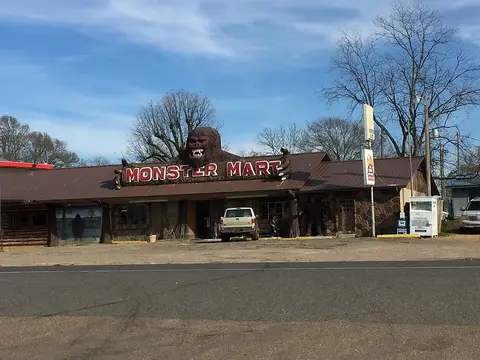
Fouke Monster
The hairy, red-eyed swamp beast of Fouke, Arkansas, whose 1971 “attack” on a farmhouse inspired the 1972 cult film “The Legend of Boggy Creek.” Regional legend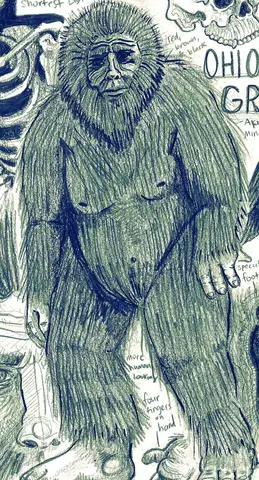
Ohio Grassman
Ohio’s own Bigfoot, a tall hairy biped said to build grass nests, linked to the 1978 Minerva scare and the Bigfoot conference at Salt Fork State Park. Regional legend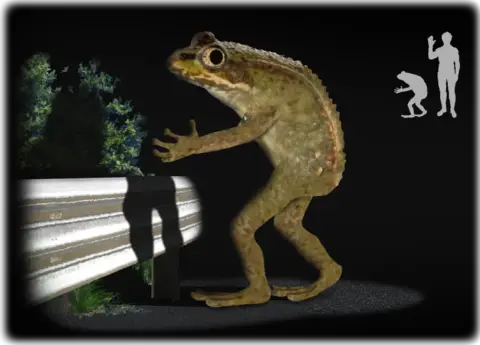
Loveland Frog
A four-foot frog-faced humanoid said to haunt the Little Miami River at Loveland, Ohio, reported in 1955 and by two police officers in 1972. Local legend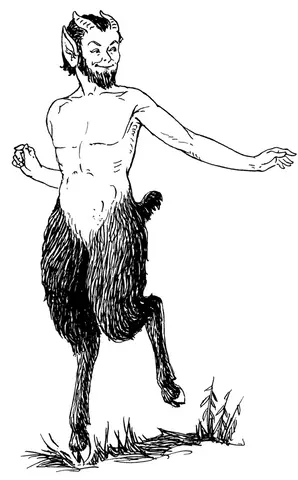
Goatman
A half-man, half-goat said to stalk the back roads of Prince George’s County, Maryland – a 1970s legend fed by teenagers, folklore archives and the press. Regional legend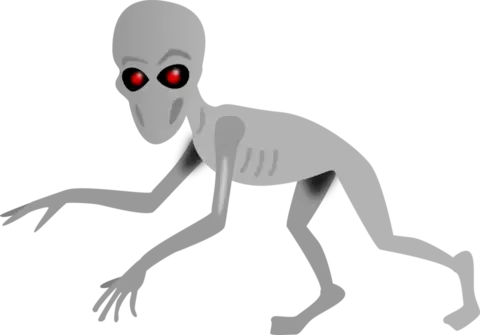
Dover Demon
A small, hairless figure with a melon-shaped head and glowing eyes that three teenagers reported in Dover, Massachusetts, over two nights in April 1977. Local legend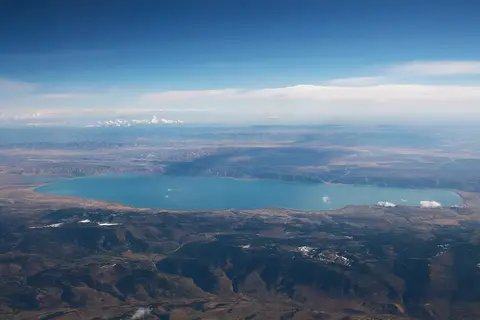
Bear Lake Monster
A serpent-like monster said to swim Bear Lake on the Utah–Idaho line, born of an 1868 newspaper story its own author later called a lie. Regional legend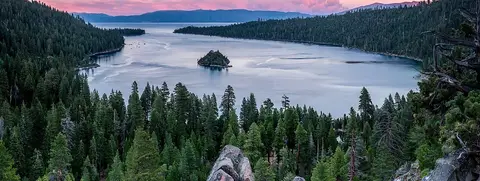
Tahoe Tessie
A humped, serpent-like monster said to glide through the deep, cold water of Lake Tahoe – the Sierra Nevada’s friendly answer to Nessie. Regional legend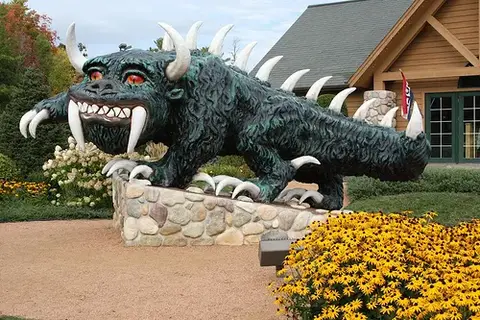
Hodag
A horned, spiny, grinning beast of Wisconsin logging-camp lore that prankster Eugene Shepard ‘captured’ in 1893 – now Rhinelander’s beloved mascot. Hoax / debunked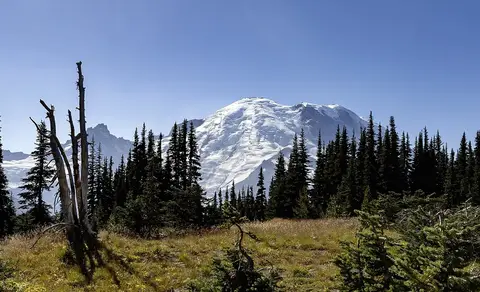
Batsquatch
A winged, ape-like creature with blue-tinged fur said to have landed in front of a stalled pickup near Mount Rainier in 1994 – part bat, part Sasquatch. Local legend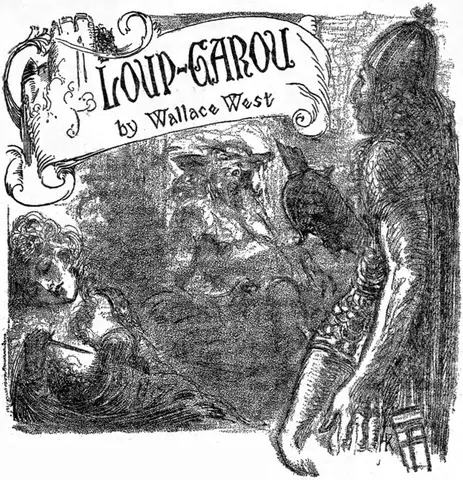
Rougarou
South Louisiana’s Cajun werewolf: a cursed shape-shifter of the bayous, born of French loup-garou tales and now the mascot of Houma’s Rougarou Fest. Folklore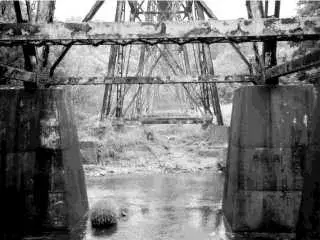
Pope Lick Monster
A goat-legged figure said to haunt a towering railroad trestle east of Louisville – a legend that has drawn people onto a deadly, active train line. Local legendMore from North America
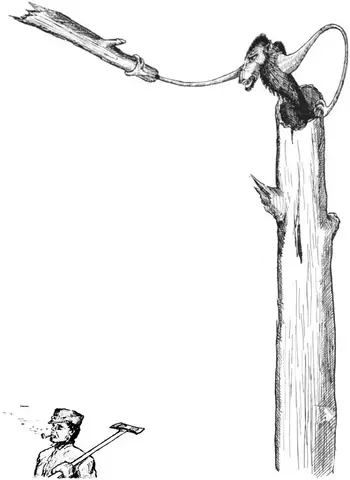 AgropelterOther · Northern conifer forests, from Maine to Oregon
AhuizotlLake & sea monster · Lakes of the Valley of Mexico
AlbatwitchHominid · Chickies Rock, Columbia…
Alkali Lake MonsterReptilian · Walgren (formerly Alkali)…
Altamaha-haLake & sea monster · Mouth of the Altamaha River…
AluxHumanoid · Yucatán Peninsula
AugerinoOther · Middle Park, Colorado
Beast of BladenboroBig cat · Bladenboro, Bladen County…
Beast of BuscoReptilian · Fulk Lake, near Churubusco…
Beast of LBLDogman & canine · Land Between the Lakes…
Bell WitchSpectral · Bell farm, Red River, Adams…
Bennington MonsterHominid · Glastenbury Mountain and the…
BessieLake & sea monster · Lake Erie, especially the…
Black Dog of West PeakDogman & canine · West Peak, Hanging Hills…
Block Ness MonsterLake & sea monster · Old Harbor, Block Island…
Blue Dog of Port TobaccoSpectral · Rose Hill, near Port Tobacco…
Boo HagHumanoid · Gullah Geechee Lowcountry…
BozhoLake & sea monster · Lake Mendota, Madison…
Bunny ManHumanoid · Burke, Clifton and Fairfax…
CadborosaurusLake & sea monster · Cadboro Bay and the Salish…
Caddo CritterHominid · Caddo, Stephens County, and…
Carbuncle Pond SerpentReptilian · Carbuncle Pond and Carbuncle…
CassieLake & sea monster · Casco Bay, off Portland and…
Charles Mill Lake MonsterHumanoid · Charles Mill Lake, Mifflin…
Charro NegroSpectral · Rural roads of Mexico…
Chatawa MonsterHominid · Chatawa, Pike County…
ChessieLake & sea monster · Chesapeake Bay and its tidal…
Choccolocco MonsterOther · Choccolocco, Calhoun County…
Cigar Ghost of the Wyoming Territorial PrisonSpectral · Wyoming Territorial Prison…
Colossal ClaudeLake & sea monster · Mouth of the Columbia River…
Connecticut River SerpentLake & sea monster · Connecticut River near…
Dark WatchersSpectral · Santa Lucia Mountains, Big Sur
Deer WomanHumanoid · Oklahoma and many Native…
Derry FairyHumanoid · Woods of Derry, New Hampshire
Devils Lake SerpentLake & sea monster · Devils Lake, northeastern…
Dewey Lake MonsterHominid · Dewey Lake and Sister Lakes…
DwayyoDogman & canine · Catoctin Mountain and…
El CadejoDogman & canine · Night roads of Guatemala and…
Elephant Butte Giant CatfishLake & sea monster · Elephant Butte Dam, Rio…
ElsieLake & sea monster · Lake Elsinore, Riverside…
Enfield HorrorOther · Enfield, White County…
Feu FolletSpectral · Marshes and swamps of south…
Flathead Lake MonsterLake & sea monster · Flathead Lake, northwestern…
Fresno NightcrawlersHumanoid · Fresno and the Yosemite area…
Fur-bearing TroutLake & sea monster · Salida (Colorado), Montana…
GiwoggleDogman & canine · Keating Township, Clinton…
GlawackusBig cat · Glastonbury, Connecticut
Glocester GhoulOther · Glocester woods and swamps…
Gloucester Sea SerpentLake & sea monster · Gloucester Harbor and Cape…
Grafton MonsterHumanoid · Grafton, Taylor County, West…
Gray Man of Pawleys IslandSpectral · Pawleys Island, Georgetown…
Gurdon LightSpectral · Railroad tracks near Gurdon…
Hamburger ManHumanoid · Sand Hills State Park, near…
Herrington Lake MonsterLake & sea monster · Herrington Lake, Mercer…
HidebehindOther · Northern logging country…
HogzillaOther · Alapaha, Georgia
Honey Island Swamp MonsterHominid · Honey Island Swamp, Pearl…
Hoop SnakeReptilian · Rural America, especially…
HoppieLake & sea monster · Lake Hopatcong, Morris and…
Hornet SpooklightSpectral · Spooklight Road near Quapaw…
Hudson River MonsterLake & sea monster · Hudson River, Rondout…
Huggin’ MollySpectral · Abbeville, Henry County…
IgopogoLake & sea monster · Lake Simcoe, Ontario
Iliamna Lake MonsterLake & sea monster · Iliamna Lake, southwest Alaska
JackalopeOther · Douglas, Converse County…
Kelly–Hopkinsville GoblinsHumanoid · Sutton farm, Kelly, near…
Kingman SerpentReptilian · Kingman County, south…
KnobbyHominid · Carpenter’s Knob, upper…
KushtakaHumanoid · Southeast Alaska (Tlingit…
La LloronaSpectral · Canals of Xochimilco, Mexico…
Lafayette VampireSpectral · Lafayette Cemetery…
Lake Kampeska MonsterLake & sea monster · Lake Kampeska, Watertown…
Lake Manitou MonsterLake & sea monster · Lake Manitou, Rochester…
Lake Norman MonsterLake & sea monster · Lake Norman, north of…
Lake Worth MonsterHominid · Greer Island, Lake Worth…
Lava BearOther · Lava beds near Fort Rock…
Little People of Spirit MoundHumanoid · Spirit Mound Historic…
Little People of the Pryor MountainsHumanoid · Pryor Mountains, Montana…
Lockridge MonsterHominid · Lockridge, Jefferson County…
Mad Gasser of MattoonHumanoid · Mattoon, Illinois
ManipogoLake & sea monster · Lake Manitoba, Manitoba
Melon HeadsHumanoid · Back roads of southwestern…
MemphréLake & sea monster · Lake Memphremagog, Magog…
MenehuneHumanoid · Kauaʻi and Oʻahu, Hawaiʻi
Mercy Brown, the Exeter VampireSpectral · Chestnut Hill Cemetery…
Mill Race MonsterHumanoid · Mill Race Park, Columbus…
MiniwashituLake & sea monster · Missouri River, North Dakota
Minnesota IcemanHominid · Traveling carnival exhibit…
Mogollon MonsterHominid · Mogollon Rim, central and…
MoʻoReptilian · Freshwater ponds, streams…
Momo (the Missouri Monster)Hominid · Louisiana, Missouri (Pike…
Montauk MonsterOther · Ditch Plains beach, Montauk…
Moon Lake MonsterLake & sea monster · Moon Lake, High Uintas…
Moon-Eyed PeopleHumanoid · Southern Appalachians…
Murphysboro Mud MonsterHominid · Big Muddy River, Murphysboro…
Nain RougeHumanoid · Detroit, Michigan
NanaueHumanoid · Waipi‘o Valley, Hawai‘i…
Nebraska ManHominid · Snake Creek fossil beds…
Night MarchersSpectral · Throughout the Hawaiian…
North Shore MonsterLake & sea monster · Monument Point, north shore…
Oklahoma OctopusLake & sea monster · Lakes Thunderbird, Tenkiller…
Okoboji Lake MonsterLake & sea monster · Okoboji Lakes, Iowa Great…
Old NedLake & sea monster · Lake Utopia, near St. George…
Omaha River SerpentLake & sea monster · Missouri River at Omaha…
Ozark HowlerBig cat · Ozark Mountains of Arkansas…
Pacific Northwest Tree OctopusOther · Olympic Peninsula…
Palatine LightSpectral · Sandy Point, Block Island…
Pascagoula River CreaturesHumanoid · Pascagoula River, Pascagoula…
Pedro Mountain MummyHumanoid · Pedro Mountains near…
Pend Oreille PaddlerLake & sea monster · Lake Pend Oreille, North Idaho
PepieLake & sea monster · Lake Pepin, Mississippi…
Piasa BirdFlying · Mississippi River bluffs…
Pigman of NorthfieldHumanoid · Devil’s Washbowl and Paine…
Pocomoonshine Lake MonsterLake & sea monster · Pocomoonshine Lake, near…
PonikLake & sea monster · Lac Pohénégamook, Quebec
PressieLake & sea monster · Lake Superior, near the…
PukwudgieHumanoid · Southeastern Massachusetts…
Raystown RayLake & sea monster · Raystown Lake, Huntingdon…
Red GhostOther · Eagle Creek and the Arizona…
Rock Lake MonsterLake & sea monster · Rock Lake, Whitman County…
Sandy Hook Sea SerpentLake & sea monster · Sandy Hook, the Shrewsbury…
Sea Witch of the DeBraakSpectral · Cape Henlopen and Lewes…
Selbyville Swamp MonsterHominid · Great Cypress Swamp, near…
Seneca Lake SerpentLake & sea monster · Seneca Lake, Finger Lakes…
SharlieLake & sea monster · Payette Lake, McCall, Idaho
SheepsquatchOther · Southwestern West Virginia…
Shunka Warak’inDogman & canine · Madison Valley, southwestern…
Si-Te-Cah (Saiduka)Humanoid · Lovelock Cave, Churchill…
Silver Lake SerpentLake & sea monster · Silver Lake, near Perry…
Sinkhole SamLake & sea monster · Big Sinkhole near Inman…
SisimiteHominid · Mountain forests of Honduras…
Slide-Rock BolterOther · San Juan Mountains near Rico…
SlipperyskinOther · Northeast Kingdom, Vermont…
SmettyLake & sea monster · Lake DeSmet, near Buffalo…
SnallygasterFlying · South Mountain and the…
Snarly YowSpectral · South Mountain and Turner’s…
Specter MooseOther · Lobster Lake and the North…
SquonkOther · Hemlock forests of…
St. Augustine MonsterLake & sea monster · Anastasia Island, St.…
Stull CemeterySpectral · Stull, Douglas County, Kansas
Swan Valley MonsterLake & sea monster · Snake River, Swan Valley…
TailypoOther · Appalachian and Southern…
Taku-HeHominid · Little Eagle, Standing Rock…
Texas Big BirdFlying · Lower Rio Grande Valley…
The Ghosts of Fort DelawareSpectral · Fort Delaware, Pea Patch…
The Iceworm of CordovaOther · Cordova and the Chugach…
Thorntown GorillaHominid · Sugar Creek, Thorntown…
TommyknockersHumanoid · Gold and silver mines of…
Turner BeastDogman & canine · Turner, Androscoggin County…
Utah Lake MonsterLake & sea monster · Utah Lake, Utah County, Utah
Van Meter VisitorFlying · Van Meter, Iowa
Walker Lake SerpentLake & sea monster · Walker Lake, near Hawthorne…
Wallowa Lake MonsterLake & sea monster · Wallowa Lake, near Joseph…
Wampus CatBig cat · Southern Appalachians and…
WessieReptilian · Presumpscot River, Westbrook…
White River MonsterLake & sea monster · White River near Newport…
Wild Girl of CatahoulaHumanoid · Catahoula Parish and central…
Witch of YazooSpectral · Glenwood Cemetery, Yazoo…
Wood DevilsHominid · Coös County, northern New…
WoodboogerHominid · Flag Rock and Powell Valley…
Yucca ManHominid · Joshua Tree and the Mojave…
Zwaanendael MermanLake & sea monster · Zwaanendael Museum, Lewes…