FIELD FILE · ZWAANENDAEL-MERMANLAKE & SEA MONSTERHOAX / DEBUNKED
Zwaanendael Merman
Also known as The Lewes Merman, Fiji Merman of Lewes, Monkeyfish
A shriveled, foot-long “merman” brought to Lewes by a sea captain – a 19th-century Asian sideshow curiosity the town loved too much to let go.
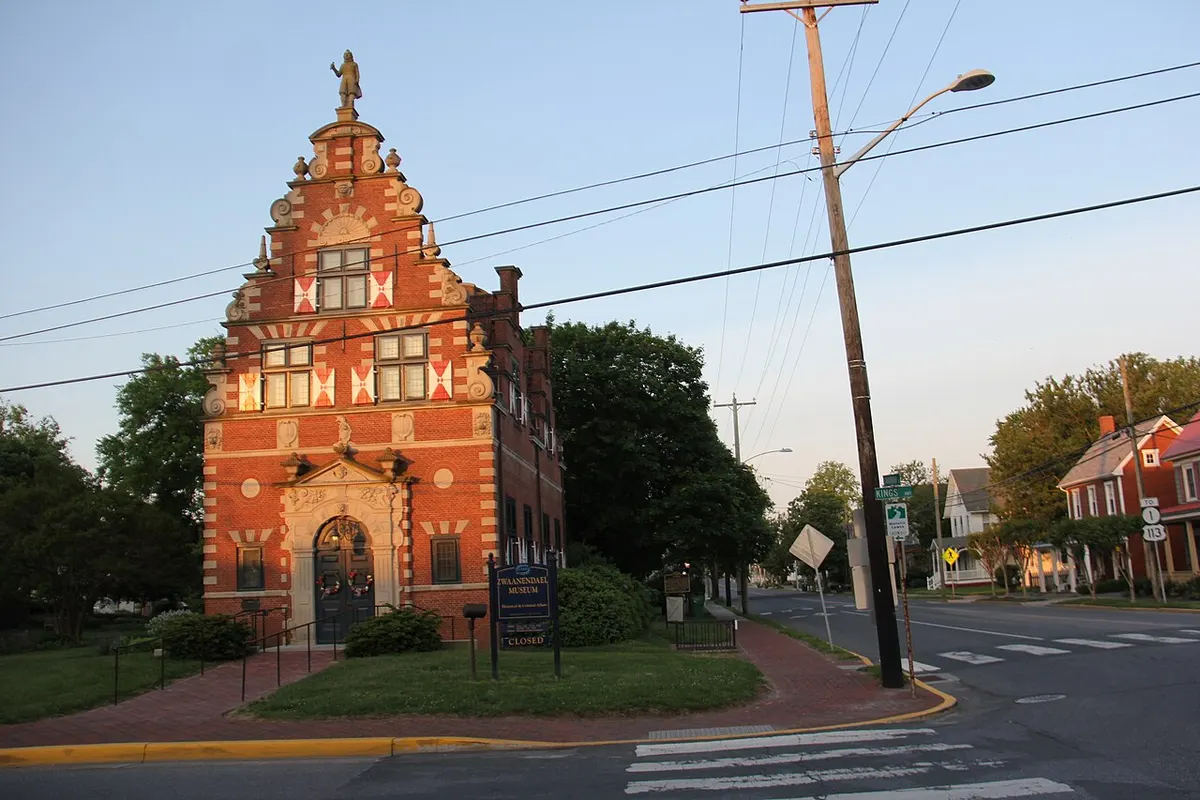
Delaware’s only mermaid lives in a glass case at the Zwaanendael Museum in Lewes, the state museum built in 1931 to mark 300 years since the short-lived Dutch whaling colony of Zwaanendael. About a foot long, with a grimacing, monkey-like face, clawed hands, a ribbed torso and a dried fish tail, the “Zwaanendael Merman” is one of the museum’s most famous – and most unsettling – objects. Local children have nicknamed it the “Monkeyfish.”
According to the state’s museum staff, the merman was given to a member of the Martin family of Lewes by an old sea captain, and the family kept it for many decades. When the family’s possessions were dispersed, a nephew set it aside for display, and it first went on show at the Zwaanendael Museum in 1941. Years later it nearly vanished in an estate sale – until Lewes residents and the Lewes Historical Society collected donations, bought it for $250, and in 1985 gave it to the museum, where it has stayed ever since.
The merman is not a sea creature at all but a piece of 19th-century craftsmanship. Objects like it – often called “Fiji mermaids,” after the famous specimen P. T. Barnum exhibited in the 1840s, or “Jenny Hanivers” – were made in East Asian ports and sold to Western sailors and merchants as curiosities. The museum’s curators believe it was made in China in the mid-19th century; the museum’s description lists fish, hair, ivory, oak, varnish, glass and dye, along with a shrunken monkey head. Its form also echoes the ningyo, a human-faced fish of Japanese tradition known for well over a thousand years.
That the merman is fake has never dimmed its appeal. It belongs to a long tradition of manufactured monsters, from sideshow mermaids to stitched-together “specimens,” that shaped how 19th-century audiences imagined undiscovered creatures. In a coastal town proud of its maritime history, the little merman has become a mascot – “much beloved by the town,” as one museum director put it.
- Status
- Hoax / debunked
- First reported
- 1941
- Best-known location
- Zwaanendael Museum, Lewes, Delaware
- Also called
- The Lewes Merman, Fiji Merman of Lewes, Monkeyfish
- Reported in
- Delaware
What witnesses describe
A mummified figure about a foot long, with the head, arms and upper body of a shriveled, grimacing primate-like creature, joined to a scaly fish’s tail. It rests on a blue velvet cushion inside a double glass case.
Where and when it’s seen
Not a living animal: it is on permanent display at the Zwaanendael Museum, Lewes, near Cape Henlopen at the mouth of Delaware Bay.
Notable sightings
- Late 1800s–early 1900sA sea captain’s gift Lewes, Delaware
An old sea captain presented the merman to a member of the Martin family, who kept it for decades. Accounts differ on the exact date.
- 1941First shown at the museum Zwaanendael Museum, Lewes
A Martin family nephew set the merman aside for display, and it went on exhibit at the state museum.
- 1985The town saves its merman Lewes, Delaware
When the merman was about to be sold in an estate sale, residents and the Lewes Historical Society raised $250 to buy it and donated it to the museum.
What could explain it?
- The merman is a manufactured curiosity – a composite of animal parts and craft materials, of the type made in East Asia in the 19th century for sale to Western buyers.
- Such “Fiji mermaids” were popularized by P. T. Barnum’s 1842 exhibit and were widely sold as sideshow attractions and sailors’ souvenirs.
- Sea captains’ tall tales and public fascination with human origins and missing links helped make these fakes convincing to 19th-century audiences.
Legend, culture and tourism
The merman is a Lewes icon, featured in museum programs, local tourism and roadside-attraction guides. It sits inside a museum modeled on the 17th-century town hall of Hoorn in the Netherlands, which tells the story of the Dutch Zwaanendael settlement of 1631 and of Delaware’s maritime past.
Places to visit
The state-run museum displays the merman along with exhibits on Lewes’s Dutch and maritime history.
Where it’s reported
Zwaanendael Merman in the news
No recent headlines about the Zwaanendael Merman. Our news desk checks every day — see all cryptid news.
Sources
First published · Updated