FIELD FILE · BOZHOLAKE & SEA MONSTERLOCAL LEGEND
Bozho
Also known as Lake Mendota Sea Serpent, Lake Mendota Monster
A playful serpent said to tip canoes and nibble swimmers’ toes in Madison’s Lake Mendota, reported since the 1880s and named Bozho by 1942.
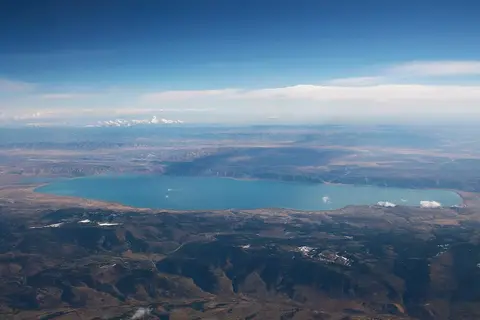
Bozho is the sea serpent of Lake Mendota, the big lake on the north side of Madison, Wisconsin, whose shore is lined by the University of Wisconsin campus. Unlike most lake monsters, Bozho has a reputation as a prankster rather than a predator: in local lore he upsets canoes, chases sailboats, pulls up piers and once, it was said, licked the foot of a woman sunbathing on the shore.
Newspaper reports of a “Lake Mendota sea serpent” go back to the late 19th century. On June 23, 1883, the Wisconsin State Journal printed “A True Snake Story,” in which well-known fisherman William “Billy” Dunn described battling a large snake-like animal from his boat. Further reports followed through the 1890s, when the monster became a familiar newspaper character across the state; one older resident even wrote in to say he had first seen it in 1860. The serpent was said to be some 25 to 30 feet long, and nearby Lake Monona had a monster of its own – in June 1897 the State Journal reported that a man named Eugene Heath had fired two shots at it.
Much of what people now “know” about Bozho comes from Charles E. Brown, the folklorist and curator of the State Historical Society of Wisconsin’s museum, who gathered the stories in pamphlets for the Wisconsin Folklore Society. His 1942 booklet Sea Serpents popularised the name Bozho, a shortened form of Winnebozho – the Ojibwe culture hero and trickster more often written Nanabozho – and recounted student tales such as a supposed serpent scale found at Picnic Point in 1917. Brown himself warned that some of Wisconsin’s lake monsters were probably invented by resort promoters and real estate agents.
Sightings faded after the 1940s, but Bozho never quite left Madison. He is a favorite of UW students, walking tours and the Wisconsin Historical Society’s folklore programs, and a cheerful reminder of the era when every resort lake in Wisconsin seemed to have a serpent of its own.
- Status
- Local legend
- First reported
- 1883
- Best-known location
- Lake Mendota, Madison, Wisconsin
- Also called
- Lake Mendota Sea Serpent, Lake Mendota Monster
- Reported in
- Wisconsin
What witnesses describe
A long, dark serpent or dragon-like animal some 25 to 30 feet long, with a broad head and, in some accounts, a horned or spiny tail. In folklore he is curious and mischievous rather than dangerous.
Where and when it’s seen
Lake Mendota, especially around Picnic Point, the university shoreline and the bluffs on the north and west shores; reported mostly in summer.
Notable sightings
- June 22, 1883Billy Dunn’s fight with a serpent Lake Mendota, Madison
Fisherman William Dunn described a struggle with a large snake-like creature near the bluffs on the lake’s shore. The Wisconsin State Journal ran the story the next day as “A True Snake Story.”
- June 1897Shots fired on Lake Monona Lake Monona, Madison
The Wisconsin State Journal reported that Eugene Heath had fired twice at a serpent in Madison’s neighboring lake, part of a wave of 1890s monster stories around the city.
- 1917A scale on Picnic Point Picnic Point, Lake Mendota
According to Charles E. Brown, a student found a large scale-like object on the point that a professor jokingly identified as a sea-serpent scale; a fisherman reported a serpent’s head rising near his boat that autumn.
- 1942The serpent gets a name Madison, Wisconsin
Brown’s Wisconsin Folklore Society pamphlet Sea Serpents collected the Mendota tales and popularised the name Bozho, which newspapers soon adopted.
What could explain it?
- Large fish such as muskellunge, sturgeon and big carp, as well as eels (a 42-inch eel was caught in Lake Mendota in 1875), floating logs and wakes may lie behind the reports.
- Some 19th-century stories were probably tall tales or newspaper filler from an era of yellow journalism; Charles Brown suspected resort and land promoters of inventing lake monsters to draw visitors.
- Many of Bozho’s best-known exploits – tipping canoes, tickling sunbathers – come from humorous folklore collected among students rather than from sworn sightings.
Legend, culture and tourism
Bozho is part of Madison’s identity and University of Wisconsin campus lore, featured in Wisconsin Historical Society folklore walking tours and local media. His name borrows from the Ojibwe culture hero Nanabozho (Winnebozho), and some writers link Madison’s lake-serpent stories to older Ho-Chunk traditions of water spirits in the Four Lakes region.
Places to visit
A wooded peninsula jutting into Lake Mendota, the setting of several serpent tales.
Where it’s reported
Bozho in the news
No recent headlines about the Bozho. Our news desk checks every day — see all cryptid news.
Sources
- Driftless Times Media: The Lake Mendota sea serpent, Bozho (2024)
- Madison Magazine: Madison myths and mysteries uncovered in historical walking tour (2024)
- Volume One: 7 Sconnie waterways and the sea serpents that love them (2015)
- Internet Scout: Folklore pamphlets 1921–1945, Wisconsin Historical Society (Charles E. Brown)
First published · Updated