FIELD FILE · KUSHTAKAHUMANOIDFOLKLORE
Kushtaka
Also known as Kóoshdaa Káa, Land Otter Man, Land Otter People, Kooshdakhaa
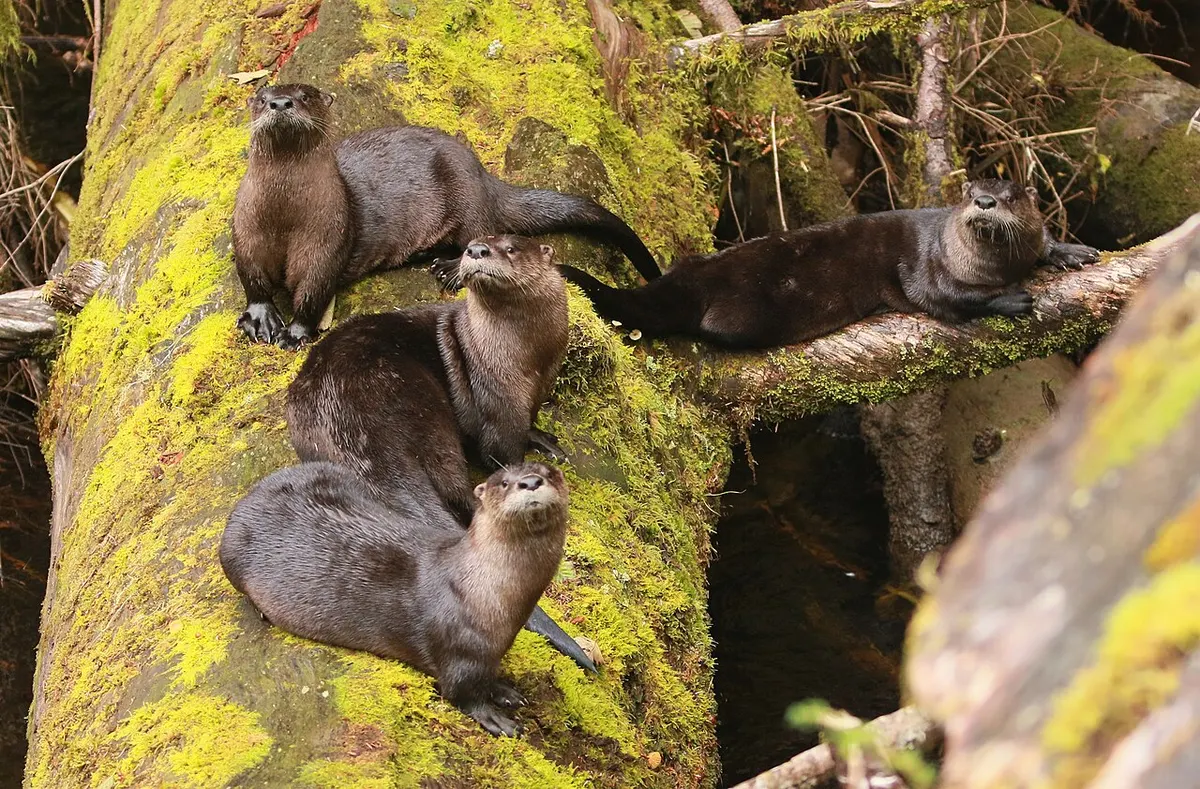
The Land Otter Man of Tlingit tradition in Southeast Alaska – a shape-shifting being linked to people lost at sea, later recast by outsiders as a cryptid.
Kushtaka is the common English spelling of Kóoshdaa Káa, a Tlingit term usually translated “Land Otter Man.” The Tlingit, whose homelands span the islands, fjords and rainforests of Southeast Alaska and neighboring British Columbia, call the river otter kóoshdaa – known locally as the “land otter” to distinguish it from the sea otter. In Tlingit tradition the land otter is far more than an animal: anthropologist Aldona Jonaitis described it as the most powerful supernatural being in the Tlingit universe, and it was traditionally the strongest spirit helper of a shaman.
According to the ethnographic record, including Frederica de Laguna’s classic study of the Yakutat Tlingit, land otters can take human form and back again, and some Land Otter People were once humans – travelers who drowned or were lost in boating accidents and were taken and transformed. A person lost in the wilderness might be found by the Land Otter People, who could appear as relatives or friends and lead them away, slowly changing them into one of their own. Stories describe ways of protecting against this, and lay people traditionally did not hunt or eat land otters. Related beings appear in the traditions of neighboring peoples, among them the Tsimshian and the Dena’ina.
These are living cultural beliefs, held and passed down within Tlingit communities, and they carry meanings about the sea, loss, respect for animals and the dangers of the land that are not the same as a monster story. Scholars and Tlingit voices have noted that popularized, distorted versions circulate widely online and in fiction, often stripped of that context. This entry describes the tradition only in the broad terms found in published sources.
Non-Native writers first linked the Kushtaka to “monster” tales through prospecting lore. Around 1900, Wrangell prospector Harry D. Colp wrote down a companion’s account of fleeing hairy, foul-smelling “devil creatures” – “neither man nor monkey” – near a lake above Thomas Bay, north of Petersburg. His manuscript, “The Strangest Story Ever Told,” was published after his death in 1950, and many readers have connected it to Kushtaka traditions. Television shows and cryptozoology writers have since treated the being as an Alaskan cousin of Bigfoot – a framing that comes from outside the culture rather than from it.
- Type
- Humanoid
- Status
- Folklore
- First reported
- Pre-colonial
- Best-known location
- Southeast Alaska (Tlingit homelands)
- Also called
- Kóoshdaa Káa, Land Otter Man, Land Otter People, Kooshdakhaa
What witnesses describe
In Tlingit tradition, a land otter that can take on human form, or a human who has been transformed into one of the Land Otter People; they may appear as a familiar person or relative. Modern popular retellings describe a small, hairy, otter-like humanoid, sometimes with a whistling call, and Colp’s prospecting tale describes roughly four-foot, hairy, foul-smelling creatures.
Where and when it’s seen
The coasts, rivers, islands and rainforests of Southeast Alaska, especially along shorelines and among rocky headlands where real river otters live, as well as remote valleys such as those above Thomas Bay near Petersburg.
Notable sightings
- 1900The Thomas Bay “devil creatures” Thomas Bay, near Petersburg, Alaska
Prospector Harry D. Colp recorded how a partner, sent to find gold on a tip from a Tlingit man in Wrangell, returned shaken, claiming hairy creatures had chased him from a lake above the bay. The tale gave the area the nickname “Devil’s Country.”
- 1909Land otter stories recorded Southeast Alaska
Ethnologist John R. Swanton’s Tlingit Myths and Texts, published by the Smithsonian’s Bureau of American Ethnology, preserved Tlingit stories involving land otters alongside many other traditional narratives.
- 1953“The Strangest Story Ever Told” published Petersburg, Alaska
After Colp’s death in 1950, his daughter Virginia had his manuscript printed. In a 1974 interview she would neither vouch for nor dismiss the story, but expressed confidence in her father’s honesty.
- 1972De Laguna’s Yakutat ethnography Yakutat, Alaska
Anthropologist Frederica de Laguna’s Under Mount Saint Elias documented Yakutat Tlingit beliefs about land otters, including the idea that drowned people could be transformed into Land Otter People. She noted that nearly everyone she met, herself included, had experienced a startling encounter with a land otter.
What could explain it?
- The Kóoshdaa Káa is a figure of Tlingit spiritual tradition, not an undiscovered animal; treating it as a cryptid misreads its cultural meaning.
- Real river otters live close to people on the Southeast Alaska coast, appear suddenly in the water, raise their heads upright and make human-like vocalizations – behavior that researchers note can seem eerie.
- Hypothermia, exhaustion and disorientation in the cold, wet wilderness can cause confusion and hallucinations, a context that fits stories of the lost being “led away.”
- Colp’s Thomas Bay account is an unverified secondhand story; his daughter mentioned claims of arsenic in the watershed, and others see it simply as a frontier tall tale.
Legend, culture and tourism
Land Otter People are part of the Tlingit cultural and spiritual heritage, appearing in oral histories, shamanic practice and carved art such as masks. The Kushtaka has also been taken up by popular culture – novels, horror fiction and cable TV programs such as Alaska Monsters – often without Tlingit context. Visitors interested in the tradition should seek out Tlingit-led institutions and treat the subject with the respect due to a living belief.
Places to visit
A Native-led center for Tlingit, Haida and Tsimshian culture with exhibits on Northwest Coast art and tradition.
The local museum near Thomas Bay covers the area’s Tlingit and settler history, including Colp’s famous tale.
Where it’s reported
Kushtaka in the news
No recent headlines about the Kushtaka. Our news desk checks every day — see all cryptid news.
Sources
- BC Studies: Madonna L. Moss, An Ethnozooarchaeological Study of Land Otters and People at Kit’n’Kaboodle, Dall Island, Alaska (2015)
- Juneau Empire: A few strange stories (2015)
- John R. Swanton, Tlingit Myths and Texts (Bureau of American Ethnology Bulletin 39, 1909) – Internet Archive
- Wikipedia: Thomas Bay
- Wikipedia: Kushtaka
First published · Updated