State file · OR
Cryptids of Oregon
What cryptids are in Oregon? The best-known are Bigfoot, Batsquatch, Colossal Claude and Lava Bear, among 6 on file.
Oregon is classic Sasquatch country: rain-soaked Coast Range forests, the volcanic Cascades and the remote Siskiyou Mountains on the California line. Bigfoot reports come from nearly every forested county, and the state routinely ranks among the top few for reported sightings. The landscapes share a long history of Indigenous traditions about wild, hairy beings of the mountains, which many tribes regard as part of their living culture.
- 6 cryptids
- 12 recorded sightings
Cryptids reported in Oregon
Bigfoot
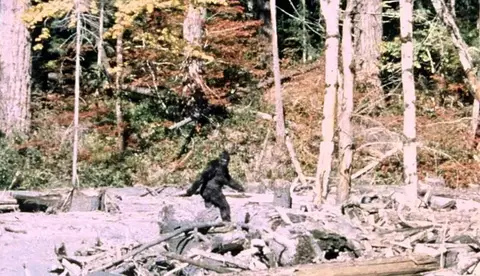
North America’s most famous cryptid: a huge, hairy, upright ape-like being reported from the Pacific Northwest to Florida since the 1958 “Bigfoot” tracks. Widely reported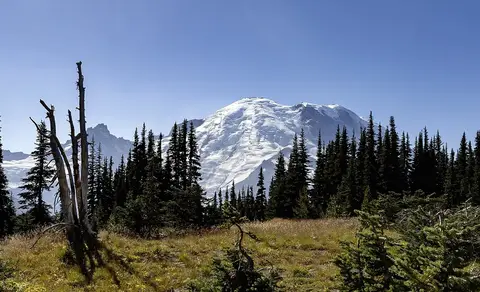
Batsquatch
A winged, ape-like creature with blue-tinged fur said to have landed in front of a stalled pickup near Mount Rainier in 1994 – part bat, part Sasquatch. Local legendColossal Claude
A long-necked sea serpent reported by lightship and fishing crews at the mouth of the Columbia River between 1934 and 1939, nicknamed Colossal Claude. Local legend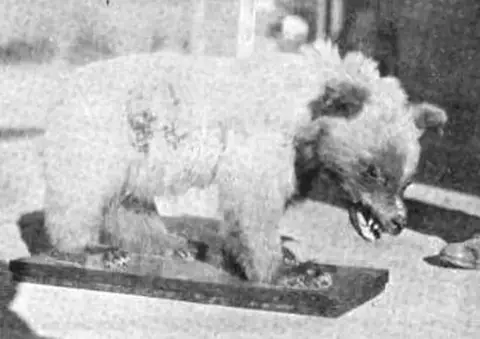
Lava Bear
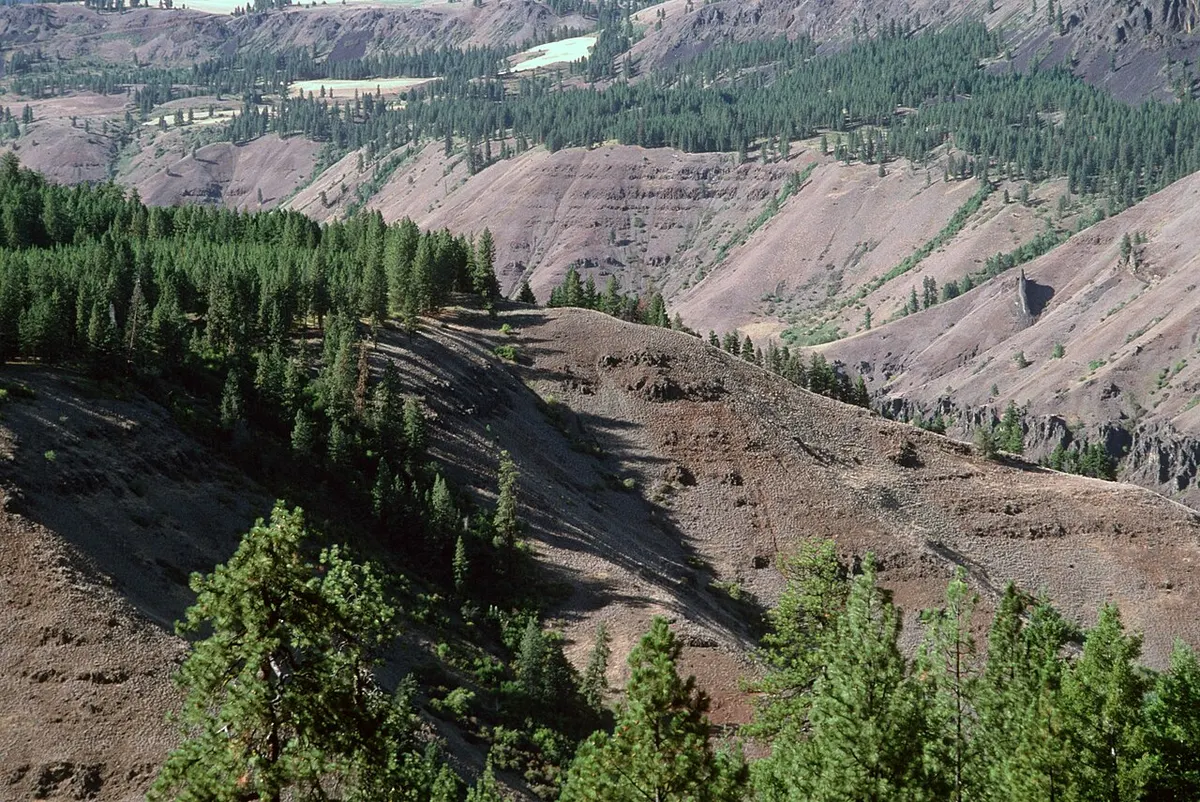
Small, woolly ‘dwarf bears’ trapped in Oregon’s high-desert lava beds from 1917 to 1934, later judged stunted black bears and adopted as a school mascot. Regional legend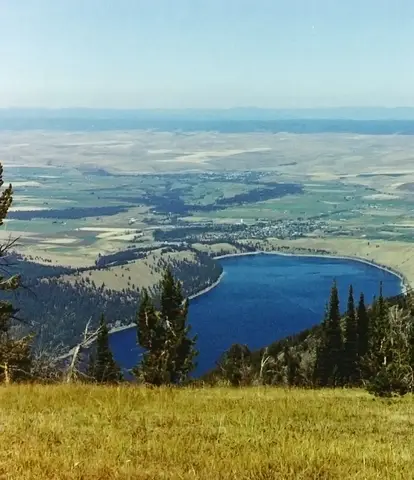
Wallowa Lake Monster
A serpent said to live in the glacial depths of Wallowa Lake in Oregon’s Wallowa Mountains, first reported in print by a startled prospector in 1885. Local legend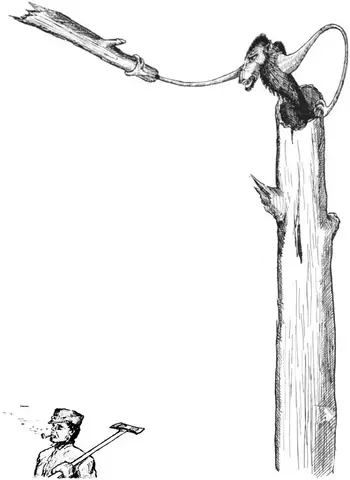
Agropelter
A wiry, ape-faced lumberwoods critter that hides in hollow trees and hurls dead branches at loggers – blamed for every “widow-maker” limb that fell. FolkloreThe legends of Oregon
Oregon has some of Bigfoot culture’s most distinctive landmarks. In 1974 a group called the North American Wildlife Research Team built a heavy wooden-and-steel Bigfoot trap in the Siskiyou Mountains near Applegate Lake; now maintained by the Forest Service, it is reached by a short trail and is said to be the world’s only Bigfoot trap. In Boring, outside Portland, researcher Cliff Barackman opened the North American Bigfoot Center in 2019, displaying footprint casts and research gear. The state also shares in the Batsquatch legend from neighboring Washington.
Skeptics note that black bears are common across Oregon and that hoaxes and misheard animal calls account for much of the evidence. Still, the sheer amount of wild land – from Mount Hood to the Wallowas – keeps Oregon at the center of the search.
Hotspots
- Bigfoot Trap, Rogue River–Siskiyou National Forest
The 1974 trap near Applegate Lake, reached by a short hike.
- North American Bigfoot Center, Boring
Museum and research center east of Portland with casts and exhibits.
- Mount Hood National Forest
Dense Cascade forests close to Portland with frequent sighting reports.
- Siskiyou Mountains
Remote range on the California border, an extension of northern California’s Bigfoot country.
- Wallowa Lake, Joseph
Glacial lake in the Wallowa Mountains with a serpent legend recorded since 1885.
- Fort Rock and the Lake County lava beds
High-desert country where the small “lava bears” were trapped between 1917 and 1934.
Sightings timeline
- 1902The horned monster in the county history Wallowa Lake Monster
Histories of Union and Wallowa Counties recorded a tradition of a horned monster that fled into the lake and took a pursuing brave with it, and said the tribes kept to the shore afterward.
- May 1917McKendree’s small bear Lava Bear
Sheepherder O. T. McKendree shot a tiny woolly bear in a juniper tree. It was mounted and shown in Lakeview, and its photograph appeared in the Oregon Sportsman that October.
- September 1920Irvin S. Cobb’s hunt Lava Bear
Cobb searched for a lava bear for the Saturday Evening Post and found none, but returned convinced the animal might exist. His article appeared on January 1, 1921.
- 1923Andrews takes a lava bear Lava Bear
Government trapper Alfred Andrews reported killing a small bear near Fort Rock and sent the specimen to the state biological survey office.
- May–June 1924A live lava bear on tour Lava Bear
Andrews caught a live male of about 28 pounds and exhibited it for a fee. Thousands paid to see it in Portland, and it later disappeared, reportedly taken or sold by his partner.
- 1934The last captures Lava Bear
Two more small bears were caught that year, one east of Crescent Lake and one by a road crew near Scar Mountain in the Willamette National Forest. They were the last animals identified as lava bears.
- 1934Pollock’s campfire legend Wallowa Lake Monster
The Rev. E. A. Pollock set down a long version of the lake’s serpent story in the Wallowa Sun, describing it as a Nez Perce tale about a failed peace marriage between two tribes.
- March 1934The lightship crews’ sighting Colossal Claude
Crews of the lightship Columbia and the tender Rose reported a 40-foot creature with an eight-foot neck. Officers refused to let sailors approach it in a small boat.
- 1937The trawler Viv Colossal Claude
Captain Charles Graham and his crew described a hairy, tan animal about 40 feet long with a horse-like head, seen at close range.
- Later in 1937From Devil’s Churn to Heceta Head Colossal Claude
Beachgoers reported a hairy creature, estimated at 55 feet with its head held high above the water, and followed it down the coast until it headed out to sea.
- April 13, 1939The Argo encounter Colossal Claude
Captain Chris Anderson reported the creature passing within ten feet of his fishing boat and apparently stealing fish from the lines – the last widely accepted sighting.
- 1998The Oregon logging-truck story Batsquatch
An anonymous log-truck driver was later said to have reported a huge winged creature with a purple face. The account circulates in cryptid books and websites but has no named witness or contemporary press source.
Our reporting
Field reports from Oregon
Forest Service Posts Bigfoot Records: What the 1982 Tracks Memo Says
Three records went up in the agency’s FOIA reading room. The longest is a 1982 footprint file with a biologist’s memo and a Border Patrol hoax opinion.