Field file · Other · Folklore
The Iceworm of Cordova
Also known as Ice Worm, Giant Ice Worm, Klondike Ice Worm
Alaska’s favorite tall tale: a worm the length of a man that lives in glaciers. The real ones are tiny, but Cordova still throws it a festival each winter.
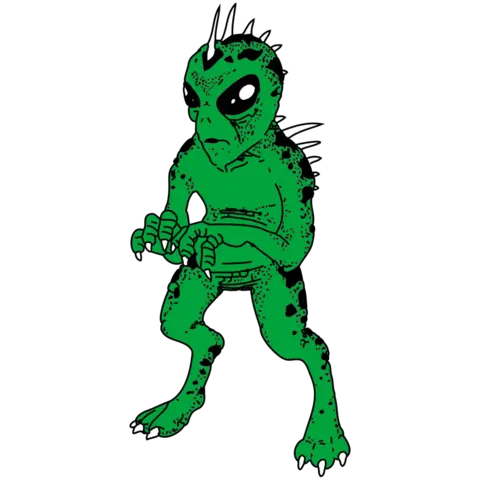
Ask a sourdough about the ice worm and you may be told it grows as long as a garden hose, lives deep inside glaciers, and tastes best fried in batter with bacon. That is the tall-tale version, and it is one of the oldest jokes in the North. Newspapers were already teasing readers about the creature by the late nineteenth century, and for generations old-timers used it to fool newcomers – the classic prank being a “worm” that turned out to be a piece of frozen spaghetti with two ink spots for eyes.
The tale rides on a true fact. A real ice worm, Mesenchytraeus solifugus, does live on Alaskan glaciers. According to the U.S. Geological Survey it is a close relative of the earthworm that spends its entire life on glacial ice, and it turns up in Alaska, Washington, Oregon and British Columbia. It is thread-thin, no longer than about an inch, and comes up to the glacier surface in the evening and early morning to feed on snow algae. The giant ice worm of legend is a stretched version of a creature that really exists – which is partly why the joke has lasted.
The poet Robert Service helped carry the legend to the wider world. His comic poem “The Ballad of the Ice-Worm Cocktail,” published in 1940, tells of a newcomer who gulps down a cocktail containing an ice worm to prove his mettle, only to learn the worm was spaghetti. Service did not invent the story; he borrowed Yukon barroom lore, and a 1906 Dawson newspaper tale about a gullible Englishman may have been a source. The Alaskan version of the joke, meanwhile, was kept alive by columnists, cocktail menus, novelty postcards and dances through the twentieth century.
Nowhere does the ice worm get a warmer welcome than in Cordova, a fishing town on Prince William Sound that cannot be reached by road from the rest of Alaska. In the early 1960s a few residents decided the town needed a winter festival like those of other Alaska communities, and the Cordova Iceworm Festival was born in 1961. Today the week of events includes a variety show, the crowning of an Iceworm Queen, a survival-suit race, a cake bake and a grand parade.
What witnesses describe
In the tall tale: a pale or bluish worm from a few inches to many feet long, sometimes said to have dozens of legs, that is killed by warmth and said to be fried or stirred into drinks. In reality: a dark, thread-like worm about the size of an eyelash that lives on the surface of glaciers.
Where and when it’s seen
Glaciers and ice fields of coastal Alaska, the Pacific Northwest and British Columbia; in legend, deep inside Klondike and Alaskan glacier ice. Real specimens come to the surface at dusk and dawn.
Notable sightings
- January 17, 1890“The Busy Ice-Worm” Lebanon, Oregon
The Oregon newspaper the Lebanon Express ran a tongue-in-cheek item describing huge ice worms wrecking an ice harvest – among the earliest printed ice-worm tales.
- 1906The spaghetti trick in print Dawson City, Yukon
The Dawson Daily News told of an Englishman fooled into thinking a piece of spaghetti was an ice worm, a story thought to have inspired Robert Service’s later poem.
- 1916Stroller White spins the yarn Alaska
Elmer “Stroller” White, writing in the Alaska Daily Empire, popularized the legend, claiming sourdoughs fried the worms and that scientists were coming to study them.
- 1940“The Ballad of the Ice-Worm Cocktail” Bar-Room Ballads
Robert Service published his comic poem about the ice-worm cocktail, which carried the joke to readers far beyond the North.
- 1961The first Iceworm Festival Cordova, Alaska
Cordova residents, including Omar Wehr and Merle “Mudhole” Smith, launched a winter festival around the ice worm, which has been held ever since.
What could explain it?
- A real animal lies behind the legend: Mesenchytraeus solifugus, a tiny glacier-dwelling relative of the earthworm, no more than about an inch long.
- The giant worm began as a gold-rush-era tall tale told to greenhorns, much like the jackalope or the hodag. The “spaghetti ice worm” prank is a documented part of the story.
- Prospectors and miners who dug in frozen ground were themselves sometimes nicknamed “ice worms,” which may have added to the lore.
- The USGS notes that real ice worms do not turn glacier ice blue, nor do they grow to fifty feet; those ideas are part of the myth.
Legend, culture and tourism
The ice worm is a mascot of Alaskan humor. Cordova’s Iceworm Festival, held every winter since 1961, features an Iceworm Queen, a parade and a survival-suit race, and the town’s tourism identity leans on the creature. The legend also shows up in Robert Service’s verse, novelty cocktails, plush toys and dances such as the “Iceworm Wiggle,” which Marie Lysing Johnson of Juneau is said to have conceived in 1937.
Places to visit
A week of community events each winter, built around the legendary worm.
The glacier country around Cordova, where real ice worms live on the ice.
Where it’s reported
Sources
First published · Updated