Type file · 10 cryptids
Phantom Big Cats
Black panthers and out-of-place big cats seen where none should live.
Phantom big cats are panthers, pumas and lion-sized beasts reported where no wild big cat is supposed to live. Britain is the hotspot, led by the Beast of Bodmin Moor and the Beast of Exmoor, but Australia has the Gippsland phantom cat and the striped Queensland tiger, and the eastern United States has its own: the Beast of Bladenboro, Connecticut’s Glawackus and the folkloric Wampus Cat. In Tanzania the striped Mngwa was blamed for killings in the 1930s.
The pattern is remarkably consistent. A farmer finds dead sheep or dogs, someone sees a long-tailed black shape crossing a field, and the local press supplies a nickname. Search parties, rewards and even soldiers follow – Royal Marines were sent onto Exmoor in 1983 – but the hunt rarely ends with a body.
Explanations are more grounded than for most cryptids. Large feral and domestic cats are routinely overestimated when there is nothing nearby for scale, and black dogs, foxes and even otters have been mistaken for panthers. Livestock kills blamed on big cats usually show the marks of dogs. Escaped or released exotic cats are real – a lynx was caught in north London in 2001 – but isolated animals cannot explain decades of reports, and no breeding population has been proven.
Every one on file

Beast of Bodmin Moor
A big black cat said to stalk Cornwall’s Bodmin Moor, investigated by the government in 1995 – days before a leopard skull turned up in a river. Widely reported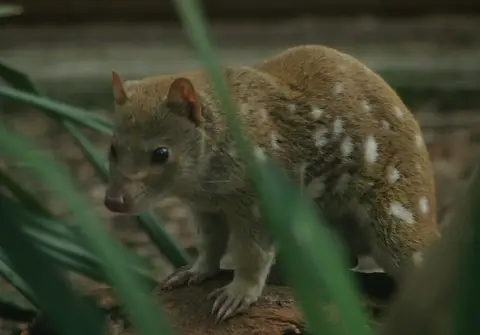
Queensland tiger
A striped, tree-climbing “marsupial cat” of north Queensland’s rainforests, reported since 1871 and linked by some to the extinct marsupial lion. Regional legend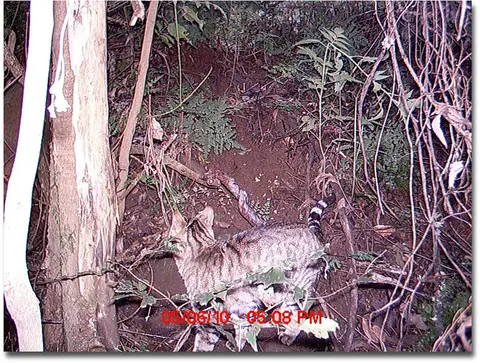
Gippsland phantom cat
Puma- or panther-sized cats reported across Gippsland since the 1930s, blamed on wartime mascots – yet every one examined so far has been a feral moggy. Regional legend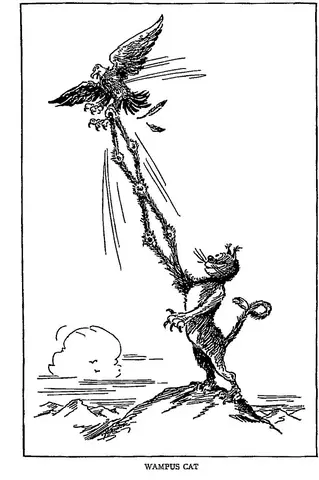
Wampus Cat
A huge, glowing-eyed cat of Southern folklore, blamed for dead livestock from Tennessee to the Ozarks – and now a beloved six-legged school mascot. Regional legend
Beast of Bladenboro
A cat-like killer blamed for a string of dog deaths around Bladenboro, North Carolina, in winter 1953–54, which drew armed crowds of up to 1,000 hunters. Local legend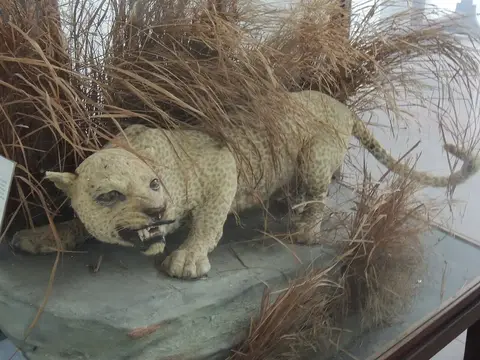
Zanzibar Leopard
A small island leopard of Unguja driven to near extinction by a witchcraft-linked cull; locals still report sightings and a disputed 2018 video. Extinct animal?
Beast of Exmoor
A phantom sheep-killer blamed on a puma or panther; in 1983 Royal Marine snipers were sent onto Exmoor to hunt it – and found nothing at all. Widely reportedGlawackus
A screaming, part-panther, part-bear beast blamed for missing livestock around Glastonbury, Connecticut, in a 1939 newspaper-fueled panic. Local legend