FIELD FILE · SKUNK-APEHOMINIDWIDELY REPORTED
Skunk Ape
Also known as Florida Bigfoot, Stink Ape, Swamp Ape, Myakka Ape, Bardin Booger
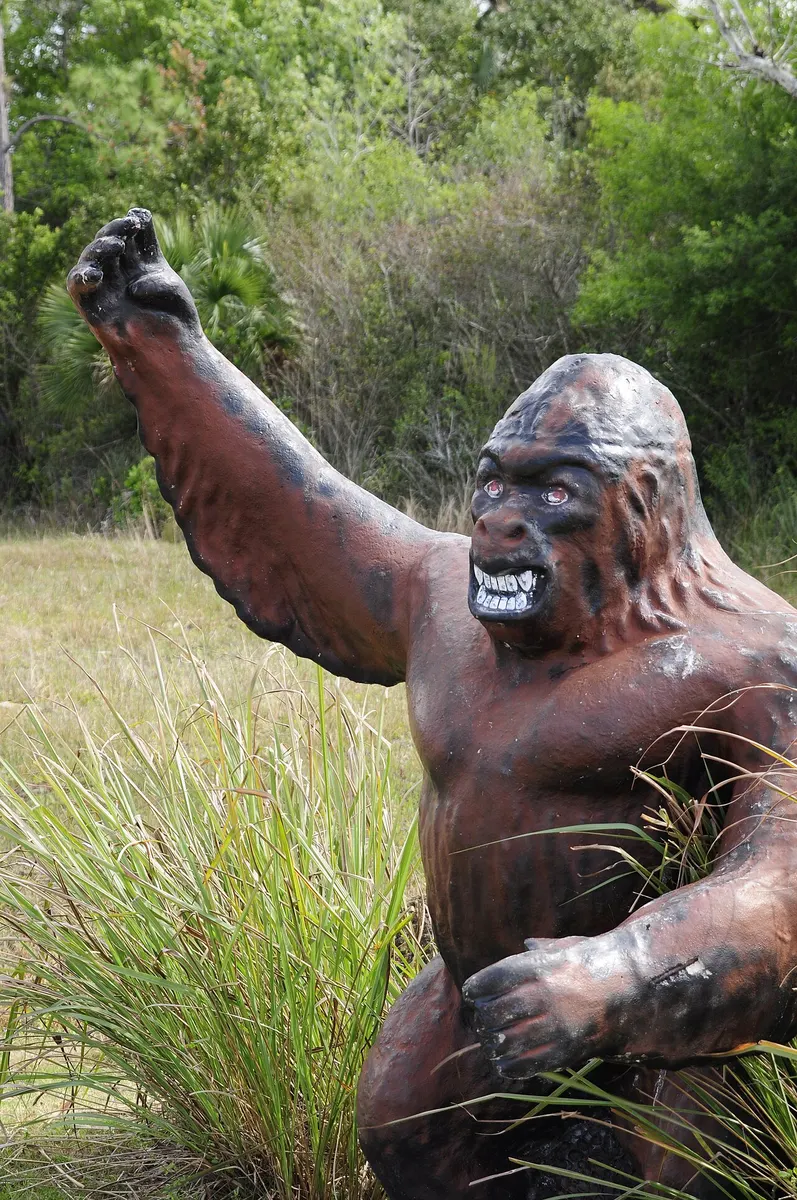
Florida’s answer to Bigfoot: a shaggy, foul-smelling ape-man said to roam the Everglades and Big Cypress Swamp, reported since the 1970s and before.
The Skunk Ape is the Southeast’s best-known variant of the North American Bigfoot: a tall, hair-covered, upright-walking creature said to live in the swamps, hammocks and pine flatwoods of Florida. Its name comes from the trait witnesses mention again and again – an overpowering smell, likened to rotten eggs, wet garbage, dead animals or a skunk. Sightings cluster in the Everglades and the Big Cypress Swamp, but reports come from every corner of the state, from Myakka River State Park near Sarasota to the Apalachicola National Forest and Tate’s Hell State Forest in the Panhandle.
Enthusiasts trace the legend back to an 1818 newspaper report of a “man-sized monkey” raiding food stores near present-day Apalachicola, though such early items are thin and hard to interpret. The modern Skunk Ape was born in the early 1970s, when a wave of night-time sightings in Broward County and the suburbs west of Fort Lauderdale and Miami described a reddish-brown to black ape-man that frightened residents and was blamed for raided trash and dead livestock. Local deputies searched, newspapers ran with the story, and the catchy name stuck. The excitement even reached Tallahassee, where a 1977 bill proposed making it illegal to harm or harass “anthropoids or humanoid animals”; it never passed.
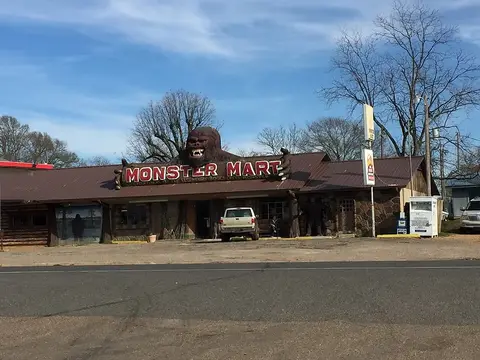
No one is more associated with the creature than Dave Shealy of Ochopee, a tiny community on the Tamiami Trail inside the Big Cypress. Shealy says he first saw a Skunk Ape as a ten-year-old in 1974, and in July 2000 he filmed a distant, dark figure crossing an open swamp – footage that believers cite as evidence and skeptics say looks like a person in a costume. He runs the Skunk Ape Research Headquarters, a roadside attraction and campground, and has written a field guide to the beast. That same year, the Sarasota County Sheriff’s Office received two anonymous photographs of a large ape-like animal half-hidden in palmetto scrub behind a home; the so-called Myakka photos remain among the most debated images in Bigfoot lore.
Scientists and land managers are unconvinced. The National Park Service has said no sighting has ever been verified by its wildlife staff, even though the Big Cypress and Everglades are crisscrossed by research projects using motion-triggered trail cameras. Skeptical investigators point out that almost all the evidence is eyewitness testimony, blurry imagery and footprint casts – and that Florida already has a large, smelly, sometimes-bipedal animal living in the very same swamps: the black bear.
Whatever lurks in the sawgrass, the Skunk Ape is now part of Florida’s roadside culture. It appears on T-shirts, beer labels and souvenir stands along the Tamiami Trail, in documentaries and reality TV, and in the state’s long tradition of tall tales about what might be hiding in its vast wetlands.
- Type
- Hominid
- Status
- Widely reported
- First reported
- 1818
- Best-known location
- Big Cypress Swamp and the Everglades, Florida
- Also called
- Florida Bigfoot, Stink Ape, Swamp Ape, Myakka Ape, Bardin Booger
What witnesses describe
Described as 6–7 feet (1.8–2.1 m) tall, heavily built and covered in long, shaggy hair ranging from reddish-brown to black, sometimes with a lighter face. Witnesses mention glowing or reddish eye-shine, long arms, no visible neck and large five-toed tracks up to about 17 inches long. The defining trait is its stench, described as a mix of rotten eggs, skunk, mildew and carrion. It is said to grunt, growl and scream, and to flee quickly when seen.
Where and when it’s seen
Cypress swamps, sawgrass prairies, hardwood hammocks and pine flatwoods, especially the Big Cypress National Preserve, the Everglades and Myakka River State Park; also North Florida forests such as the Apalachicola National Forest and Tate’s Hell. Sightings are often reported at dusk or at night, along remote roads, campsites and rural homes, and seasonal flooding is said to push it onto higher ground.
Notable sightings
- 1818A “man-sized monkey” near Apalachicola Apalachicola area, Florida
Cryptozoology writers point to an 1818 newspaper item describing an ape-like creature raiding settlers’ food stores in the Panhandle. It is often cited as the earliest Florida report, though the original account is brief and its meaning is uncertain.
- January 1974Police search Miami-area swamps Miami area, Florida
During the 1970s wave of sightings in Dade and Broward counties, an Associated Press news crew filmed officers searching the swamp edge for a strange ape-like creature. The story helped fix the name “Skunk Ape” in the public mind.
- 1997Fire chief’s photo and a burst of reports Ochopee, Florida
Ochopee fire chief Vince Doerr photographed what he said was a hairy creature crossing the road in the Big Cypress. Within weeks dozens of people reported sightings in the preserve, while Dave Shealy described bait stations raided and strange tracks.
- July 8, 2000Dave Shealy’s video Big Cypress Swamp, near Ochopee, Florida
Shealy filmed a dark, upright figure moving through a palm hammock and then running across flooded swamp. Believers point to its speed through deep water; critics say it is indistinguishable from a person in an ape suit.
- December 2000The Myakka photographs Sarasota County, Florida
An anonymous letter writer sent the Sarasota County Sheriff’s Office two photos of a large ape-like animal she said had been taking apples from her back porch near Interstate 75. She feared it was an escaped orangutan; the photos have never been traced to their source.
- March 2, 2013Video at Myakka River State Park Myakka River State Park, Florida
A visitor posted phone video of a distant, dark figure he and his son chased across a field in the park. Local TV covered the claim, but the footage was too grainy and distant to show anything identifiable.
What could explain it?
- Florida black bears can stand upright, leave human-like hind footprints, smell strongly, raid garbage and live in exactly the swamps where sightings occur; skeptic Joe Nickell argues most reports fit bears, including mangy ones.
- Hoaxes and costumes: several famous photos and videos have no traceable source or look like people in ape suits, and the creature has become a tourist draw.
- No body, bones, clear DNA or trail-camera image has turned up despite extensive wildlife research in the Big Cypress and Everglades; the National Park Service says no sighting has been verified by its staff.
- Escaped or released exotic animals (Florida has a long history of roadside zoos and monkey colonies) may explain a few ape-like encounters.
- Eyewitness memory is unreliable in poor light, and expectations shaped by Bigfoot media can turn an ambiguous dark shape into a “Skunk Ape.”
Legend, culture and tourism
The Skunk Ape is a fixture of Florida roadside Americana. Dave Shealy’s Skunk Ape Research Headquarters in Ochopee sells field guides and souvenirs beside a campground on the Tamiami Trail, and the creature has starred in TV shows, documentaries, novels and craft-beer branding. Claims that it comes from Seminole or Miccosukee tradition are often repeated but are not well supported; it is essentially a modern regional twist on the Bigfoot legend.
Places to visit
Dave Shealy’s quirky roadside museum, gift shop and campground on the Tamiami Trail, the unofficial capital of Skunk Ape lore.
The 720,000-acre wetland where most famous sightings occurred, with boardwalks, scenic drives and swamp walks.
One of Florida’s oldest state parks and the setting of the Myakka photos and a 2013 video claim.
Watch
 ARCHIVE.ORG1:31
Police Search for Ape-Like Creature (1974 news segment)
Associated PressOriginal January 1974 footage of the search in the Miami-area swamps during the 1970s wave of sightings. (Associated Press newsreel archived on archive.org.)
 ARCHIVE.ORG2:16
Dave Shealy Skunk Ape Footage (2000)
Dave ShealyThe famous July 2000 video from the Big Cypress – judge for yourself whether it shows an animal or a costume.
Where it’s reported
Skunk Ape in the news
No recent headlines about the Skunk Ape. Our news desk checks every day — see all cryptid news.
Sources
First published · Updated