Field file · Other · Local legend
Glocester Ghoul
A fire-breathing, winged, horned beast said to have chased treasure diggers from a Glocester, Rhode Island farm, a legend tied to the pirate Albert Hicks.
Rhode Island’s best-known monster comes from the rural northwestern town of Glocester (spelled without the “u” since the town was renamed in 1806 to distinguish it from Gloucester, Massachusetts). The story begins with a hunt for buried treasure. Versions of the tale agree that a group of men dug on a Glocester farm in the belief that the pirate Captain Kidd had hidden gold there, and that a monster drove them away. The dates and details differ. A 1889 Providence Journal report, as summarized by folklorist-bloggers, put the dig on November 13, 1833, with six men and a meteor falling from the sky beforehand, while later retellings set it in the summer of 1839 and cast four men.
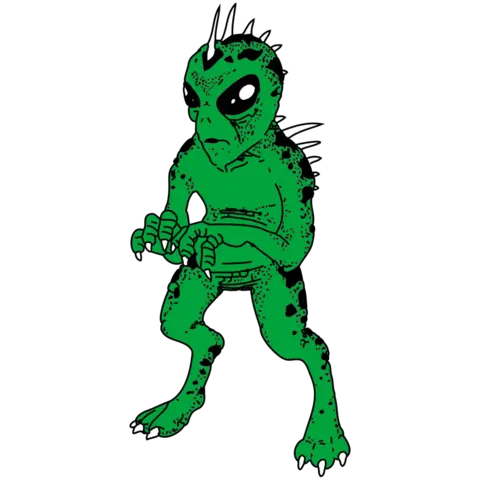
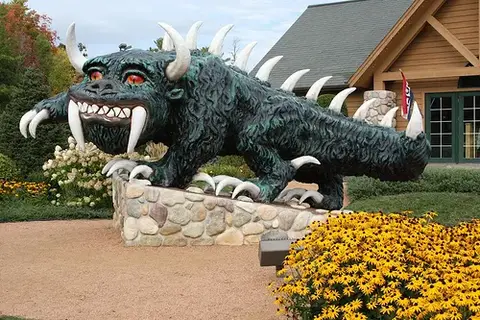
The best-known version makes the leader a real person, Albert Hicks, a Rhode Island-born sailor who became a murderer and pirate and was executed in New York in 1860. In the 1839 story, Hicks and his companions fled when a creature burst out of the forest: a cow-sized animal with bat-like wings, ram-like spiral horns, duck-like feet and scales as large as clam shells, with eyes like pewter bowls, flames from its mouth and nostrils, and a smell of burned wool. None of the men, the tale says, ever dug on the farm again.
A second chapter came in January 1896, when newspapers including the Boston Globe ran an account of a Glocester man named Neil Hopkins, who said a fiery creature charged out of the woods as he walked home from work at night. He described hot breath, a metallic clanking sound and branches crackling, and said it was as large as an elephant and had no tail. Researchers think the 1896 article was written by a New York reporter who reworked the older Providence Journal story and leaned on Hicks’s notoriety, a hint that the legend’s best-known form is partly newspaper craft.
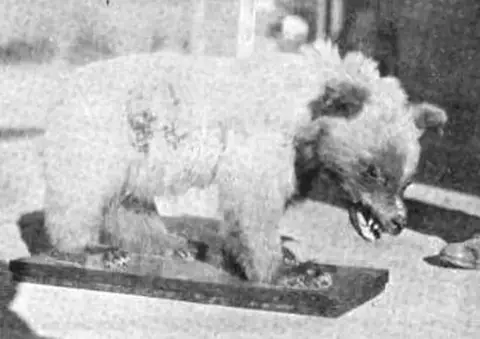
Writers disagree on what the creature was: a hellhound set to guard the treasure, a misidentified bear (one was loose in nearby Webster, Massachusetts, in 1896), or a purely literary invention. The monster has not been reported since the nineteenth century, but it has remained a staple of New England folklore, and Ocean State Media (the former Rhode Island PBS) was still profiling it in 2024 as a cryptid said to haunt the woods still.
What witnesses describe
A cow-sized, fire-breathing animal with scaly skin, bat-like dark wings, spiral ram’s horns, duck-like feet and glowing eyes; in 1896, an elephant-sized beast with no tail that gave off hot breath and a clanking sound.
Where and when it’s seen
The forests and swamps of Glocester in northwestern Rhode Island, particularly the farmland near the Providence Turnpike (Route 44) in the legend’s retellings.
Notable sightings
- November 13, 1833 (or summer 1839)The treasure diggers’ night A farm in Glocester, Rhode Island
Accounts say men digging for Captain Kidd’s gold were driven off by a fire-breathing monster. The 1889 Providence Journal version gives the 1833 date and six diggers, with Hicks in a minor role; later retellings give 1839 and make him the central figure.
- May 5, 1889“Glocester Gold Digging” The Providence Journal
A Providence Journal article with this title, cited by modern folklore researchers, tells the treasure-digging story and is one of the oldest printed versions they refer to.
- January 1896Neil Hopkins’s fiery night walk Glocester, Rhode Island
Newspapers from New York to Boston reported that Hopkins, walking home, was charged by a huge creature that breathed hot air and clanked like metal.
- 2022Folklore scholarship takes up the legend Lovecraft Annual
Folklorist Stephen Olbrys Gencarella published an essay on Lovecraft and the folklore of Glocester’s “dark swamp,” a main source for modern retellings.
What could explain it?
- Treasure-hunting tales commonly end with a supernatural guardian scaring the diggers away, a stock motif of eighteenth- and nineteenth-century folklore.
- A large black bear, reported at nearby Webster, Massachusetts, in early 1896, may have been the animal seen at night by Hopkins.
- Hicks’s own dictated confession, published after his execution, does not mention any monster, and he was known to exaggerate. The famous 1839 version may have been attached to him by a later journalist.
- The two earliest newspaper versions differ in date, number of diggers and witnesses, which suggests a story reshaped by retelling.
Legend, culture and tourism
The Glocester Ghoul is a regional fixture in New England folklore, featured by Ocean State Media (the former Rhode Island PBS), the Strange New England blog and the New England Folklore blog, and the subject of a 2022 scholarly essay on Lovecraft and Glocester’s folklore. Rhode Island’s other famous weird story, the 1892 Mercy Brown vampire case in Exeter, also comes from the state’s rural interior.
Places to visit
A state park of woods and ponds in Glocester that gives a feel of the wooded, swampy country where the legend is set.
Where it’s reported
Sources
First published · Updated