FIELD FILE · CADBOROSAURUSLAKE & SEA MONSTERWIDELY REPORTED
Cadborosaurus
Also known as Caddy, Cadborosaurus willsi, Hyaschuckaluck
“Caddy,” the horse-headed sea serpent of British Columbia’s coast, named in 1933 after Victoria’s Cadboro Bay and still reported in the Salish Sea.
Cadborosaurus – almost always shortened to “Caddy” – is the sea serpent of the Pacific Northwest. Witnesses describe a long, snake-like animal with a head like a horse or camel, swimming in the cold coastal waters between Vancouver Island, the Gulf Islands and Washington’s Puget Sound. It takes its name from Cadboro Bay, a sheltered beach on the edge of Victoria, British Columbia.
Stories of serpents in these waters are much older than the name. Coast Salish and other Indigenous nations carved and painted serpent-like beings in petroglyphs, masks and dances, and 19th-century newspapers printed breathless reports of monsters off Cape Flattery and near Victoria. Cryptozoologists have often linked Indigenous beings such as the Manhousaht hiyitl’iik to Caddy, but scholars caution that these traditions have their own meanings and should not simply be folded into a modern monster story.
Caddy’s modern career began in October 1933, when the Victoria Daily Times put on its front page the account of Major W. H. Langley, a local barrister, who said he and his wife had seen a huge creature with a serrated back off Chatham Island. Another couple’s sighting from the previous year followed, and managing editor Archie Wills championed the creature, adopting the name Cadborosaurus suggested by a reader. The timing was no accident: the Loch Ness Monster had become a worldwide sensation that same year, and Wills later admitted he hoped a sea-serpent story would bring some humour to Depression-era headlines.
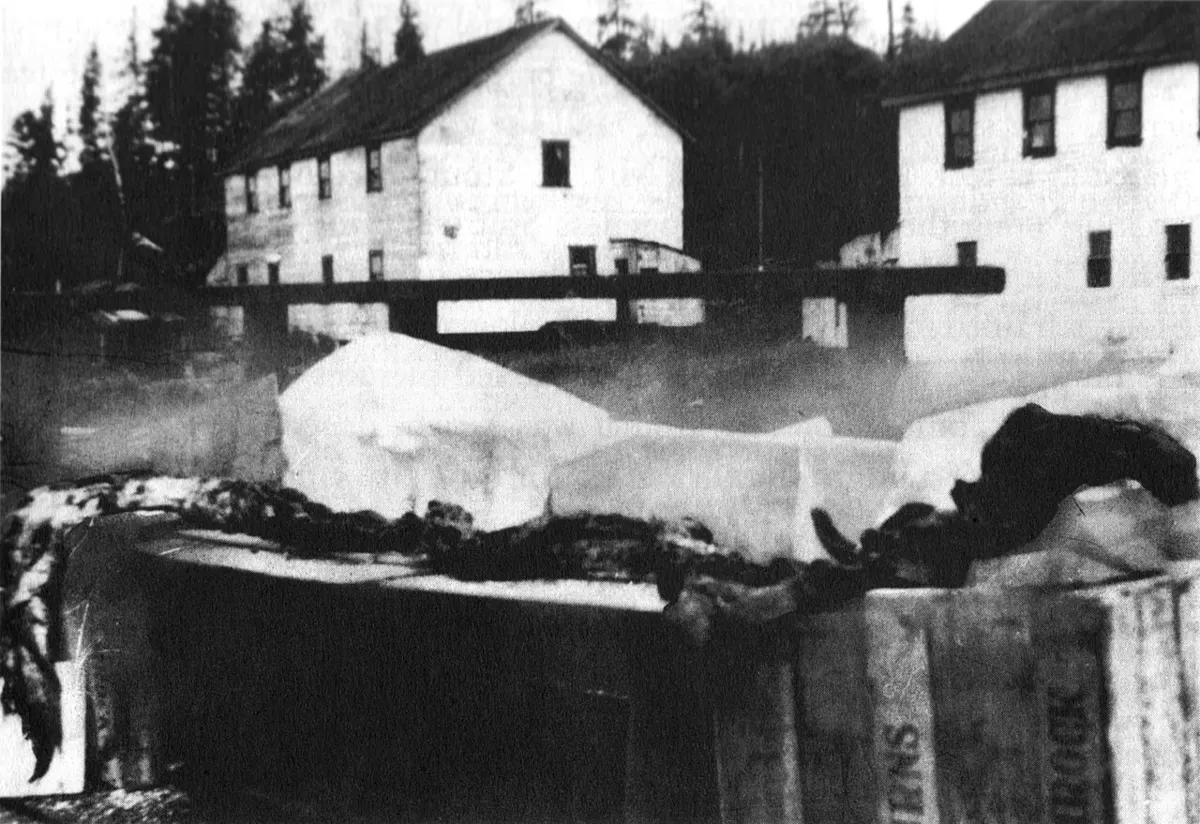
Caddy gained scientific attention in 1995, when oceanographer Paul LeBlond and zoologist Edward Bousfield formally described it as Cadborosaurus willsi, using photographs of a strange carcass recovered from a whale’s stomach in 1937 as the type material. Most zoologists rejected the proposal, and later analyses argued that the carcass and other key reports describe known animals. Still, sightings continue to trickle in from boaters and ferry passengers, and Caddy remains a cherished piece of Victoria’s local identity.
- Status
- Widely reported
- First reported
- 1933
- Best-known location
- Cadboro Bay and the Salish Sea, off Victoria, British Columbia
- Also called
- Caddy, Cadborosaurus willsi, Hyaschuckaluck
- Reported in
- Washington Canada
What witnesses describe
A slender, serpentine body perhaps 5–15 metres long, often with humps or coils showing above the water; a head likened to a horse, camel or giraffe; sometimes a mane, flippers, or a fluke-like tail. Witnesses have described it as brown, grey or dark green, and some report loud snorts or grunts.
Where and when it’s seen
The coastal waters of the Salish Sea – Haro Strait, the Gulf Islands, Cadboro Bay and Puget Sound – with reports reaching north to Haida Gwaii and Alaska. Sightings are made year-round, mostly by boaters on calm water.
Notable sightings
- October 1, 1933The Langley sighting Off Chatham Island, near Victoria, British Columbia
Major W. H. Langley and his wife, sailing near Chatham Island, reported hearing a loud grunt and seeing the back of a huge dark creature with serrated markings. The Victoria Daily Times ran the story on its front page and launched the Caddy craze.
- October 1937The Naden Harbour carcass Naden Harbour whaling station, Haida Gwaii, British Columbia
Whalers found a long, snake-like carcass in the stomach of a sperm whale and photographed it. A sample sent to the provincial museum was tentatively identified as a fetal baleen whale, and the remains were later lost.
- 1968Hagelund’s “baby Caddy” Gulf Islands, British Columbia
Captain William Hagelund later wrote that he had netted a small, eel-like “baby sea serpent” and released it. In 2011 researchers argued that his description best matches a bay pipefish.
- 1995<em>Cadborosaurus willsi</em> named Victoria, British Columbia
Paul LeBlond and Edward Bousfield published a formal description of Caddy as a new species in the journal Amphipacifica, naming it after Archie Wills. The proposal was widely criticised for lacking a physical specimen.
What could explain it?
- Known animals seen at a distance – sea lions and elephant seals swimming in a line, conger eels, oarfish, basking sharks and humpback whales – can account for many reports.
- The Naden Harbour carcass was tentatively identified at the time as a fetal baleen whale; others suggest a decomposed basking shark, which can take on a snake-like shape as it rots.
- Hagelund’s supposed baby Caddy is a close match for the bay pipefish, a little-known local fish that can raise its head like a “neck.”
- Researchers point out that Caddy reports are wildly inconsistent, suggesting many different things (logs, waves, seals, deer) rather than one creature.
- The 1933 boom closely followed the Loch Ness craze, and editor Archie Wills admitted the coverage was partly meant as light-hearted fun.
Legend, culture and tourism
Caddy has been a Victoria favourite since the 1930s, when the Victoria Daily Times treated it almost as a civic mascot, and it still turns up in local news, books and television documentaries. Serpent-like beings also appear in the petroglyphs, masks, dances and oral traditions of Coast Salish and Nuu-chah-nulth peoples, though these have their own meanings that predate and differ from the settler sea-serpent story.
Places to visit
The provincial museum, whose predecessor examined the 1937 Naden Harbour sample, holds major collections on the coast’s natural history and Indigenous cultures.
Watch
 ▶ VIDEO
Is This North American Sea Serpent Real or a Hoax?
Monstrum | Storied (PBS)A folklorist’s well-researched look at Caddy’s history, the 1937 carcass and the 1933 media frenzy.
Where it’s reported
Washington Canada British Columbia Washington
Cadborosaurus in the news
No recent headlines about the Cadborosaurus. Our news desk checks every day — see all cryptid news.
Sources
First published · Updated