Field file · Other · Folklore
Slipperyskin
Also known as Slippery Skin, Wejuk, Wet Skin
A huge, trap-dodging bear-like creature said to have pestered settlers of Vermont’s Northeast Kingdom, and to have chased a governor.
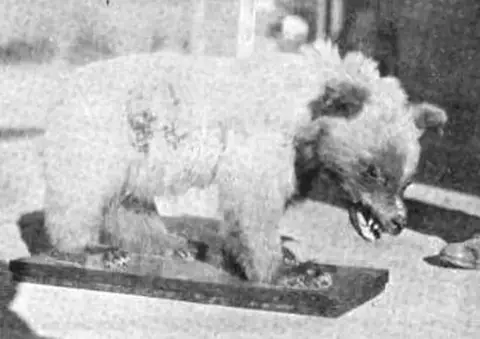
Slipperyskin is a legend of Vermont’s Northeast Kingdom, the remote north-eastern corner of the state, where the stories are tied to the towns of Lemington, Maidstone, Morgan, Westmore and Victory. In its basic form it is the tale of an enormous black bear that, over decades, tormented the early settlers: it spooked cattle and sheep, knocked over woodpiles, rolled stones into hayfields, wrecked gardens, fouled bear traps and always slipped away from the hunters sent after it. That slipperiness, the stories say, gave it its name.
Sources disagree about where the legend begins. Several retellings trace it to a journal said to have been kept in 1759 by a scout called Duluth, who traveled with Rogers’ Rangers on their retreat from the raid on St. Francis and who described a large black bear dropping pinecones and nuts on his party near Memphremagog Bay. Another modern account says the story first appeared in Kenneth Roberts’s 1937 novel Northwest Passage. I was not able to check the journal myself, so the 1759 origin is best treated as part of the tradition rather than a firm record. Modern writers also say the Wabanaki called the creature Wejuk, glossed as “wet skin”; I could not confirm that from a Wabanaki or Abenaki source, so the gloss should be treated with caution.
The tales are the kind that grow in the telling. In Lemington the creature walked on its hind legs and left tracks as big as wagon wheels. In Maidstone, according to one favorite story, Vermont governor Jonas Galusha tried to lure the bear with an ointment of female bear scent, only to be chased by it, with his hunting party scattering. Near Elon Mountain in Morgan, a large stump came rolling down a logging road at a group of hunters. In Westmore, a picnic of clergymen near Lake Willoughby was supposedly broken up, and the “mutilated body” found afterward turned out to be cheese strudel. In Victory, the creature supposedly backtracked in its own footprints to throw off pursuers.
Writers disagree about what Slipperyskin was meant to be: just a very clever bear, a garbled Bigfoot, a Native man guarding his homeland, or a good-natured tall tale. Vermont folklorist Joseph Citro’s books introduced at least one modern teller to the story, and Scott Wheeler, writing from the Vermont Northland Journal, retold it for the Vermonter and Vermont Maturity websites.
What witnesses describe
A huge black bear-like animal, said to walk upright on its hind legs and to leave tracks as large as wagon wheels; it is clever, mischievous and never caught.
Where and when it’s seen
The forested hills and lakes of Essex and Orleans Counties in northeastern Vermont – the Northeast Kingdom – especially Lemington, Maidstone, Morgan, Westmore and Victory.
Notable sightings
- 1759 (as told)Duluth’s pinecone bear Near Memphremagog Bay, Vermont–Quebec border
Retellings credit a Rogers’ Rangers scout named Duluth with the first written mention: a big black bear pelting his party with pinecones and nuts. The original record was not verified.
- Early 1800s (as told)Governor Galusha’s hunt Maidstone, Vermont
In the best-loved story, Governor Jonas Galusha tried a scent trick to lure the bear into a clearing; the bear chased him instead and the hunters fled.
- 1937Northwest Passage Novel by Kenneth Roberts
One modern writer says the Slipperyskin story first appeared in this novel about Rogers’ Rangers, which would make the 1759 journal link literary rather than documentary.
What could explain it?
- The simplest explanation is a large American black bear, which are common in Vermont and are famous for raiding fields, gardens and traps.
- Some Bigfoot enthusiasts read the upright walking and huge tracks as a sasquatch-type creature, though one modern teller argues that the Wabanaki and the settlers both knew bears well and would have recognized one.
- The stories are packed with tall-tale elements – a bear that backtracks on its own prints, a governor chased by his own bait, a body that turns out to be cheese strudel – which suggests a legend told for entertainment more than a record of events.
- The dating is shaky: most of the incidents are described only as “long ago,” and the 1759 journal link has not been independently verified (and may trace to a 1937 novel).
Legend, culture and tourism
Slipperyskin is a favorite in Northeast Kingdom storytelling, retold on Vermont history websites, in a New England legends podcast and on folklore blogs. It belongs with the state’s “Vermonsters,” the creatures that folklorist Joseph Citro has collected. The Wabanaki and Abenaki peoples are the long-term inhabitants of these lands, and the name Wejuk is reported as theirs; their own accounts deserve to be heard on their own terms.
Places to visit
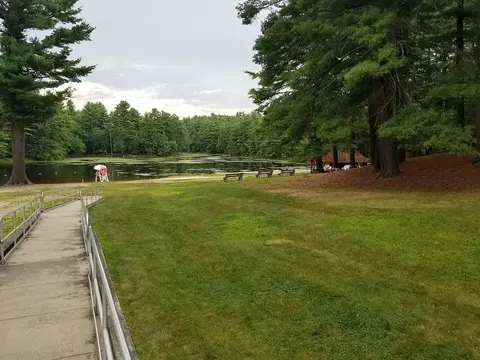
A deep glacial lake between Mount Pisgah and Mount Hor, setting of the picnic story and of its own serpent legends, with a state forest and hiking nearby.
Where it’s reported
Sources
First published · Updated