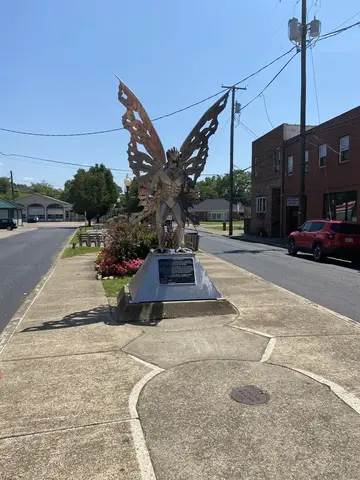
FIELD FILE · THUNDERBIRDFLYINGREGIONAL LEGEND
Thunderbird
Also known as Big Bird, Wakíŋyaŋ (Lakota thunder beings), Pennsylvania Thunderbird, Lawndale bird
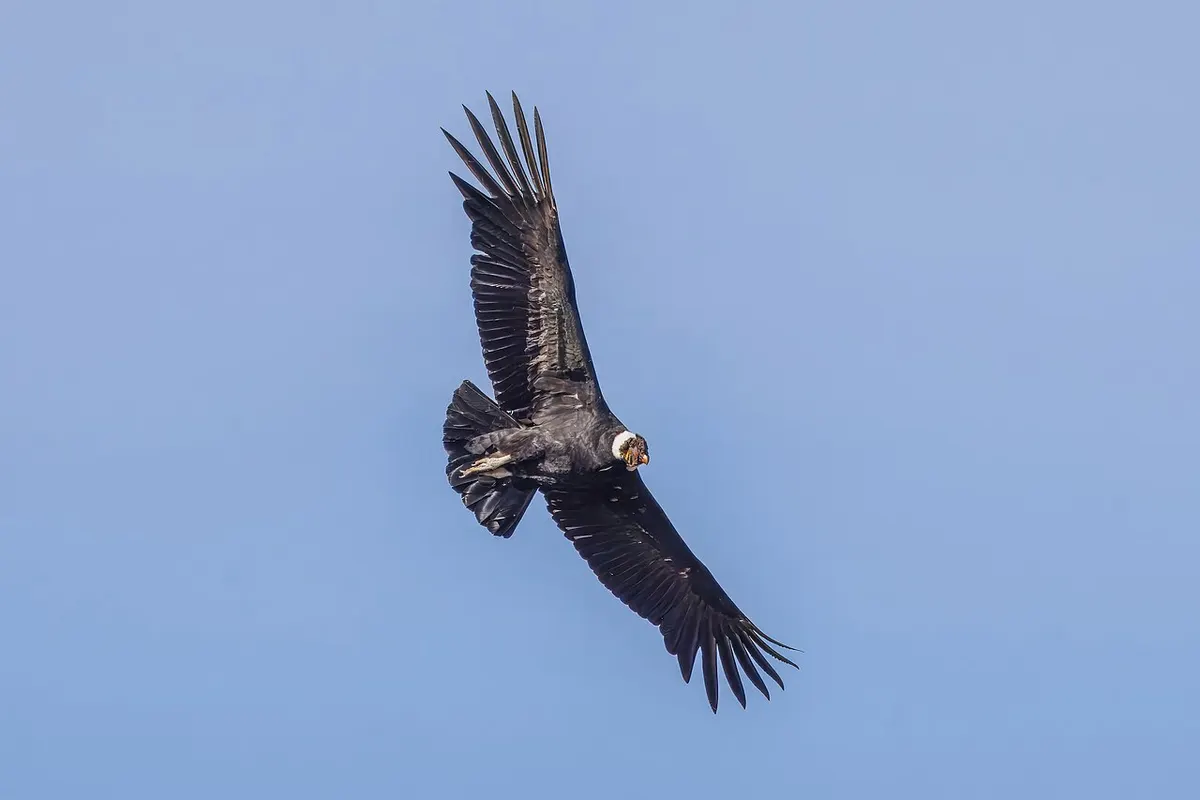
A giant bird with a wingspan said to rival a small plane, reported over Pennsylvania’s Black Forest and blamed for lifting an Illinois boy in 1977.
The word “thunderbird” comes from some of the most important sacred traditions of Native North America. Across the Plains, the Great Lakes and the Northwest Coast, many nations speak of enormous beings whose wingbeats make thunder and whose eyes or feathers flash lightning. For the Lakota, the Wakíŋyaŋ – the Thunder Beings – are ancient and holy powers, guardians of the people who bring the storms that renew the land; each spring equinox Lakota people still gather in the Black Hills of South Dakota to welcome them back with the sacred pipe, songs and offerings. These are living spiritual traditions, not monster stories, and they deserve to be understood on their own terms.
Cryptozoologists borrowed the name in the twentieth century for something quite different: reports of physical birds far larger than any known North American species, with wingspans claimed at 15 to 20 feet or more. The richest seam of such stories runs through the remote, heavily forested counties of north-central Pennsylvania – Potter, Clinton, Cameron and Lycoming – once called the Black Forest. Local writer Robert R. Lyman collected accounts going back to pioneer days, and retired Leidy Township postmaster Hiram Cranmer said he saw the birds several times from 1922 onward.
Pennsylvania is also tied to cryptozoology’s most famous missing picture. Since at least the 1960s, people have described an old photograph showing a gigantic winged creature nailed to a barn wall, with a line of men standing beneath its outstretched wings. It is often linked to an April 1890 Tombstone Epitaph story about two Arizona ranchers who supposedly killed a winged monster in the desert – but the paper never printed a photo, and nobody has produced an original. Naturalist Ivan Sanderson said he left a copy with Cranmer during a 1963 visit; Cranmer’s house burned in 1967. Many people still insist they remember seeing the image, which has made it a favorite example of shared false memory.
The best-known modern encounter came from Lawndale, a village in Logan County, Illinois. On the evening of July 25, 1977, two huge dark birds reportedly swooped on a group of boys playing in a yard, and one is said to have grabbed 10-year-old Marlon Lowe by his shirt and carried him a short distance a couple of feet off the ground before dropping him when his mother, Ruth Lowe, screamed. Several adults said they saw the birds, which Ruth Lowe described as black with a white ring around the neck. A cluster of Illinois “big bird” reports followed that summer, including film shot by John Huffer near Lake Shelbyville.
Ornithologists doubted the Lawndale story from the start, pointing out that no North American bird can lift a child of that size. The family said they were mocked and harassed for years afterward. The case, together with a wave of “Big Bird” sightings in Texas’s Rio Grande Valley in early 1976, keeps the modern thunderbird alive as one of the stranger chapters of American folklore.
- Type
- Flying
- Status
- Regional legend
- First reported
- Pre-colonial
- Best-known location
- Northern Pennsylvania mountains and central Illinois
- Also called
- Big Bird, Wakíŋyaŋ (Lakota thunder beings), Pennsylvania Thunderbird, Lawndale bird
- Reported in
- Arizona Illinois Pennsylvania South Dakota Texas
What witnesses describe
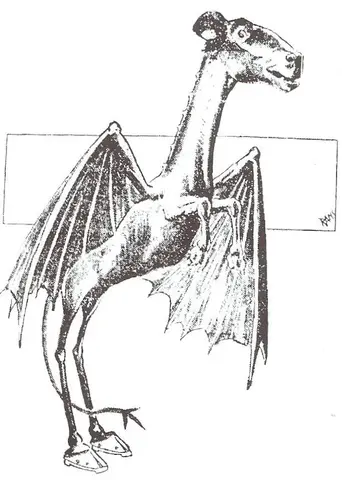
A huge dark bird, usually black or brownish-gray, with a wingspan estimated anywhere from 10 to more than 20 feet, sometimes compared to a small airplane. Some witnesses describe a bare or pale head and a white ring at the base of the neck, like a condor; others describe a long beak. Older tall tales give it featherless, bat-like wings.
Where and when it’s seen
Remote forested ridges and river valleys of northern Pennsylvania, farmland and lakes of central Illinois, and the brushland of south Texas, usually reported soaring in daylight or at dusk in summer.
Notable sightings
- April 26, 1890The Tombstone “winged monster” Tombstone, Arizona
The Tombstone Epitaph printed a story of two ranchers who claimed to have killed a gigantic winged creature with smooth, featherless wings. No photograph accompanied it, but the tale later became attached to the legend of a lost thunderbird photo.
- 1922Hiram Cranmer’s first sighting Leidy Township, Clinton County, Pennsylvania
Retired postmaster Hiram Cranmer said he first saw a giant bird this year and reported several more over the following decades, mostly in northern Clinton and southern Potter counties. He became the region’s best-known thunderbird advocate.
- July 1977The Huffer film Lake Shelbyville, Illinois
Photographer John Huffer filmed large dark birds perched and flying near Lake Shelbyville, footage later featured on television documentaries. Skeptics argue the birds are turkey vultures.
- July 25, 1977Marlon Lowe is lifted off the ground Lawndale, Illinois
Two large birds reportedly swooped on boys playing outdoors, and one allegedly lifted 10-year-old Marlon Lowe a short way before releasing him as his mother screamed. Wire services carried the story, while bird experts said no native bird could carry a child.
- June 2012Campers in Chapman Township Clinton County, Pennsylvania
Two girls camping in the Pennsylvania Wilds said a bird with an estimated 14-foot wingspan and a bare head swooped low over their camp. No further sightings followed.
What could explain it?
- Large native birds – turkey vultures, golden and bald eagles, great blue herons – look enormous at close range or against the sky, where size and distance are very hard to judge.
- Escaped or released exotic birds such as Andean condors, which have wingspans around ten feet, have been suggested for some reports.
- No living bird of prey can carry a child of Marlon Lowe’s weight; raptors can lift only a fraction of their own body weight.
- The “lost photograph” has never been found, and the Tombstone Epitaph printed no picture; the widely shared memory of it is often cited as an example of false or blended memory.
- Some writers propose that Indigenous traditions preserve memories of extinct giant birds such as teratorns or interpretations of fossils, but these are speculative readings of sacred narratives.
Legend, culture and tourism
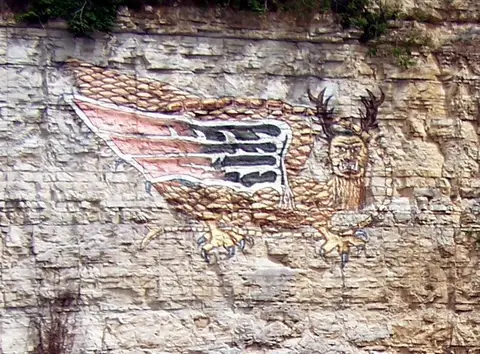
The Thunderbird is first of all a sacred figure in many Indigenous nations: the Lakota Wakíŋyaŋ, the Ho-Chunk Thunderbird clan, and the great crest birds of Northwest Coast art. In cryptozoology, Pennsylvania writers Robert Lyman and Hiram Cranmer made the Black Forest the heartland of thunderbird lore, while Loren Coleman’s research kept the 1977 Lawndale case in print. The missing barn-door photograph has spawned decades of debate, fake recreations and even a 2000 publicity photo for the TV series FreakyLinks that was widely mistaken for the real thing.
Places to visit
The rugged forest region where most Pennsylvania thunderbird stories were collected, now known for dark skies and elk viewing.
Watch
 ARCHIVE.ORG1:33
John Huffer Thunderbird Footage
John Huffer (Internet Archive upload)The original July 1977 Illinois film of large birds that many cryptozoologists cite – judge for yourself whether they are vultures.
Where it’s reported
Arizona Illinois Pennsylvania South Dakota Texas
Thunderbird in the news
No recent headlines about the Thunderbird. Our news desk checks every day — see all cryptid news.
Sources
First published · Updated