FIELD FILE · LA-LLORONASPECTRALFOLKLORE
La Llorona
Also known as The Weeping Woman, The Wailing Woman, Chokani (Nahuatl: “the one who cries”)
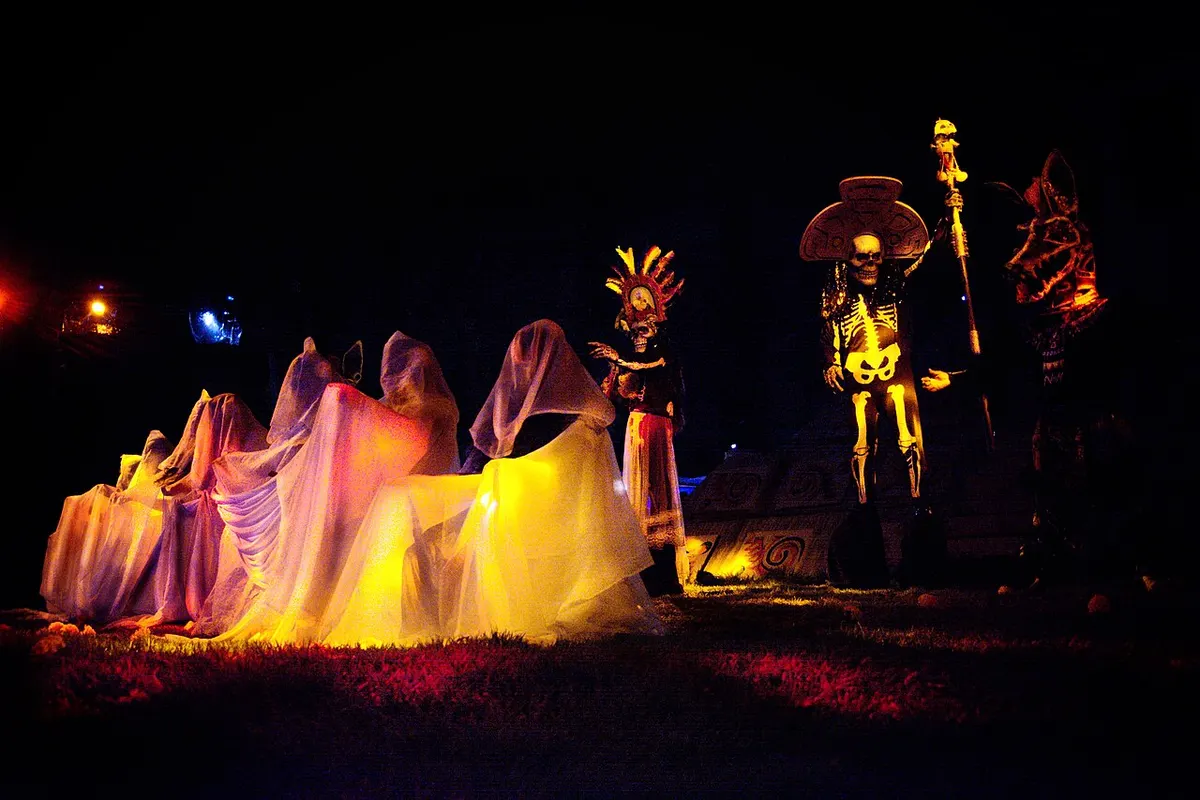
A weeping ghost in white who wanders rivers and canals at night crying for the children she lost – Mexico’s most famous and most widely told legend.
La Llorona, “the Weeping Woman,” is the best-known apparition in the Spanish-speaking Americas. In the most familiar version, a young woman abandoned by the man she loved drowns her own children in a fit of grief or rage, then dies of remorse and is condemned to wander the waterways searching for them. People who hear her long cry – usually rendered as “¡Ay, mis hijos!” (“Oh, my children!”) – near a river, lake or canal at night are said to be in danger, and generations of parents have used her to keep children away from the water after dark.
The legend’s roots run deep into Mexico’s past. The Florentine Codex, compiled by Fray Bernardino de Sahagún with Nahua scholars in the sixteenth century, lists a series of omens said to have foretold the Spanish conquest; the sixth is a woman heard weeping and crying out through the night, lamenting that her children must go far away. Many writers connect this figure with Cihuacōātl, the Nahua “serpent woman” goddess associated with childbirth and mourning, although scholars caution that the colonial legend blends many sources, including European tales of drowned children and ghostly women in white.
During the colonial period and after, storytellers often merged La Llorona with La Malinche, the Nahua woman who interpreted for Hernán Cortés, turning the ghost into a symbol of betrayal, conquest and mestizo identity. In Mexico City the apparition was long said to cross the old plazas and canals at midnight, and dozens of local variants grew up from northern Mexico to Central America, Colombia and Venezuela – each with its own river, its own reasons for her grief and its own warnings.
Migration carried the story north, and La Llorona is now as familiar in Texas, New Mexico, Arizona and California as in Mexico itself. She has inspired a famous folk song, popularized in the twentieth century and sung in Pixar’s Coco (2017), and a long line of films, from the Mexican La Llorona of 1933 to the Hollywood horror film The Curse of La Llorona and Jayro Bustamante’s acclaimed Guatemalan drama La Llorona, both released in 2019 – the latter reimagining her as a witness to the Guatemalan genocide.
La Llorona is not a cryptid in the zoological sense; she belongs to the world of ghosts and moral tales. She is included here because, like the region’s cryptids, she is “reported” – people across the Americas tell of hearing her cry – and because no other figure better shows how a legend can carry history, grief and social warning across five centuries.
- Type
- Spectral
- Status
- Folklore
- First reported
- 16th century
- Best-known location
- Canals of Xochimilco, Mexico City
- Also called
- The Weeping Woman, The Wailing Woman, Chokani (Nahuatl: “the one who cries”)
- Reported in
- New Mexico Texas Mexico Venezuela Nicaragua Costa Rica Guatemala El Salvador Honduras Panama Colombia Ecuador
What witnesses describe
A tall, thin woman in a long white dress or nightgown, with long black hair often hiding her face; some versions give her a horse’s or skull-like face beneath the veil. She seems to float rather than walk and is usually known first by her wailing cry, which is said to sound far away when she is close and close when she is far away.
Where and when it’s seen
Riverbanks, lakes, irrigation ditches, canals and arroyos, especially at night and around midnight. In Mexico City she is tied to the old lake and canal system, above all Xochimilco; in the US Southwest to rivers such as the Rio Grande and Santa Fe River.
Notable sightings
- c. 1577The sixth omen of the <em>Florentine Codex</em> Tlatelolco, New Spain (Mexico City)
Sahagún’s encyclopedic work on Nahua culture records a woman heard crying through the night as one of the omens before the conquest. It is the earliest written source usually linked to the legend.
- 1933First La Llorona film Mexico
La Llorona, directed by Ramón Peón, was one of the first Mexican sound-era horror films and fixed the ghost’s image for the screen.
- 1993The Xochimilco performance begins Cuemanco, Xochimilco, Mexico City
A floating show of music, dance and theater about La Llorona was first staged on the lake at Cuemanco. It has returned season after season for more than three decades, with audiences watching from trajinera boats.
- 2019Two new films Hollywood and Guatemala
Warner Bros. released the horror film The Curse of La Llorona, while Jayro Bustamante’s Guatemalan La Llorona premiered internationally and used the legend to address the country’s civil-war atrocities.
What could explain it?
- Folklorists see La Llorona as a cautionary tale that keeps children away from dangerous water at night and enforces moral codes around motherhood, courtship and abandonment.
- The legend blends Nahua ideas (omens of conquest, Cihuacōātl and other female deities) with European traditions of ghostly “white ladies” and drowned children, creating a distinctly mestizo story.
- Reported cries are often attributed to animals – foxes, owls, cats and nightbirds can produce sounds that resemble a woman wailing – or to wind in reeds and culverts.
- Sightings follow the classic pattern of expectation and suggestion: people who grew up with the story interpret ambiguous night-time sights and sounds near water as the Weeping Woman.
Legend, culture and tourism
La Llorona appears in Day of the Dead altars, school plays, ballads, novels (including Sandra Cisneros’ “Woman Hollering Creek”), films and theme-park attractions. The song “La Llorona,” a staple of Mexican folk repertoire, has been recorded by Chavela Vargas, Lila Downs and many others. Each autumn the canals of Xochimilco host a famous staged version performed on the water.
Places to visit
A seasonal night-time show of music, dance and theater staged on the lake, watched from trajinera boats, usually in October and November.
Watch
 ARCHIVE.ORG3:04
La Llorona
Pikes Peak Library DistrictA short 2010 storytelling segment from a Colorado public library’s community TV channel – a good example of how the legend is told in the US Southwest.
 ▶ VIDEO
The Legend of La Llorona
Monstrum | PBS StoriedFolklorist Emily Zarka explains the legend’s Nahua and colonial roots and its many regional versions.
Where it’s reported
New Mexico Texas Mexico Venezuela Nicaragua Costa Rica Guatemala El Salvador Honduras Panama Colombia Ecuador Peru Mexico City
La Llorona in the news
No recent headlines about the La Llorona. Our news desk checks every day — see all cryptid news.
Sources
First published · Updated