FIELD FILE · MINNESOTA-ICEMANHOMINIDHOAX / DEBUNKED
Minnesota Iceman
Also known as Siberskoye Creature, Homo pongoides, The Iceman
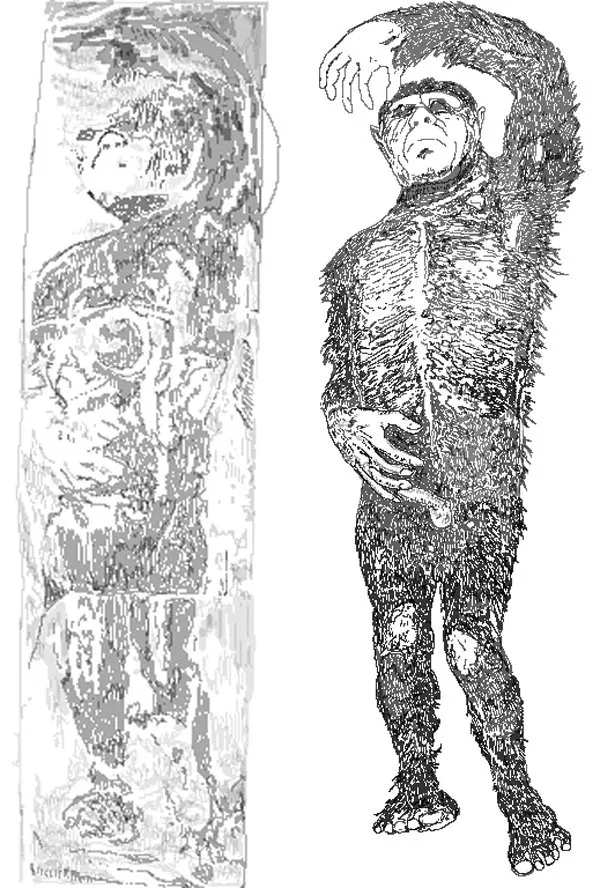
A hairy “ape-man” frozen in a block of ice, toured at 1960s fairs by showman Frank Hansen – hailed as a new species, then exposed as a latex model.
The Minnesota Iceman was a sideshow exhibit of the late 1960s: a six-foot, hairy, human-like body lying in a block of ice inside a glass-topped freezer. Showman Frank D. Hansen toured it around shopping malls, state fairs and livestock shows, charging visitors a few cents to peer at what he billed as a mysterious frozen creature. For a few months it became the most talked-about specimen in cryptozoology.
Its fame came from two of the founders of the field. In late 1968 a University of Minnesota naturalist, Terry Cullen, saw the exhibit at the International Livestock Exhibition in Chicago and alerted the writer Ivan T. Sanderson. On December 17, 1968, Sanderson and the Belgian-French zoologist Bernard Heuvelmans spent time studying the figure through the ice. Both came away convinced it was a real corpse. Heuvelmans formally described it in a Belgian scientific bulletin as a new species of relict human, Homo pongoides, and Sanderson promoted it in Argosy magazine in 1969.
The publicity drew the Smithsonian Institution. Its secretary, S. Dillon Ripley, raised the possibility with the FBI that a human body was being carried across state lines, and primatologist John Napier tried to examine the exhibit. Hansen then announced that the owner – an anonymous “California millionaire” – had reclaimed the original and that he was now showing a model. Napier concluded there had only ever been one latex figure, and in June 1969 the Smithsonian declared it a carnival gaff made of rubber and hair, reportedly built by West Coast exhibit makers for about $3,500.
Hansen kept the mystery going for years, offering at least three different origin stories over the years. The figure later sat in storage in Cottage Grove, Minnesota, until it was sold in 2013 to Steve Busti, owner of the Museum of the Weird in Austin, Texas. When the ice melted during the trip – filmed for A&E’s Shipping Wars – the rubber face and raised arm were plainly visible.
The Iceman remains a classic cautionary tale: a cheap sideshow attraction that briefly fooled two respected cryptozoologists, viewed only through frosted ice and glass, and promoted by a showman who profited from the doubt.
- Type
- Hominid
- Status
- Hoax / debunked
- First reported
- 1968
- Best-known location
- Traveling carnival exhibit; later stored in Cottage Grove, Minnesota
- Also called
- Siberskoye Creature, Homo pongoides, The Iceman
What witnesses describe
A male, roughly 6-foot human-like figure covered in dark brown hair 3–4 inches long, with large hands and feet, a flattened, upturned nose and a heavy face. One arm was raised over the head and one eye appeared to have been knocked out, as if the creature had been shot.
Where and when it’s seen
Not a wild cryptid: the Iceman was a traveling exhibit shown at fairs, malls and livestock shows in the United States and Canada from the late 1960s into the 1970s. Hansen’s accounts of where it came from – including Siberia – kept changing.
Notable sightings
- November 1968A naturalist sees the exhibit International Livestock Exhibition, Chicago
Terry Cullen paid admission to see Hansen’s frozen “ape-man” and became convinced it was a real body. He contacted Ivan T. Sanderson, setting the investigation in motion.
- December 17, 1968Sanderson and Heuvelmans examine the Iceman Hansen’s base in the Upper Midwest
Ivan T. Sanderson and Bernard Heuvelmans studied and photographed the figure through ice and glass. Heuvelmans went on to publish it as Homo pongoides, a new hominid species, in a Belgian scientific bulletin.
- June 1969The Smithsonian calls it a model Washington, D.C.
After John Napier’s inquiry, the Smithsonian’s staff newsletter reported that the Iceman was a latex-and-hair exhibit commissioned from West Coast model makers. Hansen himself had already begun calling the exhibit a model.
- February 2013Sold to a Texas museum Cottage Grove, Minnesota, to Austin, Texas
The Iceman was reportedly auctioned on eBay and bought by Steve Busti of the Museum of the Weird. As the ice melted in transit, its latex face was clearly exposed.
What could explain it?
- The Smithsonian concluded in 1969 that the exhibit was a latex-and-hair model made by professional exhibit builders.
- It was only ever examined through frosted ice and glass; no tissue, bone or hair sample was ever tested.
- Hansen repeatedly changed his story, profited from the mystery, and himself described the exhibit as a model.
- Photos compared by Sanderson showed the same ice and freezer before and after the supposed ‘switch’, and Heuvelmans later called the model “the same and only specimen.”
Legend, culture and tourism
The Iceman became a staple of cryptozoology books and TV, appearing on Unsolved Mysteries, Mysteries at the Museum, Shipping Wars and In Search of Monsters. Since 2013 it has been displayed at the Museum of the Weird in Austin, Texas, a dime-museum-style attraction in the old sideshow tradition.
Places to visit
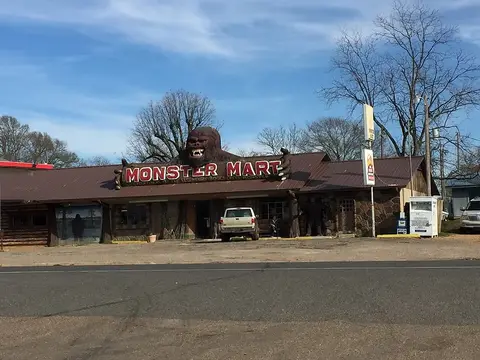
The quirky museum where the Minnesota Iceman is now displayed.
Watch
 ARCHIVE.ORG8:55
Episode 49: Bigfoot Discovery Museum Show
Bigfoot Discovery Museum (via blip.tv archive)Michael Rugg of the Bigfoot Discovery Museum in Felton, California, talks about the Minnesota Iceman.
 ▶ VIDEO
Thawing the Minnesota Iceman
Skeptoid MediaA concise, evidence-based history of the hoax from the Skeptoid science podcast.
 ▶ VIDEO
The Minnesota Iceman (In Search of Monsters)
Travel ChannelA TV segment featuring the exhibit and its current owner.
Where it’s reported
Minnesota Iceman in the news
No recent headlines about the Minnesota Iceman. Our news desk checks every day — see all cryptid news.
First published · Updated