FIELD FILE · JERSEY-DEVILFLYINGREGIONAL LEGEND
Jersey Devil
Also known as Leeds Devil, Devil of Leeds, Hoodle-Doodle Bird, Wozzle Bug
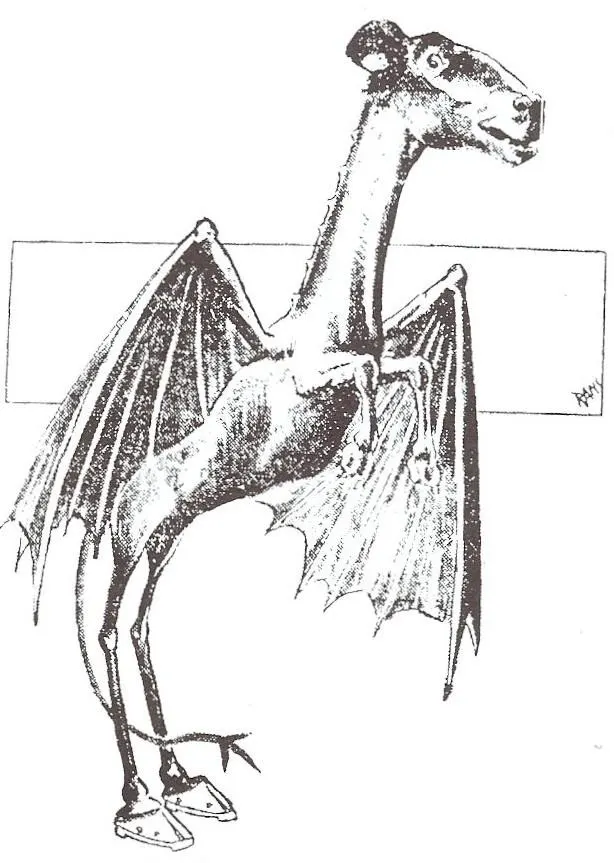
A winged, hoofed devil said to have been born to “Mother Leeds” in the Pine Barrens, and the star of a week of panic across South Jersey in January 1909.
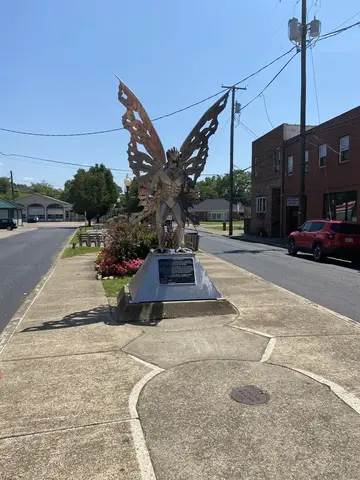
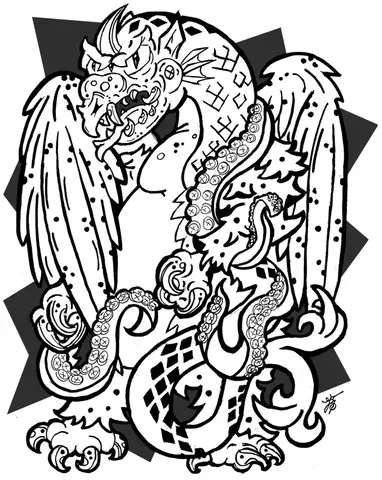
The Jersey Devil is New Jersey’s signature monster: a winged, hoofed creature said to haunt the Pine Barrens, the vast belt of sandy soil, pitch pine, cedar swamp and cranberry bog that covers roughly a fifth of the state. Witnesses and storytellers usually picture it as a two-legged beast about the size of a person, with a horse- or goat-like head, leathery bat wings, clawed hands, cloven hooves and a forked tail – and a scream loud enough to freeze anyone walking the sand roads at night.
The best-known origin tale is set in 1735 at Leeds Point, on the salt marshes of what is now Galloway Township in Atlantic County. A woman known as Mother Leeds, already the mother of twelve, learned she was expecting a thirteenth and – in the most common telling – cried that this one might as well be the devil. The baby was born normal, the story goes, then sprouted wings, horns and a tail, lashed out at the people in the room and escaped up the chimney into the pines. Other versions blame a witch’s bargain, a curse laid by a clergyman, or a liaison with a British soldier during the Revolution, and some names the family Shourds rather than Leeds.
Historians point to a real family behind the name. Daniel Leeds, a Quaker who settled in Burlington in the 1670s and later acquired the land that became Leeds Point, published almanacs with astrological content that his Quaker neighbors condemned as diabolical. His son Titan Leeds ran a rival almanac to Benjamin Franklin’s, and Franklin famously mocked him in print, “predicting” his death and later teasing him as a ghost. The Leeds family crest even carried a wyvern, a winged dragon. Brian Regal of Kean University argues that a century of political and religious mudslinging turned the family into “Leeds devils,” and that the name later attached itself to a monster; printed references to a “Jersey Devil” as such do not appear until the 20th century.
The legend’s defining moment came in the week of January 16–23, 1909. After hoof-like tracks were reported in fresh snow and a Trenton councilman said he had heard wings beating outside his window, newspapers in Philadelphia and South Jersey printed report after report: a winged creature on rooftops, an “attack” on a Haddon Heights trolley car, police in Camden and in Bristol, Pennsylvania, firing at it. Schools in some towns closed, some workers stayed home, posses combed the woods, and claims spread into Pennsylvania and Delaware. A Philadelphia dime museum soon displayed a “captured” Jersey Devil that was really a kangaroo fitted with fake wings, and the frenzy faded almost as fast as it began.
Sightings never entirely stopped – reports followed in the 1920s, 1950s and 1960s, and in 1960 Camden merchants offered a $10,000 reward for the creature’s capture that was never claimed. Today the Jersey Devil is less a fear than a badge of state identity: it gave its name to New Jersey’s NHL team and a Six Flags roller coaster, it features in countless books and campfire tales, and the Pine Barrens themselves – now protected as the Pinelands National Reserve – remain the place people go to listen for that scream.
- Type
- Flying
- Status
- Regional legend
- First reported
- 1735
- Best-known location
- Pine Barrens, southern New Jersey
- Also called
- Leeds Devil, Devil of Leeds, Hoodle-Doodle Bird, Wozzle Bug
- Reported in
- Delaware New Jersey Pennsylvania
What witnesses describe
Usually described as a biped three to six feet tall with a long neck and a horse-, goat- or dog-like head, sometimes horned; leathery bat-like wings; short arms with clawed hands; long hind legs ending in cloven hooves; and a forked or barbed tail. Many accounts mention glowing red eyes, a foul smell, and a piercing, almost human scream. In 1909 some witnesses compared it to a “winged kangaroo.”
Where and when it’s seen
The Pine Barrens of southern New Jersey – pine and oak forest, cedar swamps, bogs and lonely sand roads – especially around Leeds Point, Mays Landing, Chatsworth and the Wharton State Forest. Reports cluster at night and in winter, when tracks show in snow; the 1909 wave reached the towns of the Delaware Valley.
Notable sightings
- 1840–1841Livestock killings blamed on the Devil South Jersey
A run of attacks on livestock was put down to the Leeds Devil, and later reports in 1841 added strange tracks and screams. These episodes show the legend was already familiar locally long before 1909.
- Late January 1909The kangaroo hoax Arch Street dime museum, Philadelphia
A Philadelphia showman exhibited a “captured” Jersey Devil that was actually a kangaroo painted and fitted with fake wings. Publicist Norman Jeffries reportedly admitted years later that he had helped stage it and planted stories.
- January 16–23, 1909The week of the Jersey Devil Trenton, Camden, Haddon Heights, Gloucester and across the Delaware Valley
Newspapers reported hundreds of claimed encounters in a single week, from hoofprints in the snow and a Trenton councilman’s tale of flapping wings to a creature supposedly menacing a trolley in Haddon Heights. Police were said to have fired on it in Camden and Bristol, Pennsylvania, and some schools closed and workers stayed home while hunting parties searched the woods.
- 1951Gibbstown boys’ sighting Gibbstown, New Jersey
A group of boys reported seeing a monster matching the Jersey Devil’s description, briefly reviving the scare in Gloucester County.
- 1960Mays Landing tracks and a $10,000 reward Mays Landing and Camden, New Jersey
Strange tracks and shrieks near Mays Landing were blamed on the Devil, and Camden merchants offered $10,000 for its capture, promising to build it a private zoo. The reward was never claimed.
- 1978Red eyes near Chatsworth Chatsworth, Pine Barrens
According to a local historian, two boys from Chatsworth reported a smell like dead fish and a pair of red eyes watching them from the forest. They ran off without investigating.
What could explain it?
- Historians such as Brian Regal trace the “Leeds Devil” to colonial-era attacks on the Leeds family – Quaker condemnation of Daniel Leeds’s almanacs and Benjamin Franklin’s mockery of Titan Leeds – rather than to any animal.
- The 1909 wave is widely cited by historians of mass hysteria, including Robert Bartholomew, as a newspaper-driven panic: competing papers printed ever more dramatic claims, which prompted more reports.
- Many of the 1909 “devil tracks” resembled horse or other animal hoofprints distorted by thawing and refreezing snow, and at least one man later admitted faking prints.
- Night-time screams in the Pine Barrens are readily explained by barn owls, red foxes, bobcats and great blue herons; large birds such as sandhill cranes or herons seen in poor light may account for winged sightings.
- A legend of a deformed child, interpreted through 18th-century superstition about birth defects, may lie at the root of the Mother Leeds story.
Legend, culture and tourism
The Jersey Devil is New Jersey’s unofficial mascot. The NHL’s New Jersey Devils took the name in 1982 after a public vote, following the minor-league Jersey Devils of the 1960s and ’70s, and Six Flags Great Adventure in Jackson runs the Jersey Devil Coaster. The creature is a fixture of Pine Barrens folklore collected by writers such as John McPhee, of Weird NJ magazine, of local craft beers and festivals, and of the Pinelands’ own storytelling tradition; some writers have also suggested links to Lenape beliefs about forest spirits.
Places to visit
The largest single tract of the Pine Barrens, with Batsto Village, sand roads and canoe rivers at the heart of Jersey Devil country.
The traditional birthplace of the Devil, on the edge of the Edwin B. Forsythe National Wildlife Refuge salt marshes; the supposed Leeds house site is on private land.
Where it’s reported
Delaware New Jersey Pennsylvania
Jersey Devil in the news
No recent headlines about the Jersey Devil. Our news desk checks every day — see all cryptid news.
Sources
First published · Updated