STATE FILE · CA
Cryptids of California
What cryptids are in California? The best-known are Bigfoot, Tahoe Tessie, Chupacabra and Batsquatch, among 5 on file.
Modern Bigfoot was born in California. In August 1958, road-builder Jerry Crew found giant humanlike footprints around his bulldozer at Bluff Creek in Six Rivers National Forest; the Humboldt Times ran his plaster cast and popularized the name “Bigfoot.” Nine years later, in October 1967, Roger Patterson and Bob Gimlin filmed their famous footage of a dark, upright figure striding along the same creek. Those two events turned the forests of Humboldt, Del Norte, Trinity and Siskiyou counties into the world’s most famous Bigfoot country.
Cryptids reported in California
 HOMINID · 1958
Bigfoot
Pacific Northwest forests, reported across North America
North America’s most famous cryptid: a huge, hairy, upright ape-like being reported from the Pacific Northwest to Florida since the 1958 “Bigfoot” tracks.
WIDELY REPORTED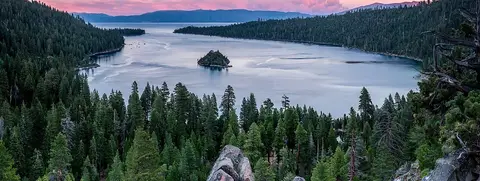 LAKE & SEA MONSTER · 1865
Tahoe Tessie
Lake Tahoe, California–Nevada border
A humped, serpent-like monster said to glide through the deep, cold water of Lake Tahoe – the Sierra Nevada’s friendly answer to Nessie.
REGIONAL LEGEND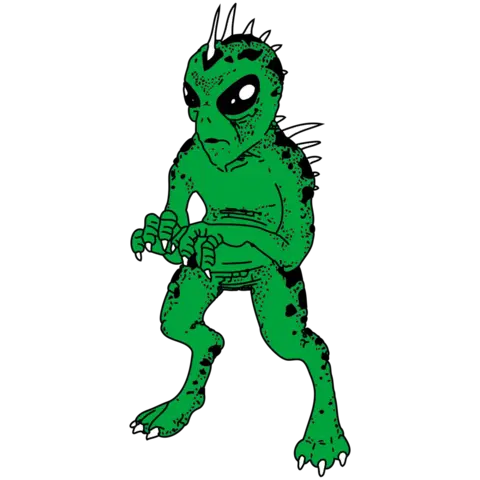 OTHER · 1995
Chupacabra
Canóvanas, Puerto Rico
The “goat-sucker” of 1990s Puerto Rico: a spiny, bloodsucking beast blamed for livestock deaths that spread across Latin America and Texas.
WIDELY REPORTED FLYING · 1994Batsquatch
Foothills of Mount Rainier, Pierce County, Washington
A winged, ape-like creature with blue-tinged fur said to have landed in front of a stalled pickup near Mount Rainier in 1994 – part bat, part Sasquatch.
LOCAL LEGEND HUMANOID · 1820sTommyknockers
Gold and silver mines of Colorado’s Front Range, around Idaho Springs and Central City
Little mine spirits brought from Cornwall to the American West, said to knock in Colorado’s gold and silver mines – warning, teasing or guiding the miners.
FOLKLOREThe legends of California
Towns in the region have made the creature part of their identity. Willow Creek bills itself as the “Bigfoot Capital of the World,” has held a Bigfoot Days parade and festival each Labor Day weekend since the 1960s, and has a large Bigfoot collection at the Willow Creek–China Flat Museum; nearby, State Route 96 is signed as the Bigfoot Scenic Byway. Farther south, the Bigfoot Discovery Museum in Felton, in the Santa Cruz Mountains, draws visitors to a cabin full of casts, maps and memorabilia. Mount Shasta, meanwhile, has its own mystical lore of hidden beings and lost civilizations.
California’s lakes and deserts add other legends: “Tessie” in Lake Tahoe on the Nevada border, Elsie in Lake Elsinore, and Chupacabra scares in the 1990s and 2000s. Skeptics point to black bears standing upright, hoaxed footprints (Ray Wallace’s family said after his 2002 death that he had faked tracks at Bluff Creek), and the challenge of an unknown ape leaving no bones. The redwoods and mountains of the far north remain the pilgrimage site for Bigfoot enthusiasts worldwide.
Hotspots
Site of the 1958 footprints that named Bigfoot and the 1967 Patterson–Gimlin film.
Self-styled Bigfoot Capital of the World, with a Bigfoot statue, museum collection and Bigfoot Days festival.
A winding route along the Klamath River through the heart of northern California’s Bigfoot country.
The deep alpine lake on the Nevada line where “Tessie” is said to swim.
Home of the Bigfoot Discovery Museum and local redwood-forest sighting stories.
Sightings timeline
- 1865A giant serpent tale Tahoe Tessie
According to a much-repeated account, a San Francisco visitor named I. C. Coggin described a serpent with an enormous head and a body hundreds of feet long. The original source is obscure, and the story reads like a frontier tall tale.
- October 6, 1958“Bigfoot” gets its name Bigfoot
After bulldozer operator Jerry Crew found giant footprints around his logging road in August, the Humboldt Times printed his photo with a plaster cast on its front page. Columnist Andrew Genzoli’s use of the crew’s nickname, “Big Foot”, went national within days.
- October 20, 1967The Patterson–Gimlin film Bigfoot
Roger Patterson and Bob Gimlin filmed a dark, hair-covered figure walking along a creek bed, which turns its head toward the camera before disappearing into the trees. Frame 352 became the world’s most recognisable Bigfoot image; the film has never been conclusively authenticated or debunked.
- 1980sA rash of modern sightings Tahoe Tessie
Hikers, local law enforcement and others reported dark shapes and wakes; a local TV station owner said children shouted “It’s Tessie!” during a commercial shoot at Zephyr Cove, but the footage was reportedly lost. Around the same time a University of Nevada, Reno conference on “unidentified swimming objects” discussed the claims.
- Mid-1980sMickey Daniels’s V-shaped wave Tahoe Tessie
Veteran charter captain and former Placer County officer Mickey Daniels said he and a passenger watched a wave split into a huge V half a mile offshore, with no boat to explain it. He told the Los Angeles Times about it in 2005.
- April 2005Humps off Tahoe Park Beach Tahoe Tessie
Two visitors reported a dark, undulating shape with three to five humps about 100 yards offshore. They took no photographs, and the sighting was reported in the Tahoe Daily Tribune.
- May 2022Divers circle the lake – no monster Tahoe Tessie
Volunteer divers with the nonprofit Clean Up the Lake finished a year-long survey of the entire shoreline, removing about 25,000 pounds of litter. The Associated Press reported they found no trace of Tessie.
Latest from California
No recent cryptid headlines from California. See all the latest cryptid news.
Videos
 ARCHIVE.ORG3:07
Patterson–Gimlin film (unedited)
Roger Patterson and Bob GimlinThe original 1967 Bluff Creek footage – the most famous and most debated minute in Bigfoot history. Marked public domain on archive.org.
 ARCHIVE.ORG4:59
The Film That Made Bigfoot A Star
Oregon Public BroadcastingOPB’s short documentary on how the Patterson–Gimlin film turned a regional legend into a global icon – and the hoax claims around it.
 ▶ VIDEO
Sts’ailes Sasquatch Days in Harrison Hot Springs
Tourism Harrison River ValleyShows the festival celebrating the Sts’ailes people’s Sásq’ets, the being behind the word “Sasquatch” (no archive.org equivalent).
 ▶ VIDEO
El Chupacabras, a Modern Mystery
Monstrum | PBS StoriedFolklorist Emily Zarka traces both the Puerto Rican and the Texas chupacabra and the real explanations behind them.