FIELD FILE · TAILYPOOTHERFOLKLORE
Tailypo
Also known as Tailipoe, Taileybone, Tailbones
Star of a classic Appalachian and African American scary story: a creature whose tail is cut off and eaten, and who comes back to get it.
The Tailypo is not a creature anyone claims to have seen – it is the monster of one of the best-loved scary stories in the American South. In the usual telling, an old man living alone in a cabin in the woods with his hounds goes hungry after a poor day of hunting. That night a strange, furry creature with a long tail creeps in through a crack in the wall. The man chops off the tail, cooks it and eats it, and goes to bed with a full stomach.
Then the scratching begins, and a voice in the dark asks, “Tailypo, tailypo, all I want’s my tailypo.” Each time, the man sends one of his dogs after the creature, and each time a dog fails to return – in some versions they are named Uno, Ino and Cumptico-Calico. At last the creature comes to the man’s bed. In the gentler versions, all that remains of the cabin the next morning is the chimney; in the grimmer ones, the man is torn to pieces. Either way, on windy nights you can still hear the creature whispering that it has got its tailypo back.
The story belongs to a wider family of “give me back my…” tales – a close cousin is “The Big Toe,” in which someone eats a toe dug up in the garden and its owner comes to reclaim it. Folklorists have collected many African American versions of “Tailypo,” as well as versions identified specifically with Appalachia. Kentucky collector Leonard Roberts recorded “Tailipoe” from mountain storytellers in the 1950s, and one of those tellers, Jane Muncy Fugate, was still telling it to folklorist Carl Lindahl nearly half a century later.
Because it is short, rhythmic and built around a scary call-and-response, “Tailypo” became a favorite of storytellers, teachers and campfire tellers. Scholars read it partly as a tale about hunger and isolation in the hills and partly as a warning against mistreating animals. It reached a national audience through children’s picture books, including Joanna and Paul Galdone’s The Tailypo: A Ghost Story (1977) and Jan Wahl’s Tennessee-set Tailypo! (1991).
- Type
- Other
- Status
- Folklore
- First reported
- 1950s
- Best-known location
- Appalachian and Southern storytelling tradition
- Also called
- Tailipoe, Taileybone, Tailbones
What witnesses describe
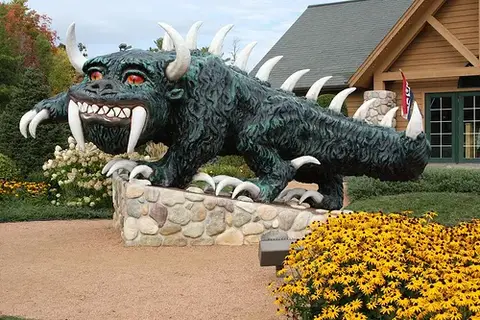
A small-to-medium furry animal with bright, glowing eyes, sharp claws and a long tail – one illustrated Kentucky version gives it monkey- and squirrel-like features. After losing its tail it is described only by its scratching and its whispering voice.
Where and when it’s seen
Lonely cabins deep in the woods and hills; the creature creeps in through cracks in the walls or holes in the floor on dark, windy nights, often in late autumn or winter.
Notable sightings
- 1954Recorded in the Kentucky hills Kentucky
Folklorist Leonard Roberts recorded a version of “Tailipoe” about a man living alone “way back in the hills of Kentucky,” later published in his collection Old Greasybeard: Tales from the Cumberland Gap (1969).
- 1955Jane Muncy’s telling Kentucky
Roberts recorded Kentucky storyteller Jane Muncy telling “Tailipoe.” Folklorist Carl Lindahl recorded her telling it again in 2001, and both versions appeared in American Folktales from the Collections of the Library of Congress (2004).
- 1977The Tailypo: A Ghost Story New York
Joanna Galdone’s picture book, illustrated by Paul Galdone, brought the tale of the old woodsman and his three dogs to children across the country; a ten-minute video version was also made.
- 1991Jan Wahl’s Tailypo! Tennessee (setting)
Wahl’s African American version, illustrated by Wil Clay and set in Tennessee, gave the story a darker ending, in which the creature devours the old man.
What could explain it?
- The Tailypo is a fictional creature from oral storytelling, not a reported animal; the tale is told for entertainment and to deliver a scare.
- It belongs to an internationally known story type in which someone takes part of a creature or corpse and its owner returns to claim it.
- The tale is told in both African American and white Appalachian communities, reflecting the shared and mixed roots of Southern storytelling.
- Its themes of hunger, isolation and cruelty to animals mirror real anxieties of life in remote mountain communities.
Legend, culture and tourism
“Tailypo” is a staple of Appalachian and Southern storytelling festivals, school libraries and Halloween campfires. Collected by folklorists for Kentucky archives and the Library of Congress, it lives on in picture books, recordings by professional storytellers and countless retellings.
Where it’s reported
Tailypo in the news
No recent headlines about the Tailypo. Our news desk checks every day — see all cryptid news.
Sources
First published · Updated