COUNTRY FILE · NORTH AMERICA
Cryptids of Canada
What cryptids are in Canada? The best-known are Ogopogo, Bigfoot, Cadborosaurus and Memphré, among 11 on file.
Canada is lake-monster country. Glaciers scoured the land into tens of thousands of long, deep, cold lakes, and almost every region seems to have one with a creature of its own. The most famous is Ogopogo of British Columbia’s Okanagan Lake – a settler name for a much older being, nx̌aʔx̌ʔitkʷ, sacred to the Syilx people – but there is also Memphré in Lake Memphremagog on the Quebec–Vermont border, reported since 1816, and Igopogo in Ontario’s Lake Simcoe, whose “Kempenfelt Kelly” nickname nods to Barrie’s waterfront. On the Pacific coast, the horse-headed sea serpent Cadborosaurus, or “Caddy,” has been a Victoria favourite since a newspaper named it in 1933.
Cryptids reported in Canada
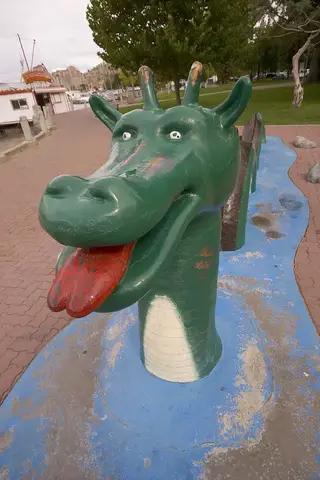 LAKE & SEA MONSTER · Pre-colonial
Ogopogo
Okanagan Lake, British Columbia
Canada’s most famous lake monster: a long, humped serpent said to swim Okanagan Lake, rooted in the Syilx being nx̌aʔx̌ʔitkʷ, spirit of the lake.
WIDELY REPORTED HOMINID · 1958
Bigfoot
Pacific Northwest forests, reported across North America
North America’s most famous cryptid: a huge, hairy, upright ape-like being reported from the Pacific Northwest to Florida since the 1958 “Bigfoot” tracks.
WIDELY REPORTED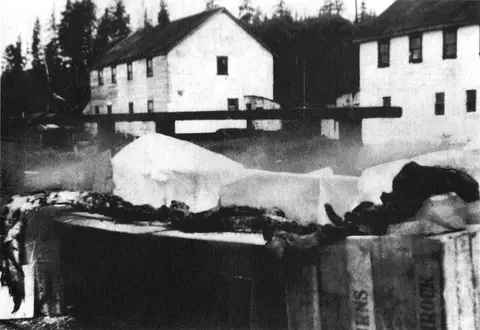 LAKE & SEA MONSTER · 1933
Cadborosaurus
Cadboro Bay and the Salish Sea, off Victoria, British Columbia
“Caddy,” the horse-headed sea serpent of British Columbia’s coast, named in 1933 after Victoria’s Cadboro Bay and still reported in the Salish Sea.
WIDELY REPORTED LAKE & SEA MONSTER · 1816Memphré
Lake Memphremagog, Magog (Quebec) to Newport (Vermont)
The horse-headed serpent of Lake Memphremagog, a border lake shared by Quebec and Vermont, reported since 1816 and adopted as Magog’s friendly mascot.
REGIONAL LEGEND SPECTRAL · Pre-colonialWendigo
Boreal forests of Canada and the northern Great Lakes
A being of winter, hunger and greed from Algonquian traditions – Ojibwe, Cree, Innu and others – whose teachings warn against selfish excess.
FOLKLORE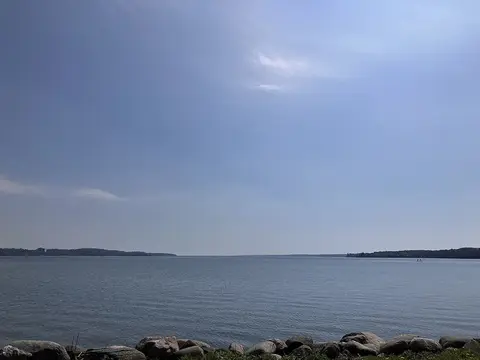 LAKE & SEA MONSTER · 1823
Igopogo
Lake Simcoe, Ontario
Ontario’s answer to Ogopogo: a grey, dog-faced creature reported in Lake Simcoe since settler days, honoured by a sea-serpent sculpture in Barrie.
LOCAL LEGEND LAKE & SEA MONSTER · 1819
Champ
Lake Champlain, New York–Vermont border
A long-necked monster said to live in Lake Champlain, made famous by Sandra Mansi’s 1977 photo and protected by local and state resolutions in the 1980s.
REGIONAL LEGEND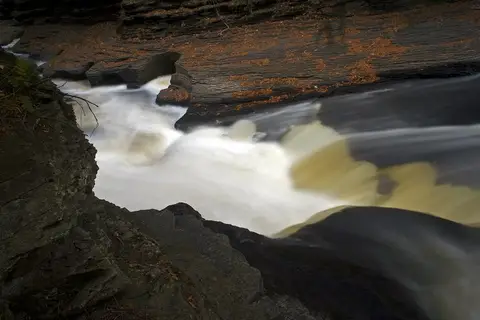 LAKE & SEA MONSTER · 1977
Pressie
Lake Superior, near the Presque Isle River, Michigan
A serpent-like monster said to swim Lake Superior, named for sightings near the Presque Isle River in Michigan’s Porcupine Mountains.
LOCAL LEGEND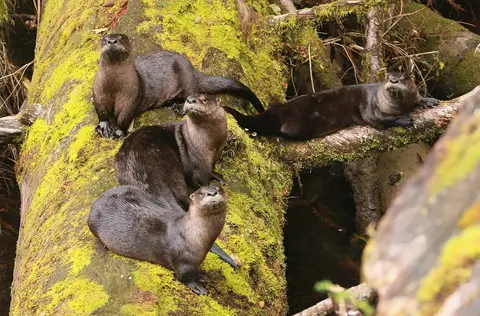 HUMANOID · Pre-colonial
Kushtaka
Southeast Alaska (Tlingit homelands)
The Land Otter Man of Tlingit tradition in Southeast Alaska – a shape-shifting being linked to people lost at sea, later recast by outsiders as a cryptid.
FOLKLORE DOGMAN & CANINE · 1700s (French colonial era)Rougarou
Bayous and cane fields of south Louisiana
South Louisiana’s Cajun werewolf: a cursed shape-shifter of the bayous, born of French loup-garou tales and now the mascot of Houma’s Rougarou Fest.
FOLKLORE HUMANOID · Pre-colonialDeer Woman
Oklahoma and many Native nations of the Plains and Eastern Woodlands
A spirit being of many Native nations who appears as a beautiful woman with deer’s feet, and who punishes men who harm women and children.
FOLKLOREThe legends of Canada
Canada’s forests also gave the world the word “Sasquatch.” It comes from sásq’ets, a being in the traditions of the Sts’ailes people of the Harrison River valley, anglicised by a schoolteacher who published their accounts in Maclean’s in 1929. Across the boreal north, Algonquian-speaking nations such as the Cree, Ojibwe and Innu tell of the Wendigo, a spirit of winter hunger and greed that is a living teaching about restraint rather than a monster to hunt. These traditions deserve to be heard on their own terms, from the communities that hold them.
Shared waters and borders mean Canada shares monsters too: Champ swims Lake Champlain, which reaches into Quebec; Lake Superior’s Pressie is reported along the Ontario shore; French-Canadian loup-garou tales are cousins of Louisiana’s rougarou; and the Tlingit Kushtaka is known in northern British Columbia and the Yukon. For travellers, the classic monster road trip runs from Kelowna’s Ogopogo statue to the Sasquatch country of Harrison Hot Springs, or from Magog’s Memphré sculpture to the shores of Lake Simcoe.
Hotspots
Home of Ogopogo and of the Syilx being nx̌aʔx̌ʔitkʷ, with Kelowna’s famous 1960 Ogopogo statue on the waterfront.
Sts’ailes homeland and the origin of the word Sasquatch, celebrated as Canada’s Sasquatch country.
The Victoria beach that lent its name to Caddy, the sea serpent reported off southern Vancouver Island since the 1930s.
Border lake where Memphré has been reported since 1816; Magog’s lakeside park has a Memphré sculpture.
Cottage-country lake an hour north of Toronto where Igopogo has been reported since the 1820s.
Sightings timeline
- 1823David Soules’s sighting Igopogo
The settler David Soules, tending sheep near the lake, is credited with the first account: a long creature that left a wake on the water and a track in the mud. The story survives through later retellings rather than a contemporary record.
- 1855McDougall’s horses Ogopogo
According to local history, Métis settler John McDougall was swimming his horses across the lake behind his canoe when they were suddenly pulled under. He reportedly cut the ropes to save the canoe – the first settler encounter in the Ogopogo canon.
- 1872Susan Allison’s account Ogopogo
Susan Allison, one of the earliest settler women in the region, wrote about a large, unknown creature in the lake. Her account is often cited as the first detailed description by a European settler.
- August 24, 1882“The Sea Serpent Captured” Igopogo
The Northern Advance ran a sea-serpent story under this headline, one of several 19th-century newspaper items about a strange animal in Lake Simcoe now indexed by the Simcoe County Archives.
- 1952Four witnesses, including a First Nation chief Igopogo
A group of four people, among them Wellington Charles, chief of the Georgina Island First Nation, reported seeing the creature together. The account is one of the most frequently cited Igopogo reports.
- July 24, 1963“Igopogo Looms its Ugly Head” Igopogo
The Barrie Examiner reported that Bradford resident Neil Lathangue and his family had seen the creature while boating near Jackson’s Point, a sighting that made headlines across the county that summer.
- August 1968The Folden film Ogopogo
Home-movie enthusiast Arthur Folden filmed about a minute of footage showing a large, moving object leaving a wake on calm water below Highway 97. It is still called the best film of Ogopogo; a 2005 re-analysis for the National Geographic Channel concluded the object was a real animal but far smaller and closer than first thought.
- 1983The sonar contact Igopogo
A sonar operator, William Skrypetz, reported a reading he interpreted as a large animal with a long neck. Skeptics replied that a school of fish could produce the same trace.
- 1991Japanese television expedition Ogopogo
An expedition financed by Japan’s Nippon Television searched the lake with a remotely operated vehicle and a small submarine, reportedly diving to the deepest part of the lake. No creature, carcass or bones were found.
- Autumn 2011The West Kelowna winery video Ogopogo
Visitor Richard Huls shot a shaky phone video from a winery showing dark shapes in the water and told reporters it was not a wave. Investigator Benjamin Radford noted the footage seemed to show two short objects floating side by side, most likely logs.
- August 2011Memphré on a coin Memphré
The Royal Canadian Mint issued a coloured 25-cent coin featuring an artist’s impression of Memphré, bringing the lake monster national attention.
Latest from Canada
Videos
 ARCHIVE.ORG3:07
Patterson–Gimlin film (unedited)
Roger Patterson and Bob GimlinThe original 1967 Bluff Creek footage – the most famous and most debated minute in Bigfoot history. Marked public domain on archive.org.
 ARCHIVE.ORG4:59
The Film That Made Bigfoot A Star
Oregon Public BroadcastingOPB’s short documentary on how the Patterson–Gimlin film turned a regional legend into a global icon – and the hoax claims around it.
 ▶ VIDEO
Sts’ailes Sasquatch Days in Harrison Hot Springs
Tourism Harrison River ValleyShows the festival celebrating the Sts’ailes people’s Sásq’ets, the being behind the word “Sasquatch” (no archive.org equivalent).
 ARCHIVE.ORG16:46
Cryptid Review Show Episode 1 – Champ
UVMtvA light student-TV overview of the Champ legend made in Burlington, on the lake’s shore.
 ARCHIVE.ORG2:00
Champ Video Discussion
VCAMBurlington community-media participants discuss the 2009 Champ cellphone video.
 ▶ VIDEO
The Legend of Ogopogo: The history of lake monster sighting claims in BC
Global NewsA short news feature tracing the history of sighting claims on Okanagan Lake.