FIELD FILE · CHAMPLAKE & SEA MONSTERREGIONAL LEGEND
Champ
Also known as Champy, Lake Champlain Monster, Tatoskok
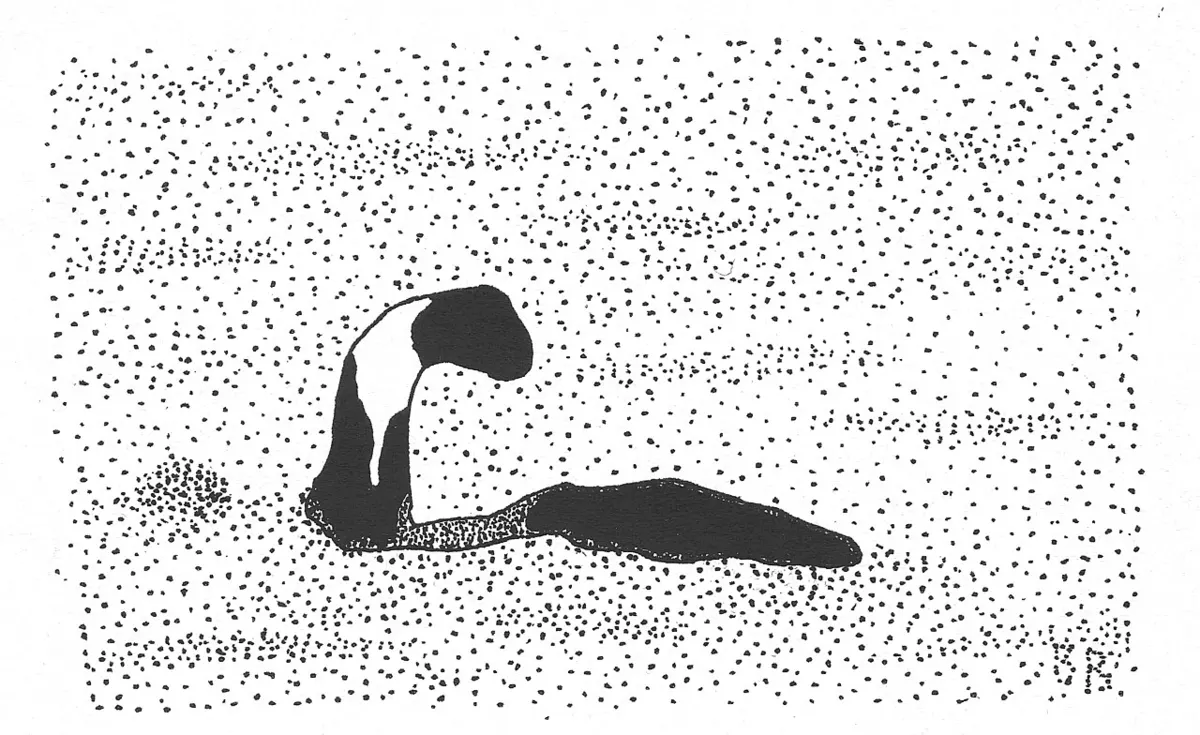
A long-necked monster said to live in Lake Champlain, made famous by Sandra Mansi’s 1977 photo and protected by local and state resolutions in the 1980s.
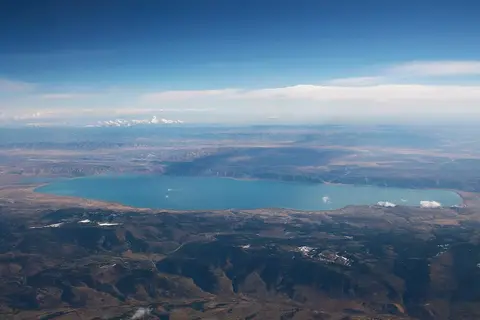
Champ is America’s answer to the Loch Ness Monster: a large, long-necked animal said to swim in Lake Champlain, the 120-mile lake that divides upstate New York from Vermont and reaches north into Quebec. Hundreds of sightings – supporters count more than 300 – describe a dark, humped body and a snake-like head, usually glimpsed briefly on calm water.
Popular accounts often claim that Samuel de Champlain saw the creature in 1609, but that story first appeared in a 1970 magazine article; what Champlain actually described was a large fish, probably the longnose gar. Indigenous peoples of the region – the Abenaki and Haudenosaunee nations – have their own traditions of great water serpents, and the Abenaki name Tatoskok is sometimes used for Champ. Newspaper reports of a serpent in the lake begin in 1819, and in the 1870s and 1880s a run of sightings prompted showman P. T. Barnum to offer a reward for the animal, dead or alive.
The modern legend rests on a single snapshot. On July 5, 1977, Sandra Mansi, picnicking with her fiancé and two children on the Vermont shore – she believed north of St. Albans – photographed what looks like a head and neck rising from the water beside a hump. She kept the picture private for years; when the New York Times published it in June 1981 it became the most discussed lake-monster photo in North America. Analysts found no sign of tampering, but the negative had been lost and the location could never be pinned down.
Champ’s fame produced an unusual political response. Encouraged by researcher Joseph Zarzynski, the village of Port Henry, New York, declared its waters a safe haven for the creature in the early 1980s; the Vermont House of Representatives passed a resolution in 1982 urging protection of Champ from harm, and New York lawmakers followed with their own measure in 1983. The resolutions were symbolic, but they turned Champ into an official piece of regional identity.
Sightings and footage continue to appear, from a 2005 video by two fishermen to a 2009 cellphone clip shot at sunrise in Burlington, and Champ remains a mascot, a tourist draw and a running argument between believers and skeptics on both shores of the lake.
- Status
- Regional legend
- First reported
- 1819
- Best-known location
- Lake Champlain, New York–Vermont border
- Also called
- Champy, Lake Champlain Monster, Tatoskok
What witnesses describe
A dark, serpentine or plesiosaur-like animal estimated at 10 to 30 feet or more, with a small horse- or snake-like head on a long neck and one or more humps showing above the water. Witnesses describe gray, brown or black skin and slow, undulating movement.
Where and when it’s seen
Lake Champlain, a deep, cold glacial lake over 400 feet deep in places. Reports come from both shores, especially Port Henry and Bulwagga Bay in New York and the Burlington and St. Albans areas of Vermont, mostly on calm summer days.
Notable sightings
- 1819First newspaper report Bulwagga Bay, near Port Henry, New York
A newspaper account described a huge serpent seen in the lake, the earliest printed report usually cited for Champ.
- 1883Sheriff Mooney’s sighting Lake Champlain, New York
Clinton County sheriff Nathan Mooney reported seeing a large serpent-like animal, and his account was followed by a rush of further eyewitness reports. P. T. Barnum offered rewards for the creature in 1873 and again in 1887.
- July 5, 1977The Mansi photograph Vermont shore of Lake Champlain, probably north of St. Albans
Sandra Mansi took a single Instamatic photo of what appears to be a long neck and head beside a hump about 150 feet offshore. It was published in the New York Times in 1981; the negative was never found.
- 1980–1983Safe-haven resolutions Port Henry, New York; Montpelier, Vermont; Albany, New York
Port Henry declared its waters off-limits to anyone seeking to harm the creature around 1980–81, the Vermont House passed a protective resolution in 1982, and New York legislators adopted a similar measure in 1983.
- 2005The fishermen’s video Lake Champlain
Two fishermen filmed something moving just below the surface. Reviewers disagreed sharply on what it showed, and one of two retired FBI image analysts who studied it said he could not see an animal.
- May 31, 2009The Oakledge Park cellphone clip Oakledge Park, Burlington, Vermont
Eric Olsen filmed a long, low object moving through the water at about 5:30 a.m. and posted it online, where it drew tens of thousands of views in days.
What could explain it?
- Investigators Benjamin Radford and Joe Nickell argued that the Mansi photo is consistent with a floating tree trunk or root mass; Radford built a scale model showing how a waterlogged stump can mimic a head and neck.
- Large native fish – lake sturgeon up to 6 feet or more and longnose gar – along with swimming deer, otters, beavers and rows of waterbirds can create “humps” on the surface.
- Seiches, boat wakes and standing waves on a long, narrow lake produce moving shapes that are easy to misread from shore.
- A breeding population of large animals would need far more food and far more evidence – carcasses, bones, sonar contacts – than Lake Champlain has ever produced, and the lake was under glacial ice until about 10,000 years ago.
- The story of Champlain’s 1609 sighting, often repeated as proof of an ancient history, is a 20th-century invention.
Legend, culture and tourism
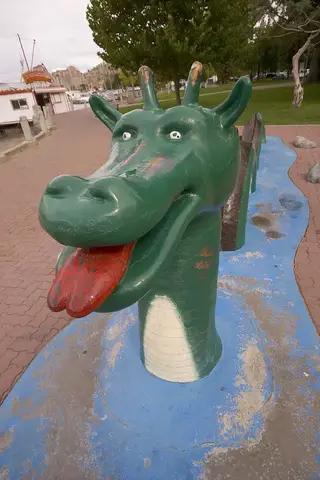
Port Henry, New York, holds an annual Champ Day and displays a large Champ sign and statue near the lakefront; Burlington’s summer baseball team, the Vermont Lake Monsters, uses Champ as its mascot. Abenaki and Haudenosaunee traditions of water serpents form the deeper background to the legend. Champ has inspired books, documentaries, the 2024 independent film Lucy and the Lake Monster and a steady trade in souvenirs on both sides of the lake.
Places to visit
The self-styled home of Champ lists every recorded sighting on a lakeside board and hosts a summer Champ Day.
A science museum on the Burlington waterfront devoted to the lake’s ecology, a good place to meet the real sturgeon and gar behind many sightings.
Watch
 ARCHIVE.ORG16:46
Cryptid Review Show Episode 1 – Champ
UVMtvA light student-TV overview of the Champ legend made in Burlington, on the lake’s shore.
 ARCHIVE.ORG2:00
Champ Video Discussion
VCAMBurlington community-media participants discuss the 2009 Champ cellphone video.
Where it’s reported
Champ in the news
No recent headlines about the Champ. Our news desk checks every day — see all cryptid news.
Sources
First published · Updated