State file · WI
Cryptids of Wisconsin
What cryptids are in Wisconsin? The best-known are Hodag, Beast of Bray Road, Michigan Dogman and Bigfoot, among 11 on file.
Wisconsin’s best-loved monster is a confessed hoax. In 1893 Rhinelander land surveyor and prankster Eugene Shepard announced that he had killed a hodag – a horned, fanged, spiny-backed beast of the north woods – and in 1896 he exhibited a “live” captured one at the Oneida County fair, which turned out to be a carved wooden figure moved by hidden wires. Rhinelander adopted the hodag anyway: it is the city’s official symbol, the high school’s mascot and the namesake of the summer Hodag Country Festival, and a large hodag sculpture greets visitors at the chamber of commerce.
- 11 cryptids
- 12 recorded sightings
Cryptids reported in Wisconsin
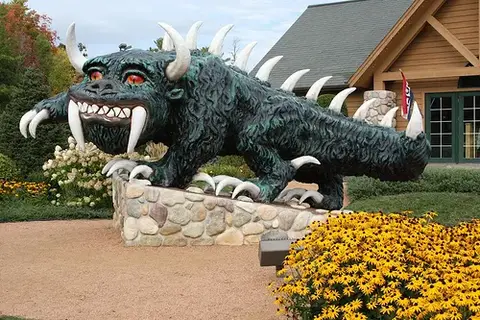
Hodag
A horned, spiny, grinning beast of Wisconsin logging-camp lore that prankster Eugene Shepard ‘captured’ in 1893 – now Rhinelander’s beloved mascot. Hoax / debunkedBeast of Bray Road
A wolf-headed creature that walks on two legs, reported along a farm road outside Elkhorn, Wisconsin, and made famous by reporter Linda Godfrey in 1991. Regional legend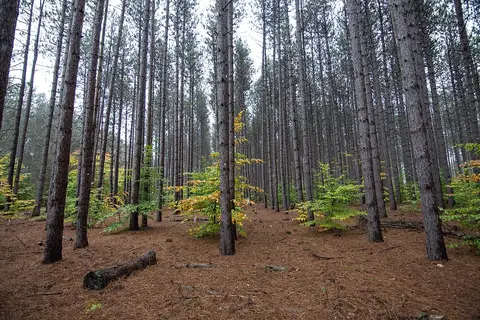
Michigan Dogman
A seven-foot, dog-headed creature said to walk upright through northern Michigan’s forests – a legend born from a 1987 April Fools’ radio song. Regional legend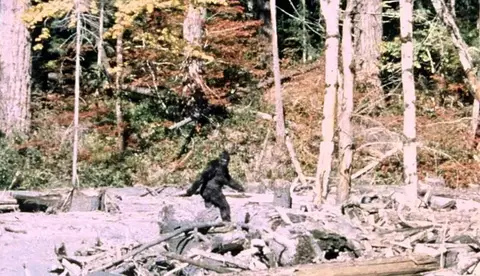
Bigfoot
North America’s most famous cryptid: a huge, hairy, upright ape-like being reported from the Pacific Northwest to Florida since the 1958 “Bigfoot” tracks. Widely reported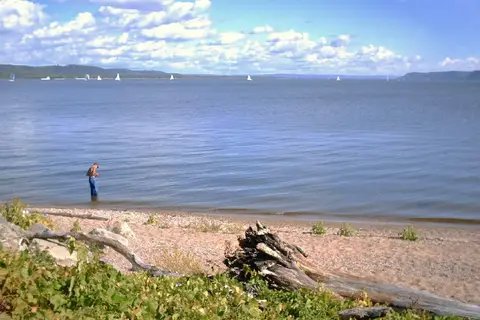
Pepie
A serpent-like creature said to lurk in Lake Pepin, a broad stretch of the Mississippi River, reported in newspapers since the 1860s. Local legend
Pressie
A serpent-like monster said to swim Lake Superior, named for sightings near the Presque Isle River in Michigan’s Porcupine Mountains. Local legend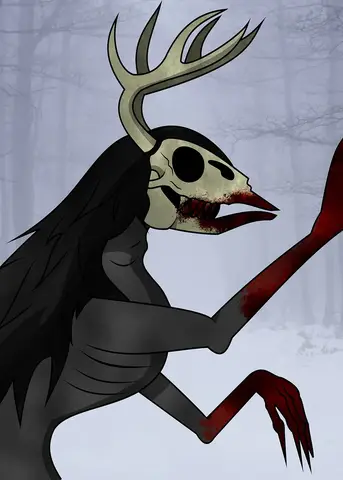
Wendigo
A being of winter, hunger and greed from Algonquian traditions – Ojibwe, Cree, Innu and others – whose teachings warn against selfish excess. Folklore
Bozho
A playful serpent said to tip canoes and nibble swimmers’ toes in Madison’s Lake Mendota, reported since the 1880s and named Bozho by 1942. Local legend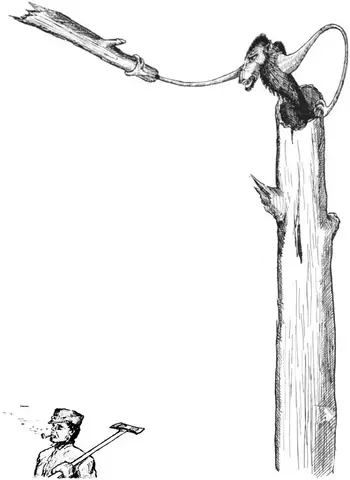
Agropelter
A wiry, ape-faced lumberwoods critter that hides in hollow trees and hurls dead branches at loggers – blamed for every “widow-maker” limb that fell. Folklore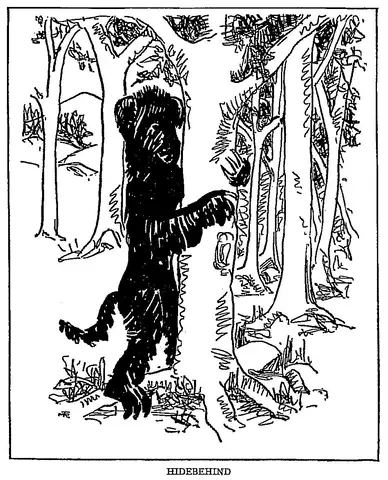
Hidebehind
A lumberjack-camp “fearsome critter” that stalks woodsmen but can never be seen, because it always slips behind a tree – or behind you. Folklore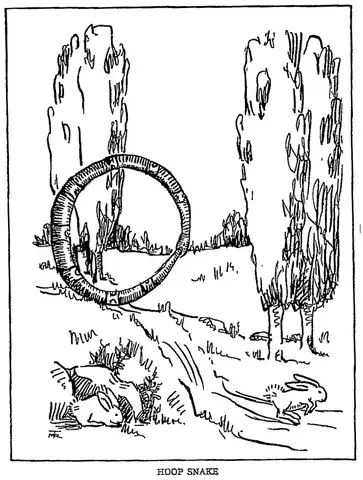
Hoop Snake
A legendary snake that bites its own tail and rolls downhill like a wheel to chase its victims, striking with a venomous tail that kills trees. FolkloreThe legends of Wisconsin
Southern Wisconsin has the Beast of Bray Road, a wolf-like creature said to walk on two legs near Elkhorn in Walworth County. Reporter Linda Godfrey broke the story in the local Week newspaper in 1991–92 after collecting accounts from several witnesses, and went on to write numerous books about upright canines; the Beast overlaps with the “Dogman” tradition of neighboring Michigan. Skeptics point to wolves, coyotes, large dogs and bears, plus the power of suggestion once a story spreads.
Water monsters fill out the map: Pepie in Lake Pepin on the Mississippi, shared with Minnesota, and Pressie in Lake Superior. The Chequamegon-Nicolet National Forest and the north woods also generate Bigfoot reports, and Indigenous nations of the region carry their own traditions, including stories of the Wendigo, which deserve respect as part of living cultures.
Hotspots
- Rhinelander
Hodag City, with its sculpture, mascot and Hodag Country Festival.
- Bray Road, Elkhorn
Rural road in Walworth County where the Beast of Bray Road was reported.
- Lake Pepin
Wide stretch of the Mississippi on the Minnesota border, home of Pepie.
- Lake Superior shore
Wisconsin’s north coast, part of Pressie’s range.
- Chequamegon-Nicolet National Forest
Vast north-woods forest with Bigfoot and dogman reports.
Sightings timeline
- 1937The Paris, Michigan, encounter Michigan Dogman
In an account usually attributed to Robert Fortney, a teenager was circled by a pack of wild dogs near Paris, Michigan, during the Depression. When he fired a .22 rifle, the pack scattered except for one animal that reportedly rose onto its hind legs and stared at him. The story surfaced only in 1987, when an elderly caller phoned WTCM after hearing Cook’s song.
- 1939Tryon’s Fearsome Critters Hidebehind
Henry H. Tryon’s illustrated field guide gave the hidebehind a mock Latin name and a famous drawing by Margaret R. Tryon of a black, shaggy creature peering around a tree.
- 1942The serpent gets a name Bozho
Brown’s Wisconsin Folklore Society pamphlet Sea Serpents collected the Mendota tales and popularised the name Bozho, which newspapers soon adopted.
- 1959A gift for a candidate Hodag
During a campaign stop, John F. Kennedy was presented with a hodag carving, a sign of how firmly the creature had become the town’s emblem.
- April 1, 1987“The Legend” airs on WTCM Michigan Dogman
WTCM-FM morning listeners heard Steve Cook’s song about a dog-headed creature in Wexford County for the first time. Calls describing similar encounters began arriving within hours, and the song quickly became the station’s most requested track.
- 1989Lorianne Endrizzi’s roadside sighting Beast of Bray Road
Driving home at night, Endrizzi said she saw a hairy figure with a wolf-like face kneeling at the side of the road, apparently holding food in its paws. She later identified it with a werewolf picture in a library book.
- October 31, 1991Doristine Gipson’s Halloween encounter Beast of Bray Road
After feeling her car bump something, Gipson said a large dark creature ran at her and leapt at the vehicle as she drove off. Her account became central to the first newspaper story.
- December 29, 1991Linda Godfrey’s first article Beast of Bray Road
The Week published Godfrey’s report on the Bray Road sightings with her own illustration. The story was picked up by TV and wire services, making the Beast a national curiosity.
- 2007The “Gable film” surfaces Michigan Dogman
In a year ending in seven, an apparently vintage 8mm home movie appeared online, ending with a large animal charging the camera. Cook shared it on his website, and it was widely discussed as possible evidence.
- December 2007The story goes online Pressie
Braun posted his account and a photo online, and The Capital Times in Madison wrote about it. The report revived worldwide interest in a Lake Superior monster and popularized the name Pressie.
- June 2008The $50,000 Pepie reward Pepie
Paddle-wheeler owner Larry Nielson and Lake City promoters announced a $50,000 reward for indisputable proof of the creature. The offer drew national press attention, but no claim has succeeded.
- 2010MonsterQuest exposes the Gable film Michigan Dogman
The History Channel series MonsterQuest revealed that the Gable film had been staged by Michigan resident Mike Agrusa, a fan of Cook’s song who wanted to keep the ten-year cycle alive. Agrusa admitted to making the footage.


