State file · HI
Cryptids of Hawaii
What cryptids are in Hawaii? The best-known are Night Marchers, Menehune, Moʻo and Nanaue.
Hawaii does not have a Bigfoot or a lake monster in the usual sense; its stories of unseen beings belong to Native Hawaiian tradition and should be understood as part of a living culture rather than as cryptids to be hunted. Among the best known are the huaka‘i pō, or night marchers – processions of ancient warriors said to walk at night along old trails toward the sea, accompanied by drums and torchlight. Many Hawaiians still advise anyone who hears them to show respect and get out of the way.
- 4 cryptids
- 12 recorded sightings
Cryptids reported in Hawaii
Night Marchers
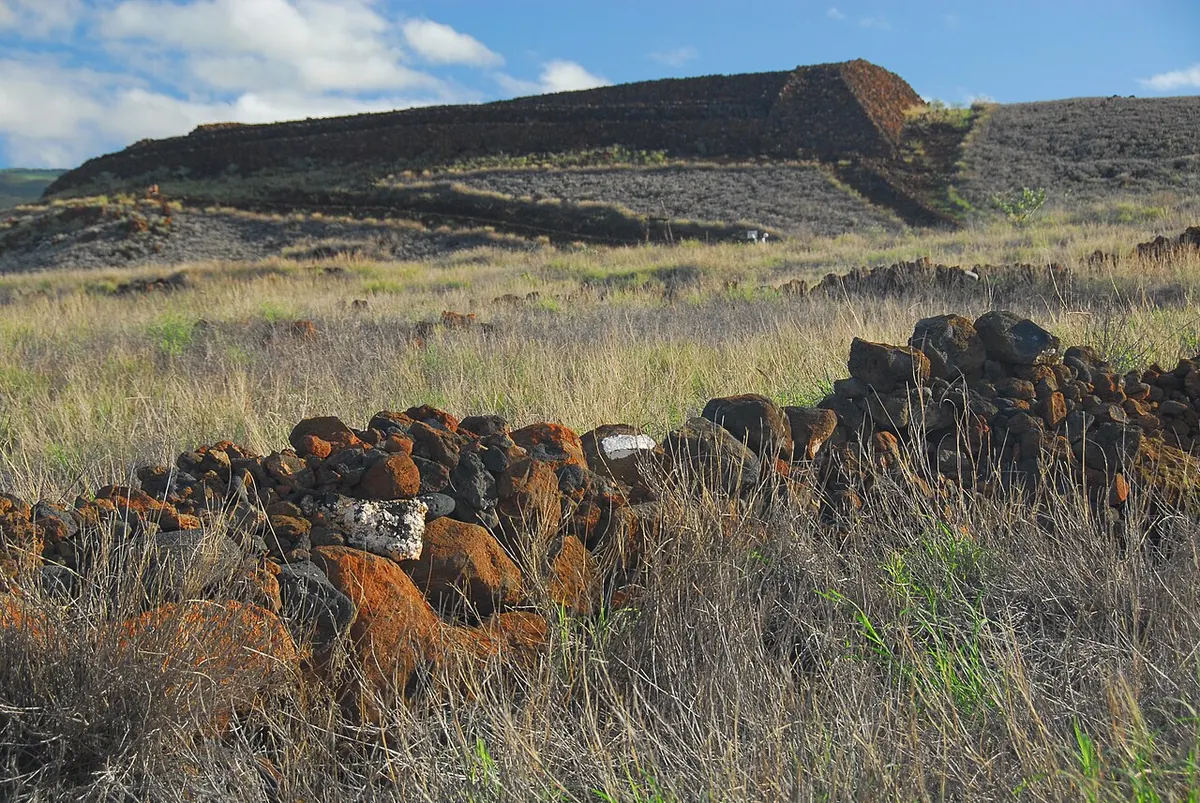
Huakaʻi pō – ghostly processions of chiefs, warriors and gods in Hawaiian tradition, heralded by drums, chants and torchlight on sacred nights. Folklore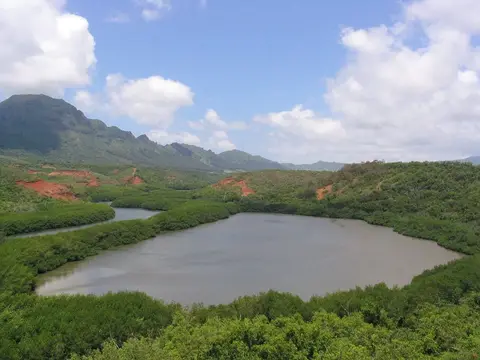
Menehune
The legendary master builders of Hawaiian tradition, said to raise fishponds and stone walls in a single night – still debated by Hawaiian scholars today. Folklore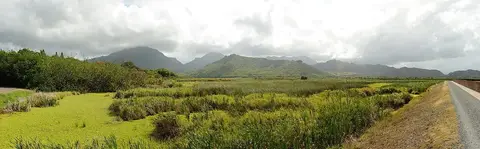
Moʻo
In Hawaiian tradition, moʻo are shape-shifting reptilian beings of fresh water. They guard ponds and fisheries and are still honored as akua. Folklore
Nanaue
In Hawaiian tradition, Nānaue is the shark-king’s son, born with a shark’s mouth on his back, who could become a shark and preyed on people. FolkloreThe legends of Hawaii
Other traditions include the menehune, described in Hawaiian lore as a people of skilled builders who worked at night. On Kaua‘i, stonework such as the Alekoko (Menehune) Fishpond near Līhu‘e and the Kīkīaola (Menehune Ditch) at Waimea is traditionally credited to them. The mo‘o – powerful lizard or dragon-like water spirits – are linked to particular ponds, streams and waterfalls across the islands, and the volcano goddess Pele is honored at Kīlauea in Hawai‘i Volcanoes National Park.
Visitors interested in these stories are encouraged to learn from Hawaiian cultural centers, museums such as Bishop Museum in Honolulu, and local storytellers, and to treat heiau (temples), burial grounds and other sacred places with care. Tourist “ghost tours” are popular in Honolulu and Lahaina, but the deeper meaning of these beings lies in Hawaiian history, genealogy and relationship with the land.
Hotspots
- Alekoko (Menehune) Fishpond, Kaua‘i
An ancient fishpond near Līhu‘e that tradition credits to the menehune.
- Kīkīaola (Menehune Ditch), Waimea
Finely fitted stone irrigation works on Kaua‘i associated with menehune lore.
- Hawai‘i Volcanoes National Park
Kīlauea and Halema‘uma‘u crater, sacred to Pele and rich in Hawaiian tradition.
- Nu‘uanu Pali, O‘ahu
A historic cliff and battle site above Honolulu, often named in night-marcher and Pele stories.
- Kawainui Marsh, Kailua, Oʻahu
A former fishpond and marsh traditionally guarded by the moʻo Hauwahine.
- Waipi‘o Valley, Hawai‘i Island
The valley where Nānaue’s story begins in Hawaiian tradition.
Sightings timeline
- 1820Menehune in the census Menehune
During a census taken under Kauaʻi’s ruling chief Kaumualiʻi, 65 people at Wainiha were recorded as Menehune. Scholars still debate whether the term then referred to a social class, a lineage or the legendary people.
- 1885The carved image of Kihawahine is taken Moʻo
Eduard Arning and Herbert Purvis took a carved kou-wood image of Kihawahine from the valley. It was donated to Berlin’s Ethnological Museum in 1887.
- 1907Written version published Nanaue
Thomas G. Thrum’s Hawaiian Folk Tales printed a version of the story attributed to Mrs. E. M. Nakuina.
- By 1914Mokuʻula is covered over Moʻo
After decades of stream diversion for sugar plantations, the pond of Mokuhinia had nearly dried up and a baseball field covered the royal island of Mokuʻula.
- 1930sThe Menehune wall of Mānoa Menehune
In an interview recorded in the 1930s, Maka Woolsey described a “Menehune wall” that began at Kūkaʻōʻō Heiau and ran for miles, part of Mānoa’s rich Menehune traditions.
- 1932Kepelino’s traditions published Night Marchers
Martha Beckwith’s translated edition of Kepelino’s Traditions of Hawaii, from a 19th-century Hawaiian manuscript, was issued as a Bishop Museum bulletin. It preserved Hawaiian descriptions of the marches, including the belief that seeing one was fatal unless a relative among the dead interceded.
- 1940Beckwith’s Hawaiian Mythology Night Marchers
Beckwith’s Hawaiian Mythology gathered accounts of the night marchers, among them a Kona story of a young man who witnessed a procession and later its gathering of dance and games, and whose grandfather recognized that he had been with “our people of the night.”
- 1940Beckwith’s Hawaiian Mythology Nanaue
Folklorist Martha Beckwith summarized the story among the stories of shark gods and demigods.
- 1951Luomala’s study Menehune
Katharine Luomala’s The Menehune of Polynesia and Other Mythical Little People of Oceania argued that the legendary builders grew out of the Polynesian word for commoners. Her view remains influential but is contested.
- June 1963A procession at Iwilei Night Marchers
A family account retold in Ka Wai Ola describes a boy, sleeping in the family car, who saw a procession of warriors; his mother chanted the family genealogy, and he woke unharmed the next morning.
- 1973ʻAlekoko Fishpond listed Menehune
The Menehune Fishpond was added to the National Register of Historic Places as one of the finest surviving examples of ancient Hawaiian aquaculture.
- January 2022A scholarly catalog of moʻo Moʻo
Marie Alohalani Brown’s Ka Poʻe Moʻo Akua: Hawaiian Reptilian Water Deities was published, cataloging 288 moʻo with sources.
Our reporting