State file · LA
Cryptids of Louisiana
What cryptids are in Louisiana? The best-known are Rougarou, Honey Island Swamp Monster, Feu Follet and Fouke Monster, among 6 on file.
Louisiana’s swamps, bayous and cypress forests have fed a remarkable blend of French, Creole, Cajun, African, Spanish and Indigenous folklore. The best-known figure is the rougarou, a werewolf-like creature descended from the French loup-garou, which Cajun parents long invoked to keep children home after dark or to enforce Lenten rules. In Houma, the South Louisiana Wetlands Discovery Center hosts the annual Rougarou Fest each October, celebrating the legend while raising awareness of coastal wetland loss.
- 6 cryptids
- 12 recorded sightings
Cryptids reported in Louisiana
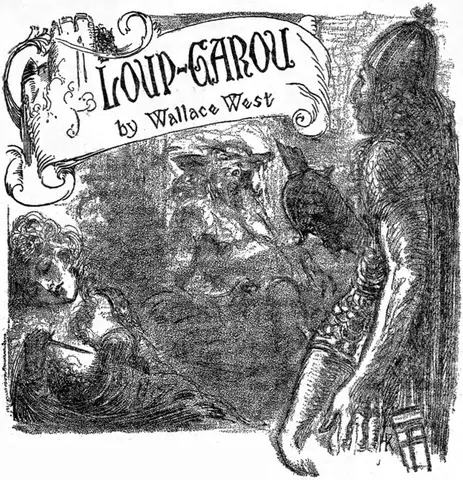
Rougarou
South Louisiana’s Cajun werewolf: a cursed shape-shifter of the bayous, born of French loup-garou tales and now the mascot of Houma’s Rougarou Fest. Folklore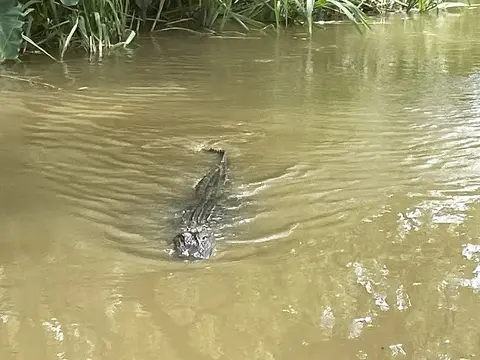
Honey Island Swamp Monster
A gray-haired, amber-eyed swamp ape said to roam the Pearl River’s Honey Island Swamp – launched by a 1974 report of webbed footprints near Slidell. Regional legend
Feu Follet
Louisiana’s will-o’-the-wisp: a dancing marsh light that Cajun and Creole lore says leads travelers astray – a lost soul, a sorcerer or swamp gas. Folklore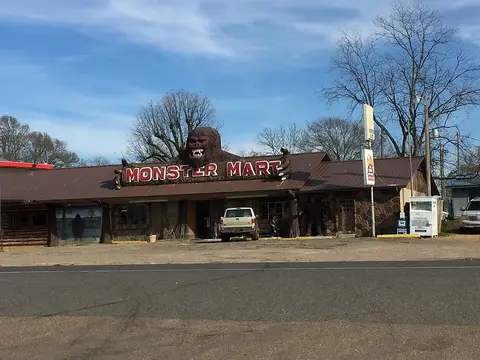
Fouke Monster
The hairy, red-eyed swamp beast of Fouke, Arkansas, whose 1971 “attack” on a farmhouse inspired the 1972 cult film “The Legend of Boggy Creek.” Regional legendWild Girl of Catahoula
Late-1880s Louisiana newspapers tracked a barefoot, hair-covered girl who outran every posse around Catahoula Parish – a feral child, or a publicity hoax? Local legend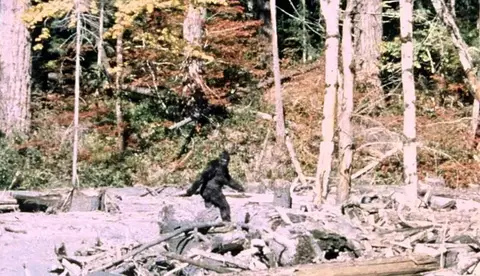
Bigfoot
North America’s most famous cryptid: a huge, hairy, upright ape-like being reported from the Pacific Northwest to Florida since the 1958 “Bigfoot” tracks. Widely reportedThe legends of Louisiana
The Honey Island Swamp, along the Pearl River on the Mississippi border, is home to Louisiana’s Bigfoot: a tall, grey-haired creature first publicized by retired air traffic controller Harlan Ford, who said he saw it in 1963 and later found footprints. Swamp tour operators near Slidell still tell its story. The marshes of the south are also the realm of the feu follet, a will-o’-the-wisp that lore says leads travelers astray, and northwest Louisiana shares the Fouke Monster’s territory across the Arkansas line.
Skeptics point to bears, feral hogs, nutria and the eerie bioluminescence or marsh gas of decaying vegetation, and folklorists stress that the rougarou is as much a moral tale as a monster. For visitors, the Atchafalaya Basin – the nation’s largest river swamp – and the bayous of Terrebonne Parish offer an unforgettable setting for legend hunting.
Hotspots
- Honey Island Swamp
Protected swamp along the Pearl River near Slidell, home of the Honey Island Swamp Monster.
- Houma & Terrebonne Parish
Bayou country that hosts Rougarou Fest each October.
- Atchafalaya Basin
The country’s largest river swamp, full of feu follet lights and rougarou tales.
- Bayou Teche & Acadiana
Cajun heartland around Lafayette and St. Martinville where the rougarou legend is deeply rooted.
- Catahoula Parish
Central Louisiana parish centered on Harrisonburg, where newspapers tracked the Wild Girl of Catahoula in the 1880s.
Sightings timeline
- 1901 (recalling c. 1840)The Breaux Manuscript Feu Follet
An anonymous memoir of Acadian folkways, completed in 1901 and probably written by Judge Joseph Arsenne Breaux, defined the feu follet as an evil spirit that leads people astray and told the story of the young man who saved himself by throwing his hat on the water.
- 1945Werewolves in Gumbo Ya-Ya Rougarou
The Louisiana Writers’ Project folklore collection Gumbo Ya-Ya, compiled by Lyle Saxon, Edward Dreyer and Robert Tallant from Works Progress Administration fieldwork, playfully credited “the loup-garous of Bayou Goula” among its informants. It helped preserve the tradition of werewolves gathering along the bayous for a wider audience.
- 1962The Gonzales light Feu Follet
High school student Lane Casteix and friends repeatedly watched a basketball-sized light that changed color and drifted toward their parked car; when they drove closer to look for a source, they found nothing. Local residents compared it to the feu follet of Cajun tradition.
- 1963Ford and Mills’s first encounter Honey Island Swamp Monster
According to their later account, Harlan Ford and Billy Mills surprised a tall, gray-haired creature with amber eyes, which ran off into the swamp. They said an afternoon rainstorm washed away its tracks; the encounter was not reported at the time.
- 1966The Breaux text reaches English readers Feu Follet
Professor George F. Reinecke’s English translation of the manuscript’s folklore chapters, including its account of the feu follet, was published by the Louisiana Folklore Society in Louisiana Folklore Miscellany.
- 1974Webbed footprints and a slain boar Honey Island Swamp Monster
Ford and Mills went public with plaster casts of four-toed, webbed tracks found near a wild boar with its throat gashed. The story spread quickly through south Louisiana and beyond.
- March 4, 1978In Search of… broadcast Honey Island Swamp Monster
The episode “The Swamp Monster” of Leonard Nimoy’s documentary series featured Ford and brought the legend to a national audience, prompting calls from around the country.
- 1980Ford’s death and the Super 8 film Honey Island Swamp Monster
Harlan Ford died in 1980. His family said they later found among his belongings a reel of grainy Super 8 film showing a large, hairy figure moving behind trees; it has since appeared on several cable TV programs, but its subject has never been identified.
- 2001Joe Nickell tours the swamp Honey Island Swamp Monster
Investigator Joe Nickell reported touring the swamp with wetlands ecologist Paul Wagner and Cajun guide Robbie Charbonnet, who between them had decades on the water and had never seen anything unidentifiable. In Skeptical Inquirer he concluded the evidence pointed to a hoax.
- October 2011The first Rougarou Fest Rougarou
Jonathan Foret and colleagues at the South Louisiana Wetlands Discovery Center launched a rougarou-themed festival to fund wetlands education. Built around a parade by the Krewe-Ga-Rou, costume contests and storytelling, it quickly became one of Houma’s biggest annual events.
- October 2016Rougarou Awareness Month Rougarou
Terrebonne Parish government promoted October as “Rougarou Awareness Month” in a video for the festival, presenting the creature as a piece of shared local heritage rather than a mere scare story.
- October 2022The festival moves to the wetlands center Rougarou
After a two-year absence, during which organizers redirected their efforts to relief work after Hurricane Ida, Rougarou Fest left its traditional home in downtown Houma for the grounds of the Wetlands Discovery Center.
Our reporting
Field reports from Louisiana
Videos
 3:07
Patterson–Gimlin film (unedited)
 4:59
The Film That Made Bigfoot A Star
 2:35
Sts’ailes Sasquatch Days in Harrison Hot Springs
 0:30
Rougarou Awareness Month
 11:48
Louisiana Legends: The Rougarou
 1:02:54