State file · SD
Cryptids of South Dakota
What cryptids are in South Dakota? The best-known are Taku-He, Bigfoot, Thunderbird and Lake Kampeska Monster, among 6 on file.
South Dakota’s most famous cryptid episode came in the fall of 1977, when residents of Little Eagle, on the Standing Rock Reservation in Corson County, reported a tall, hairy, foul-smelling creature near town. An Associated Press story that November counted more than two dozen sightings since September, described residents carrying rifles, and recorded the Lakota name Taku He. Tribal police officers were among those who reported seeing it, and searchers on horseback found large tracks. Corson County produced another round of reports in the late 1990s.
- 6 cryptids
- 10 recorded sightings
Cryptids reported in South Dakota
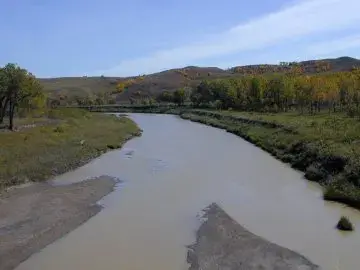
Taku-He
A hairy, ape-like creature reported by dozens in Little Eagle on the Standing Rock Reservation in autumn 1977, including by police officers. Local legend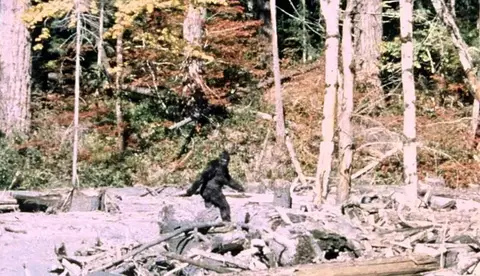
Bigfoot
North America’s most famous cryptid: a huge, hairy, upright ape-like being reported from the Pacific Northwest to Florida since the 1958 “Bigfoot” tracks. Widely reported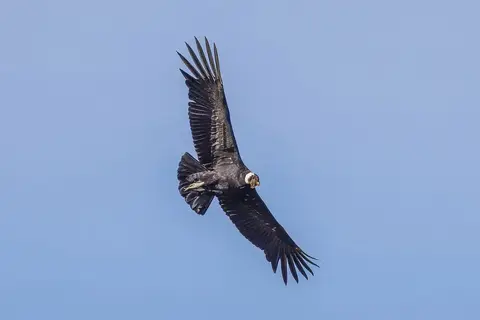
Thunderbird
A giant bird with a wingspan said to rival a small plane, reported over Pennsylvania’s Black Forest and blamed for lifting an Illinois boy in 1977. Regional legend
Lake Kampeska Monster
A 20-foot scaly serpent with a head the size of a calf that 1880s newspapers said interrupted a picnic on Lake Kampeska, outside Watertown, South Dakota. Local legend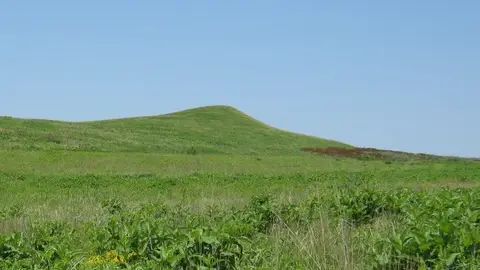
Little People of Spirit Mound
Small beings of Lakota, Otoe and Missouria tradition said to guard a lone South Dakota prairie hill – the ‘little devils’ Lewis and Clark sought in 1804. FolkloreDeer Woman
A spirit being of many Native nations who appears as a beautiful woman with deer’s feet, and who punishes men who harm women and children. FolkloreThe legends of South Dakota
Today Bigfoot interest centers on the Black Hills, the pine-covered range rising out of the western plains that is sacred to the Lakota and other nations. Reports come from around Rochford, Horsethief Lake and the backcountry near Mount Rushmore, and the tourist town of Keystone has staged a winter Bigfoot Bash. The Bigfoot Field Researchers Organization lists fewer than two dozen reports for the whole state. The Black Hills are also where Lakota people gather each spring to welcome back the Wakíŋyaŋ, the Thunder Beings – sacred powers of a living tradition that lie behind the wider Thunderbird legend, and that are not a cryptid in Lakota eyes.
Skeptics point to the rarity of bears outside the Black Hills, the ease of mistaking people, elk or shadows for something larger, and the way one well-publicized sighting can inspire many more – a pattern seen in Little Eagle in 1977.
Hotspots
- Little Eagle, Standing Rock Reservation
Community at the center of the 1977 Taku He sightings.
- Black Hills National Forest
Pine-covered mountains with most of South Dakota’s recent Bigfoot reports.
- Keystone
Black Hills tourist town near Mount Rushmore that has hosted a Bigfoot Bash.
- Rochford
Tiny Black Hills settlement in an area of reported howls and sightings.
Sightings timeline
- August 25, 1804Lewis and Clark climb the hill Little People of Spirit Mound
After hearing warnings from Native people, Lewis, Clark and about ten men hiked to the mound in sweltering heat. They found no little people but recorded swarms of insects, birds and a vast view of bison herds.
- 1880sThe picnic monster Lake Kampeska Monster
Local newspapers reported that a picnic of reputable citizens was interrupted by a 20-foot scaly creature in the lake. Later reports hinted the story was a promotional invention.
- 1974National Register listing Little People of Spirit Mound
Spirit Mound was listed on the National Register of Historic Places for its role in the Lewis and Clark story.
- Mid-September 1977A “big ape” on the hillside Taku-He
Chris Howiatow and others checking cattle said a large, apelike creature watched them from a hill and then ran into the brush as they approached.
- October 6 and 13, 1977Phoebe Little Dog’s pasture Taku-He
Phoebe Little Dog reported seeing a Bigfoot-like creature in the same cattle pasture on both dates.
- October 29, 1977The police chase Taku-He
Officers Verdell Veo, Selvin Arlen and Bobby Gates said they saw the creature in the middle of the night, chased it and stopped when they realized they had no weapons to use against it.
- December 5, 1977The last sighting Taku-He
The final reported sighting of the 1977 wave, after about three months of reports.
- May 1978Newspaper accounts collected Taku-He
Mark A. Hall published “Contemporary Stories of ‘Taku-He’ or ‘Bigfoot’ in South Dakota as Drawn from Newspaper Accounts,” the main scholarly record of the wave.
- 2001The state acquires the mound Little People of Spirit Mound
South Dakota bought the 320-acre site so that farm buildings could be removed and the native prairie restored, creating Spirit Mound Historic Prairie.
- 2021An eel-like creature Lake Kampeska Monster
A widely shared social media post described two jet-skiers seeing an eel-like animal with a serpent’s head, prompting renewed talk of the Kampeska legend.


