STATE FILE · CT
Cryptids of Connecticut
What cryptids are in Connecticut? The best-known are Melon Heads, Black Dog of West Peak and Glawackus.
Connecticut is small, wooded and old, and its legends have had centuries to ripen. Its most famous cryptid story is that of the Melon Heads – said to be small humanoids with oversized, bulbous heads who lurk along the back roads of Fairfield County, especially around Shelton, Trumbull and Monroe. Versions of the tale blame an escaped asylum population, an inbred colonial family or medical experiments; Velvet Street in Trumbull, nicknamed “Dracula Drive,” is the road most often named. The story is a classic teenage legend-trip, and a nearly identical version is told in western Michigan.
Cryptids reported in Connecticut
Melon Heads
Back roads of southwestern Connecticut; Kirtland, Ohio; Saugatuck, Michigan
Small, big-headed figures said to lurk along wooded back roads in Connecticut, Ohio and Michigan – a teen legend with no real asylum behind it.
REGIONAL LEGEND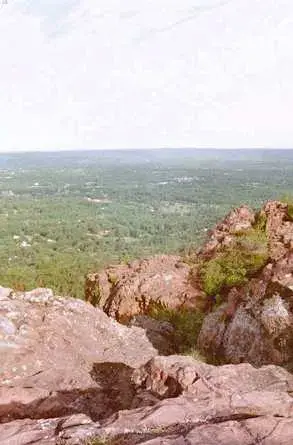 DOGMAN & CANINE · 1898
Black Dog of West Peak
West Peak, Hanging Hills, Meriden, Connecticut
A silent, trackless black dog of Meriden’s Hanging Hills: see it once for joy, twice for sorrow, and the third time you die – or so an 1898 story says.
LOCAL LEGEND BIG CAT · 1939Glawackus
Glastonbury, Connecticut
A screaming, part-panther, part-bear beast blamed for missing livestock around Glastonbury, Connecticut, in a 1939 newspaper-fueled panic.
LOCAL LEGENDThe legends of Connecticut
The state’s traprock ridges supply another famous tale. In the Hanging Hills near Meriden, a small black dog is said to roam West Peak: in an account published in 1898 by writer W. H. C. Pynchon, the saying goes that seeing it once brings joy, twice brings sorrow, and a third time brings death. In 1939 farmers around Glastonbury reported a mystery animal that a newspaper dubbed the “Glawackus,” and the Housatonic and Connecticut rivers have produced occasional sea-serpent and lake-monster reports.
Folklorists point out that the Melon Heads legend has no documented basis and closely mirrors “cropsey” and asylum stories found across the Northeast; the Glawackus was most likely a large bobcat, a lynx or an escaped animal. Trespassing on the private roads tied to the Melon Heads is a frequent problem, so enthusiasts are urged to respect local residents and stick to public land such as Hubbard Park, where the Hanging Hills trails begin.
Hotspots
The narrow wooded road most often linked to Melon Heads sightings – visitors should respect private property.
Traprock ridges where the legendary Black Dog of West Peak is said to appear.
Fairfield County lanes woven into many versions of the Melon Heads story.
The Hartford County town where farmers reported the mysterious “Glawackus” in 1939.
Sightings timeline
- 1898“The Black Dog” is published Black Dog of West Peak
W. H. C. Pynchon’s illustrated story introduced readers to the silent dog of West Peak and the deadly third meeting. It remains the earliest known written account of the legend.
- Story set in the 1890sHerbert Marshall’s fatal fall Black Dog of West Peak
In Pynchon’s narrative, Marshall sees the dog for the third time on the icy cliffs on a February climb and falls to his death; searchers later find a black dog watching over his body. No real-world record of this death has been found.
- Winter 1939Hunts, hounds and caves Glawackus
Hunting parties searched the woods, a trail of tracks was followed for some two miles, cavers explored local caves, and dogs trained for hunting panthers were brought in. The animal was never found.
- 1939Lowell Thomas spreads the word Glawackus
Popular broadcaster Lowell Thomas reported on the Glawackus, claiming it had been named by a Connecticut scientist and carrying the local scare to a national audience.
- January 1939The Glastonbury creature hits the headlines Glawackus
The Hartford Courant reported a mysterious animal howling at night and blamed for vanished dogs, cats and small livestock. The paper’s coverage gave the beast its comic name.
- 1980sThe blue Granada chase Melon Heads
A widely retold Connecticut story says a group of high school girls drove down Velvet Street after a Friday-night football game and were rushed by small figures with big heads and glowing eyes. The account circulates without names or a firm date.
- November 2019The legend revisited Black Dog of West Peak
Folklore podcasters Jeff Belanger and Ray Auger retraced the story, noting that the original is fiction but that folklorists treat it as the root of a genuine local legend that listeners still report.