State file · MT
Cryptids of Montana
What cryptids are in Montana? The best-known are Shunka Warak’in, Flathead Lake Monster, Bigfoot and Fur-bearing Trout, among 5 on file.
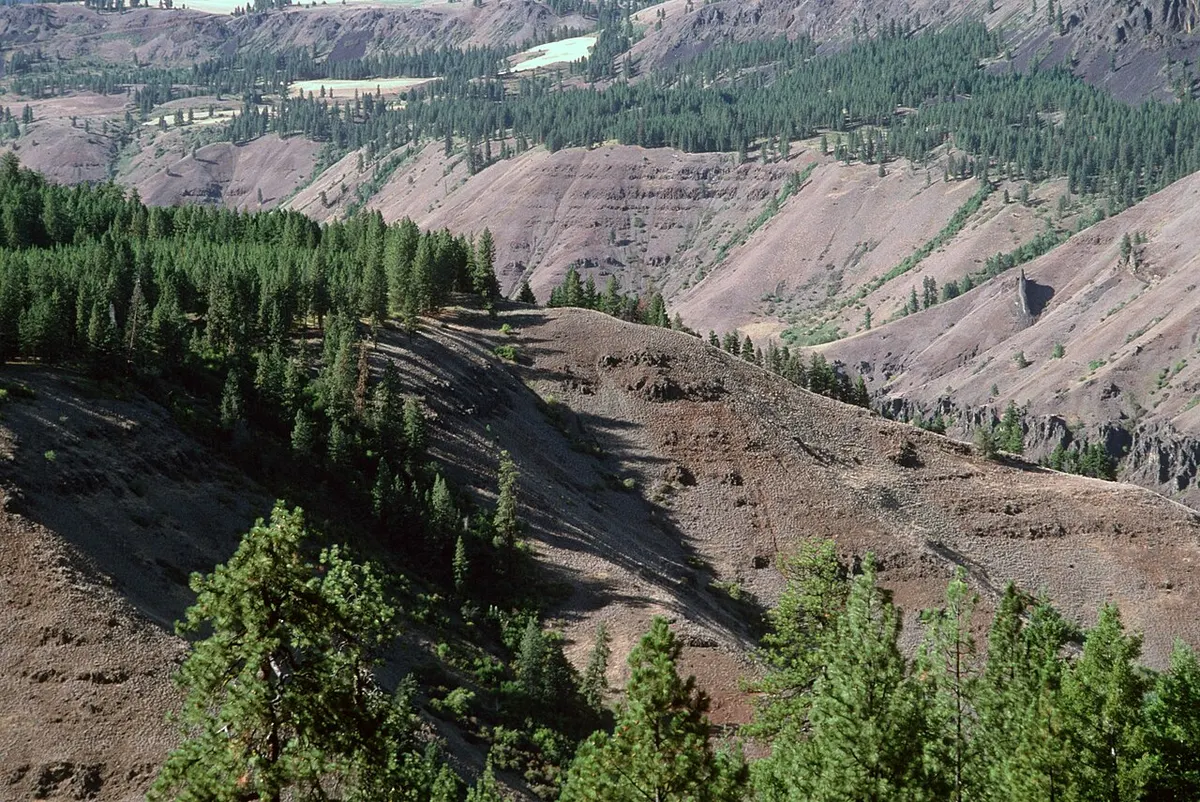
Montana’s cryptid lore is written across enormous country: the glacier-carved peaks of the northern Rockies, the deep cold water of Flathead Lake, and the river valleys of the southwest where ranchers once guarded herds against wolves. Its two signature legends both come from that frontier landscape – a wolflike animal that nobody could quite identify, and a lake creature reported from the decks of early steamboats.
- 5 cryptids
- 12 recorded sightings
Cryptids reported in Montana
Shunka Warak’in
A hyena-like wolf shot in Montana’s Madison Valley in 1886, whose mounted body – the “Ringdocus” – now draws visitors to a small museum in Ennis. Regional legend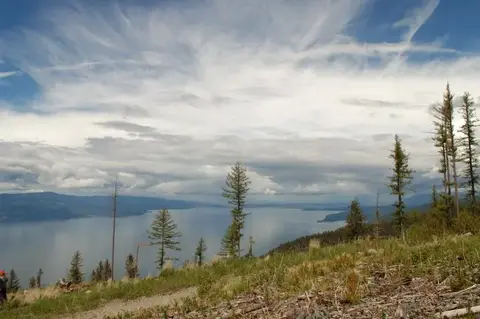
Flathead Lake Monster
An eel-like giant said to swim in Flathead Lake, the West’s largest natural freshwater lake, reported since a steamboat sighting in 1889. Regional legend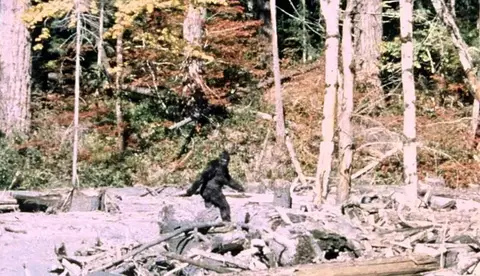
Bigfoot
North America’s most famous cryptid: a huge, hairy, upright ape-like being reported from the Pacific Northwest to Florida since the 1958 “Bigfoot” tracks. Widely reported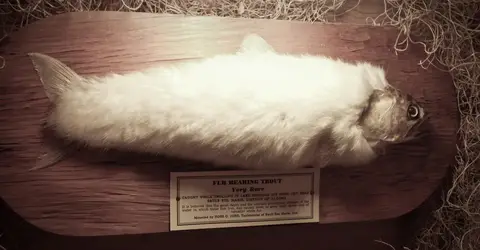
Fur-bearing Trout
A trout said to grow a thick fur coat to survive icy northern waters – a tall tale kept alive by joke postcards and rabbit-fur taxidermy mounts. Hoax / debunked
Little People of the Pryor Mountains
Small, immensely strong beings of Crow tradition said to live in the Pryor Mountains, honored with offerings and still spoken of by Crow families today. FolkloreThe legends of Montana
The first is the shunka warak’in, a name drawn from Plains Indigenous tradition for a dog-like predator said to carry off camp dogs. In Montana it is tied to a strange canine said to have been shot in the Madison Valley in the 1880s, then mounted by a taxidermist and displayed for decades as a curiosity. The mount resurfaced in an Idaho museum’s storage and returned to Montana in 2007, where the Madison Valley History Museum in Ennis now exhibits it. Many zoologists think it is simply an unusual wolf or wolf–dog hybrid, a question only DNA testing could settle.
Flathead Lake, the largest natural freshwater lake by surface area west of the Mississippi in the lower 48 states, has its own monster, usually described as a dark, serpentine or eel-like animal. Reports are said to stretch back to the late 1800s, and Polson and other lakeside towns treat the creature with affection. Skeptics point to large white sturgeon, swimming deer or elk, logs and boat wakes. Bigfoot reports also come from the Bitterroot, Kootenai and Lolo forests of western Montana, where hunters and hikers swap stories of tracks and night-time knocks.
Hotspots
- Madison Valley History Museum, Ennis
Displays the mounted wolflike animal linked to the shunka warak’in legend.
- Flathead Lake
The huge glacial lake where a serpentine monster has been reported since the steamboat era.
- Polson
Lakeside town at Flathead Lake’s southern end, a base for monster-watching from shore or boat.
- Kootenai and Lolo National Forests
Remote, heavily timbered country that produces most of western Montana’s Bigfoot reports.
- Pryor Mountains and Pryor Gap
Sacred range of Crow tradition, home of the Little People, where offerings are still left.
Sightings timeline
- 1901–1911The railroad and the Little People Little People of the Pryor Mountains
During the decade the Burlington railroad line ran through the area, Crow storytellers say the delays were the Little People’s response to noise on sacred ground, according to archaeologist Laura Scheiber.
- 1929Montana Wildlife’s exploding trout Fur-bearing Trout
J.H. Hicken wrote in Montana Wildlife about trout that grew fur in cold water, the earliest known American printing of the tale.
- 1930sPlenty Coups’s vision recorded Little People of the Pryor Mountains
Writer Frank Linderman published the chief’s recollection of dreams in which the Little People’s chief foretold his leadership.
- June 23, 1938Salida’s furry trout Fur-bearing Trout
The Salida Daily Mail ran photos of a “Chaffee County fur-bearing trout,” part of Wilbur Foshay’s publicity campaign. Other Colorado newspapers and Denver radio repeated the story that autumn.
- April 24, 1948“The Weird Wolf of Henry’s Lake” Shunka Warak’in
A feature on Sherwood’s mount called the animal a “Guyasticutus,” one of several joke names attached to the specimen in its roadside-museum years.
- July 1953“Like a big boat” Flathead Lake Monster
Mrs. Robert Olson told the Daily Inter Lake she had seen a huge creature in the lake that looked like a large boat.
- May 28, 1955The 181-pound sturgeon Flathead Lake Monster
During a prize contest run by Polson businessmen, C. Leslie Griffith landed a 7½-foot white sturgeon. It is displayed in Polson, though experts believe it was not native to the lake.
- 1977The “Ringdocus” in print Shunka Warak’in
Hutchins’s grandson published a photo of the mount and the family story in a natural-history book, the only published image for many years after the specimen disappeared from view.
- 1993The peak year Flathead Lake Monster
Laney Hanzel logged 13 reports in a single year, including two sightings 16 miles apart within 25 minutes of each other.
- 2007The mount comes home Shunka Warak’in
Jack Kirby found the specimen in the Idaho Museum of Natural History in Pocatello, which lent it to the Madison Valley History Museum, where it went on display.
- 2017A toddler’s rescuer Flathead Lake Monster
According to a widely retold local story (some versions place it decades earlier), a three-year-old boy who fell into the lake told his mother the monster had lifted him out.
- May 16, 2018The Denton “mystery canine” Shunka Warak’in
A rancher shot an odd-looking canine with short legs, large ears and short teeth, and social media linked it to the Shunka Warak’in. DNA tests by the U.S. Fish and Wildlife Service, announced in June 2018, showed it was a two- or three-year-old female gray wolf.
Our reporting
Field reports from Montana
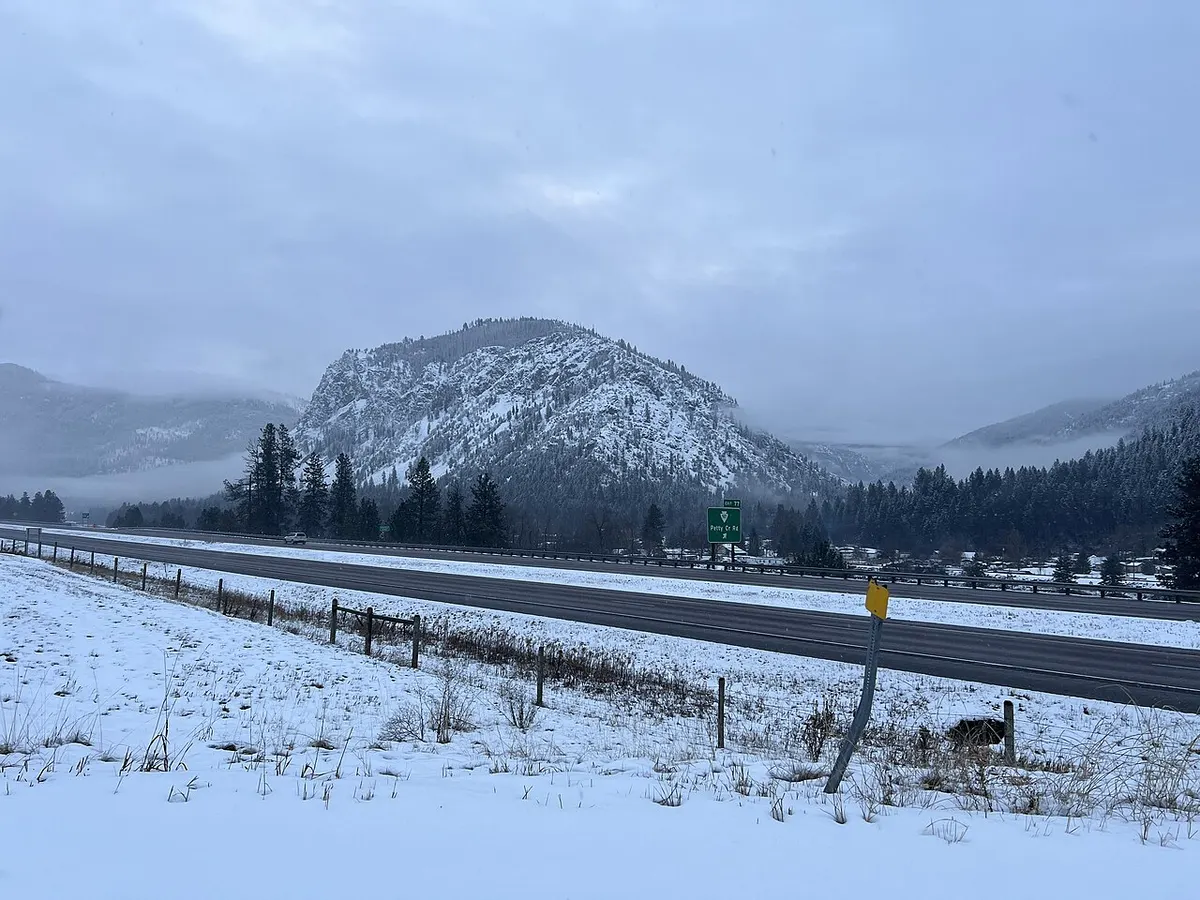
Forest Service’s Montana Bigfoot Records: A 1940s Elk Hunt, 2003 Tracks
Two of the three records the agency posted are Montana accounts: a local memoir of tracks near Petty Creek and a 2003 newspaper story from Plains.