STATE FILE · KS
Cryptids of Kansas
What cryptids are in Kansas? The best-known are Sinkhole Sam and Kingman Serpent.
Kansas is the heart of the Great Plains, and its monster stories are as unexpected as a lake in a wheat field. Near Inman, in McPherson County, the Big Sinkhole – a water-filled collapse in the prairie – is home to Sinkhole Sam, a huge eel- or snake-like creature locals have described since the 1950s. In south-central Kansas, residents around Kingman reported a giant snake in the 1960s, and in 1969 hundreds of people turned out for a monster hunt that never found it.
Cryptids reported in Kansas
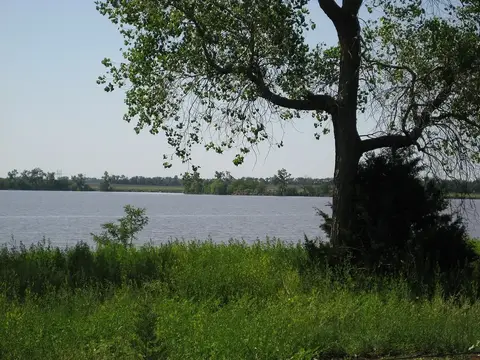 LAKE & SEA MONSTER · 1952
Sinkhole Sam
Big Sinkhole near Inman, McPherson County, Kansas
A huge worm- or snakelike creature said to swim in the Big Sinkhole near Inman, Kansas, since 1952 – the state’s only homegrown lake monster.
LOCAL LEGEND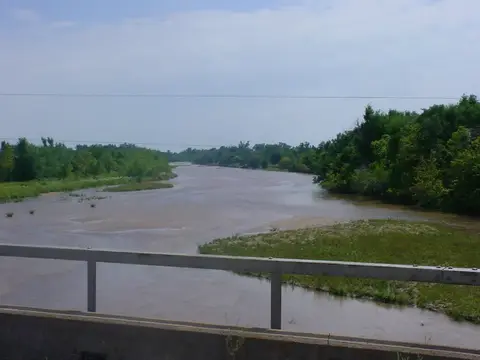 REPTILIAN · 1963
Kingman Serpent
Kingman County, south-central Kansas
A giant snake up to 20 feet long reported around Kingman, Kansas, in the 1960s, inspiring a monster hunt in 1969 by hundreds of armed volunteers.
LOCAL LEGENDThe legends of Kansas
The state’s landscapes go far beyond flatland. The Flint Hills preserve the largest remaining tallgrass prairie in North America; the Smoky Hills and the chalk formations of Monument Rocks and Castle Rock in western Kansas were once the bed of an inland sea, and their fossils of giant marine reptiles have fed more than one imaginative “sea serpent” tale. Kansas also has a scattering of Bigfoot, phantom panther and UFO reports, including the 1971 Delphos ring case.
Skeptics suggest that escaped pets, large bull snakes, gar, or simple tall tales lie behind the Kansas serpents, and they note how often small towns have enjoyed a monster story as entertainment. For enthusiasts, Kansas offers quiet back roads, fossil museums and some of the most surprising cryptid legends in the country.
Hotspots
A water-filled sinkhole in McPherson County that is home to the Sinkhole Sam legend.
Where a giant snake was reported in the 1960s, prompting a large 1969 monster hunt.
The continent’s largest remaining tallgrass prairie, a vast and lightly peopled landscape.
Chalk spires in western Kansas whose ancient sea-reptile fossils have inspired monster tales.
Sightings timeline
- Summer 1952Regehr and Neufeld see the serpent Sinkhole Sam
George Regehr and Bert Neufeld reported a large serpentine creature in the sinkhole; Regehr watched it from a bridge over the water. Neufeld’s two shots from a .22 rifle had no visible effect.
- Late 1952The “foopengerkle” spoof Sinkhole Sam
Columnist Ernest Alva Dewey published a tongue-in-cheek Salina Journal piece featuring a fictional scientist who declared Sam a foopengerkle from the caverns beneath Kansas. The joke helped fix the legend in local memory.
- October 1953Sam goes national Sinkhole Sam
A Newspaper Enterprise Association story by Mary Kay Flynn, quoting the young witnesses, was picked up by newspapers nationwide around October 12, 1953. Crowds of curious drivers visited the sinkhole in the following months.
- About 1963Raymond Dunbar’s pasture Kingman Serpent
Farmer Raymond Dunbar reported a snake 10 to 15 feet long in his pasture and said he saw it several more times. His account is usually treated as the start of the legend.
- August 1969The great snake hunt Kingman Serpent
Hundreds of volunteers – reportedly more than 750, with riders and two planes – joined a hunt organized by a local dentist. No snake was found.
- 1970A second search Kingman Serpent
A follow-up investigation led by the same organizer also came up empty, and reports dwindled afterward.
Latest from Kansas
No recent cryptid headlines from Kansas. See all the latest cryptid news.