State file · NE
Cryptids of Nebraska
What cryptids are in Nebraska? The best-known are Bigfoot, Alkali Lake Monster, Omaha River Serpent and Deer Woman, among 5 on file.
Nebraska is not famous for monsters, but it gave America one of its most entertaining lake-serpent hoaxes. In the 1920s the Hay Springs News and then larger papers began printing reports of a huge gray creature in Alkali Lake – now Walgren Lake – a small body of water in the Sandhills of Sheridan County. The most famous account, published in 1923 and credited to local man J. A. Johnson, described an animal some 40 feet long with a horn between its eyes and nostrils.
- 5 cryptids
- 10 recorded sightings
Cryptids reported in Nebraska
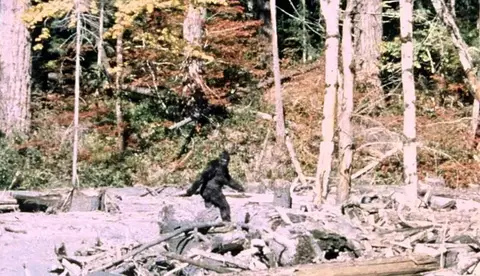
Bigfoot
North America’s most famous cryptid: a huge, hairy, upright ape-like being reported from the Pacific Northwest to Florida since the 1958 “Bigfoot” tracks. Widely reported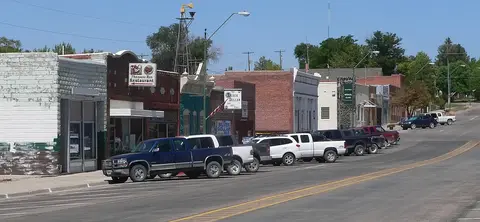
Alkali Lake Monster
A 40-foot horned reptile said to lurk in a small Sandhills lake near Hay Springs, Nebraska – a 1920s newspaper sensation widely blamed on a famous hoaxer. Hoax / debunked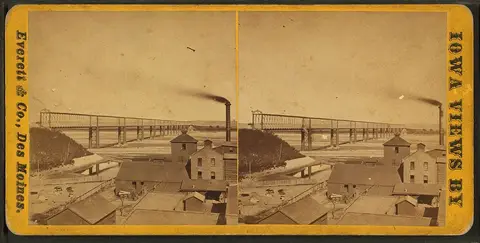
Omaha River Serpent
A 50-foot serpent that the Omaha Daily Bee said jammed the Union Pacific bridge on April 1, 1885, a prank the paper admitted in its own story. Hoax / debunkedDeer Woman
A spirit being of many Native nations who appears as a beautiful woman with deer’s feet, and who punishes men who harm women and children. Folklore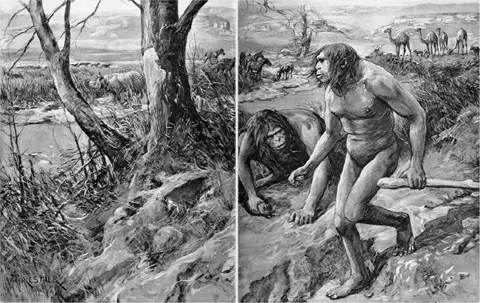
Nebraska Man
A supposed American ape-man announced in 1922 from a single fossil tooth found in western Nebraska – which turned out to belong to an extinct peccary. Hoax / debunkedThe legends of Nebraska
History Nebraska, the state’s historical society, notes that the story most likely began as a tall tale; Chadron newspaperman and promoter John G. Maher, known for other stunts, is often named as the source. The yarn traveled well beyond the Plains, and the monster even picked up a mock-scientific name, Giganticus brutervious. Hay Springs has kept the legend alive as a piece of local color.
Beyond Walgren Lake, Nebraska’s cryptid lore is thin but varied. A handful of Bigfoot reports come from the wooded river bottoms along the Missouri, Niobrara and Platte, and from the Pine Ridge country of the northwest. The state’s vast grasslands, buttes and sand hills make for big skies and long sightlines – a reminder, skeptics say, of how easily distant deer, coyotes or cattle can turn into something stranger at dusk.
Hotspots
- Walgren Lake State Recreation Area
The former Alkali Lake near Hay Springs, home of Nebraska’s famous 1920s lake-monster story.
- Hay Springs
Sandhills village whose newspaper first spread the Alkali Lake monster reports.
- Niobrara River valley
Wooded canyons and bluffs in north-central Nebraska that produce occasional Bigfoot reports.
- Pine Ridge
Forested escarpment near Chadron, the most rugged country in the state.
- Omaha riverfront
The Missouri River crossing where the Omaha Daily Bee’s 1885 April Fools’ serpent was said to jam the Union Pacific bridge.
Sightings timeline
- Morning, April 1, 1885The black object upriver Omaha River Serpent
By the Bee’s account, riverside watchers saw a huge black form float down the river around 8 a.m. and guessed it was a dime-museum whale, a giant shoe or a horse’s tail before settling on a serpent.
- Afternoon, April 1, 1885Stuck at the Union Pacific bridge Omaha River Serpent
A series of timed bulletins put the serpent at the foot of Davenport Street, then wedged between the stone piers of the Union Pacific bridge, threatening to bring it down.
- April 2, 1885“An April Fool lie” Omaha River Serpent
The Bee’s final bulletin, timed 4:00 p.m., admitted the whole story was an April Fools’ joke. The paper printed it in its April 2 edition.
- 1917Harold Cook finds the tooth Nebraska Man
Rancher-geologist Harold Cook collected a small, worn fossil tooth from deposits that had already yielded many extinct mammals.
- September 16, 1921The Hay Springs News reports Alkali Lake Monster
Following a summer of rumors, the local paper reported a monster in Alkali Lake, helping launch a story that would spread nationally.
- April 1922Osborn names Hesperopithecus Nebraska Man
Henry Fairfield Osborn announced the tooth as belonging to the first anthropoid ape known from the Americas and named it after Cook.
- June 24, 1922The Illustrated London News drawing Nebraska Man
Amédée Forestier’s reconstruction of Nebraska Man and his mate appeared with an article by Grafton Elliot Smith, giving the ape-man a face that far outran the evidence.
- 1923J. A. Johnson’s account Alkali Lake Monster
Johnson told the Omaha World-Herald that he and two friends had seen a 40-foot, horned, alligator-like animal from about 20 yards away while camping by the shore. The story was picked up as far away as London.
- 1927Retraction in Science Nebraska Man
After further excavations in 1925–26, William King Gregory concluded that the tooth belonged to an extinct peccary, Prosthennops. Newspapers in New York and London reported the reversal in early 1928.
- 1938The tall-tale version Alkali Lake Monster
A Depression-era collection of Nebraska folklore embroidered the story with livestock-eating, earth-shaking footsteps and a mysterious green mist.


