FIELD REPORT · OREGON, WASHINGTON & MONTANA
Forest Service Posts Bigfoot Records: What the 1982 Tracks Memo Says
Three records went up in the agency’s FOIA reading room. The longest is a 1982 footprint file with a biologist’s memo and a Border Patrol hoax opinion.
The U.S. Forest Service has put three historical Bigfoot records in its online FOIA reading room, and the posting, which the agency made quietly last month, became national news on November 20 after the Washington Post wrote about it. The documents include a 1982 federal investigation of footprints that a Forest Service wildlife biologist concluded were probably not made by a large two-legged animal, and a Border Patrol official called a hoax. The agency says it has not taken a position on Bigfoot.
What the Forest Service posted
The agency’s reading room lists a “Bigfoot/Sasquatch Records” entry under “Frequently requested records,” dated October 15, 2026, with three PDFs: a June 18, 1982 investigation of tracks on the Umatilla National Forest, a Clark Fork Valley Press article from January 13, 2003, and a document by a person named Kinney about Montana. NewsOn6 reports that the Kinney document, written around 1980, describes large two-legged tracks in snow near Petty Creek, Montana, and that the 2003 clipping describes an 8-year-old finding hundreds of footprints about 16.5 inches long. Newsmax, citing the Post, says the accounts reach back to 1941.
Asked why the records went up, an agency spokesman told the Post it had little to share, and that USDA weighs factors including whether records are likely to draw media, researcher or public attention, according to the Post’s account as reprinted by the New Zealand Herald. The Post and Newsmax both report that the agency has not taken a position on Bigfoot’s existence.
The 1982 memo, page by page
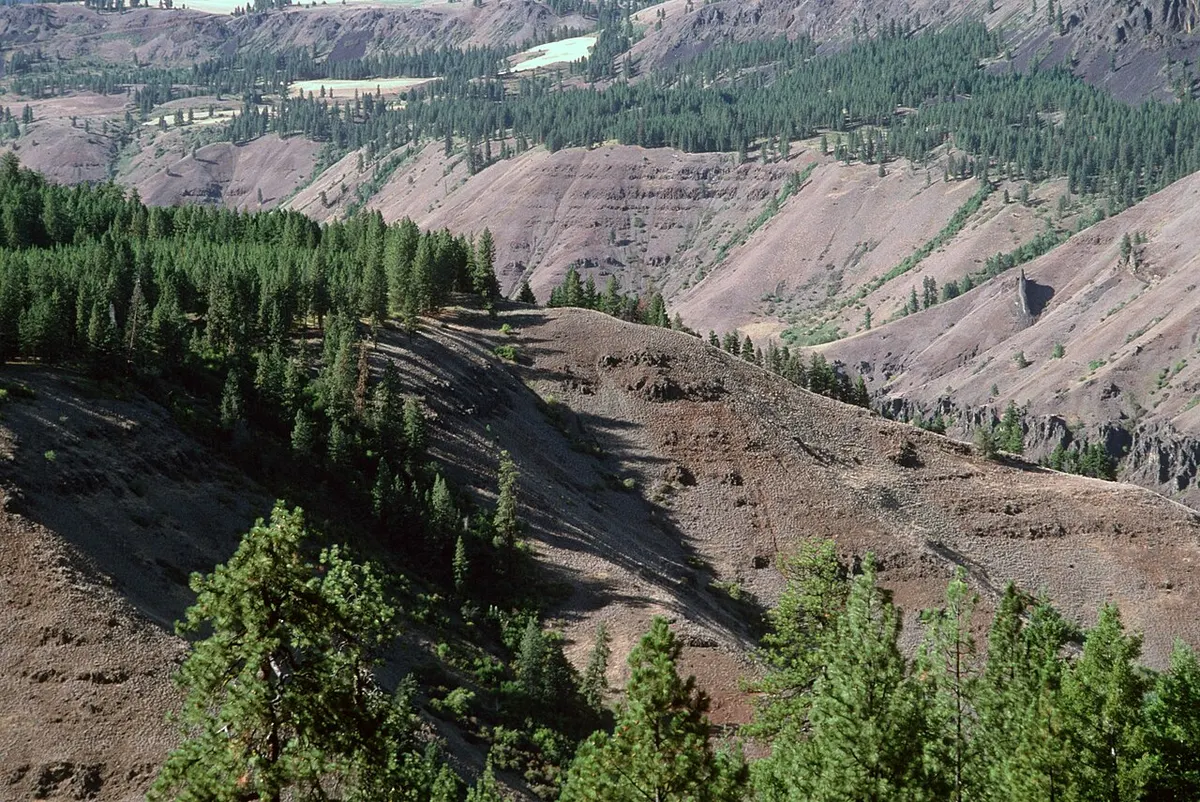
The longest record is a memo from Rodney L. Johnson, a wildlife biologist for the forest’s North Zone, to Roger E. Baker of the resource staff. It is on Umatilla National Forest letterhead from Pendleton, Oregon. Johnson wrote that he joined a group on June 17, 1982 to look at reported “Bigfoot” tracks in the Low Creek drainage of the Mill Creek Watershed.
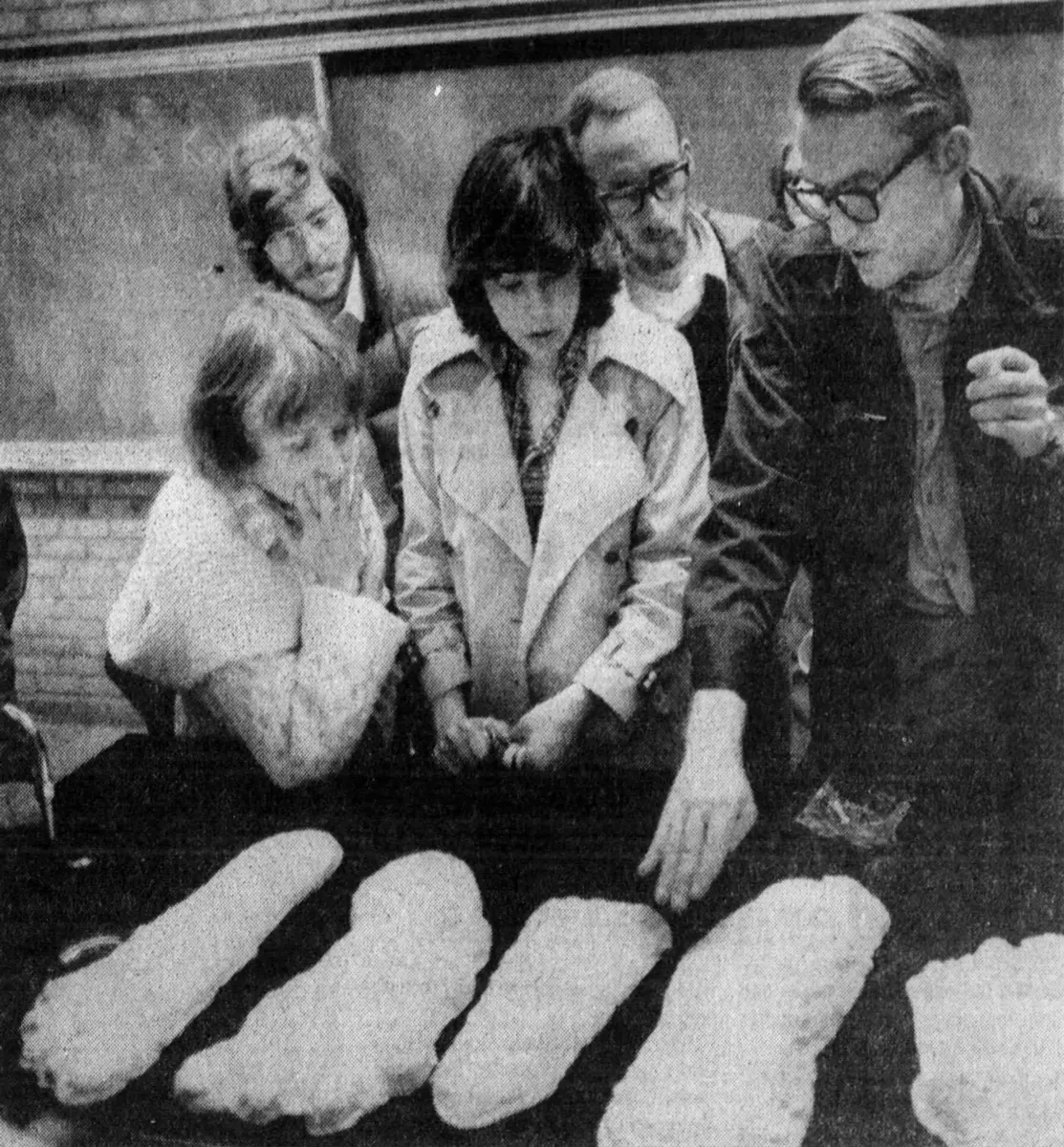
At the first site, on the Low Ridge Trail, he counted six identifiable tracks over about 25 feet in muddy ground. At the second, beside an elk wallow along the Low Creek Trail, he counted about 18 prints over about 40 feet, running into dense vegetation. Two Site A prints in his photographs were about 15 inches long and 6.5 to 7 inches wide; a photo of a Site B print shows the boot of Paul Freeman, whom the memo calls the watershed rider, for scale. A third site was not visited.
Johnson listed eight reasons the tracks were made by “something other than a 300 pound plus two footed being.” The stride was a steady four feet on slopes of about 2–3 percent and 8–25 percent. The prints were shallower than his own boot prints in the same mud. They were isolated, with a clear beginning and end, unlike the bear trails nearby. At one site the forest litter looked brushed aside. There was no sign of slipping on slopes, and some prints looked as if the foot had been rocked side to side. He also noted that the toe-print markings were clear where a foot should be worn smooth and calloused, and that the small toes lacked pads at the tips.
If the tracks were faked, someone went to a great deal of trouble and detail.
Rodney L. Johnson, Forest Service wildlife biologist, in his June 18, 1982 memo
Johnson also wrote that the print marks “appear very natural” and would be very hard to duplicate. He said he would almost suspect that a cast of a real foot was used to make the fakes, though in that case other creases in the foot should have shown.
A hoax opinion, and the believers’ view
A second memo, dated July 28, 1982 and written on a government memo form by Joel Hardin of the U.S. Border Patrol in Bellingham, Washington, is addressed to Wayne Long, district supervisor of the Walla Walla District. Hardin, who examined the tracks on June 17, called them a “very clever attempt to perpetrate a hoax.” He wrote that they were likely made with a foot coated in soft plaster or rubber, citing prints that did not press down to solid ground even in soft mud, an identical stride uphill and downhill, and tracks that appeared and ended with no sign leading to or away from them. He suggested the maker was someone with normal access to the area and knowledge of Bigfoot stories. The memo names no suspect.
According to the Post and Newsmax, Freeman, a part-time Forest Service patrolman, reported seeing a large creature in the forest and later found the footprints; the 1982 memos themselves do not mention a sighting. Newsmax adds that Grover Krantz, a Washington State University anthropologist who studied Bigfoot, later argued the prints had details difficult to fabricate. Jeremiah Byron, host of the Bigfoot Society podcast, told the Post he hopes the posting means government agencies may start releasing more information about Bigfoot.
Coverage differs on the state. KREM places the Mill Creek watershed in Washington, while NewsOn6 says near Pendleton, Oregon. The Post and Newsmax also say Washington. The memo’s letterhead is the forest headquarters in Pendleton, Oregon, and Hardin’s memo is addressed to the Walla Walla District, but neither memo says which state the tracks were in.
What the records do and do not show
The files are a government agency’s own records of what its staff found, not evidence that Bigfoot exists. In the 1982 memos, two men who examined the same tracks both ruled out a large two-legged animal. Hardin called them a hoax, while Johnson said that if they were faked, whoever made them took great care. For how scientists weigh such evidence, see our report on testing Bigfoot evidence, the Bigfoot entry, and the state pages for Oregon, Washington and Montana.
Sources
- U.S. Forest Service: FOIA Reading Room, “Bigfoot/Sasquatch Records” (posted October 15, 2026)
- U.S. Forest Service: Documentation of Investigation into Sighting of “Bigfoot” Tracks in the Mill Creek Watershed (R. L. Johnson memo, June 18, 1982; with J. Hardin memo, July 28, 1982)
- NewsOn6: U.S. Forest Service releases records of suspected Bigfoot tracks (November 20, 2026)
- Newsmax via Yahoo News: Forest Service Releases Historical Bigfoot Records (November 20, 2026)
- KREM via Yahoo News: US Forest Service releases records on 1982 ‘Bigfoot’ tracks found in Mill Creek watershed (November 20, 2026)
- Washington Post via NZ Herald: Bigfoot believers get a boost from an unlikely ally: The US Forest Service (Annie Gowen, November 20–21, 2026)