FIELD REPORT · MONTANA
Forest Service’s Montana Bigfoot Records: A 1940s Elk Hunt, 2003 Tracks
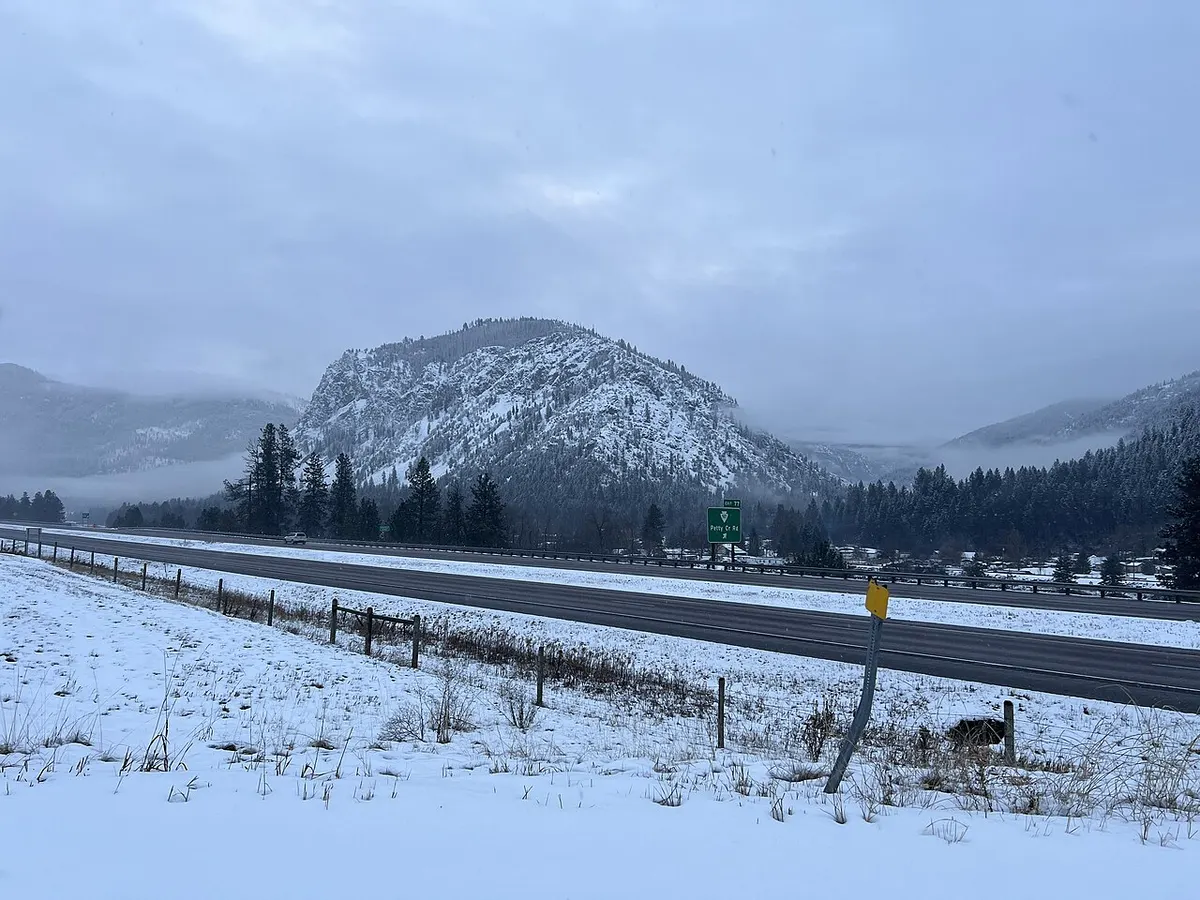
Two of the three records the agency posted are Montana accounts: a local memoir of tracks near Petty Creek and a 2003 newspaper story from Plains.
Last week’s report covered the 1982 Umatilla National Forest tracks memo in the U.S. Forest Service’s Bigfoot records. The same reading-room entry holds two Montana documents that drew less attention: a typed local-history memoir by Leo T. Kinney, written around 1980, and a page from the <i>Clark Fork Valley Press</i> of Plains, Montana, about tracks found in January 2003. We opened both scans on the agency’s site. Neither is a Forest Service investigation: one is a resident’s recollection, the other a community newspaper story, and the agency’s page adds no comment.
Petty Creek, in the 1940s
Kinney’s memoir, titled “What Do You Know About Petty Creek?”, runs six pages and is mostly ordinary local history: homesteaders and the creeks named for them, a gold legend, runaway longhorns, Army camels. Petty Creek drains into the Clark Fork River about two miles east of Alberton, which he places about 30 miles west of Missoula. The Bigfoot material is a single passage, and he does not call it that. He describes a creature “that walked on its hind legs” and writes that “there wasn’t actual sightings,” only tracks, a strong odor and a grunting sound.
As Kinney tells it, four men went to pack out a six-point bull elk and found only its entrails, with a large set of tracks in the snow leading to and away from the spot. He reasoned that it was not a bear: bears walk on their hind legs only briefly and would drag a carcass, while this animal had apparently carried the elk off the ground. About half a mile on, the tracks crossed a log three feet in diameter, and marks where the horns had dragged showed in the snow on top of it. The men decided they did not want to catch up. In later conversations, Kinney writes, they all admitted to an uneasy feeling and chills. The following year, he writes, W. W. Schmitz found the same kind of tracks, a strong smell and a grunting noise on upper Bills Creek and went elsewhere. “At this time we had never heard of Bigfoot,” Kinney adds.
Two cautions: Kinney says dates and some names in the memoir may be in error. And the year of the elk hunt is typed as “194” with the last digit overstruck on the scan, so we can’t read it with confidence (it may be a 9 typed over another digit). KIRO 7 in Seattle reports encounters in 1949 and 1950. The station also says Kinney asked the government to contact his family because “we have pictures” of the creature. In the scan we read, the “we have pictures” line comes midway through, in the section on the old Lothrop sawmill: it refers to photographs of the mill and invites anyone interested to contact the Kinneys in Alberton.
Plains, January 2003
The newspaper page is headlined “Mysterious tracks discovered near River Road West” and is bylined Ed Moreth. Its second page carries the date January 15, 2003; the file name in the reading room says January 13. According to the article, eight-year-old Austin Petersen spotted large prints in about two inches of fresh snow while visiting neighbor Jim Rohweder, 87, with his father Dean Petersen, about 3 p.m. on January 3. Rohweder first took them for bear tracks, but on a closer look they noticed what looked like toes, according to Petersen.
Neighbor Bob Mesing, a 45-year-old contractor, and Dean Petersen followed the tracks for about two hours, roughly 100 yards into the woods, before they faded on hard, rocky ground with little snow. Mesing said there were hundreds of prints. A photo caption gives one print as 16½ inches long and 8½ inches wide, with an average stride near five feet, and Petersen guessed the animal weighed 800 to 1,000 pounds. Mesing thought the trail came from the direction of Eddy Creek into Rohweder’s yard, then turned toward the Clark Fork River.
If someone played a hoax, they did a pretty good job.
Bob Mesing, neighbor, <i>Clark Fork Valley Press</i>, January 2003
“I don’t know if I believe in the Bigfoot theory, but the tracks were right there,” Mesing said. Petersen, a former Kalispell police officer, doubted a fake because the prints seemed to flex over rocks and sticks, and Mesing said you could tell there was an arch. They also found a large pile of droppings they could not identify. They had planned to send a sample to a lab but decided against it; Mesing said they notified no authorities but planned to give a sample to Fish and Game. Rain washed most of the prints away the next day.
What the two records do and do not show
Both accounts rest mainly on tracks, and in each case the first guess was a bear. The only sighting in either is a one-line photo caption saying Gladys Rohweder saw a hairy two-legged creature when the couple moved to River Road West some 30 years earlier. Kinney wrote decades later; the 2003 story has no casts, expert examination or tested droppings, and the prints were gone within a day. The article itself says there is “no solid, conclusive evidence that Sasquatch exists,” and notes the then-new claim, made by his family after his death in late 2002, that California man Ray Wallace faked the famous 1958 prints. KIRO 7 describes the Montana measurements as very close to the ones Rodney Johnson measured in 1982. The 1982 memo gives tracks of about 15 inches by 6½ to 7 inches, so the 2003 figures are somewhat larger.
The Forest Service has not said why the records were posted. Newsweek reported that it had emailed the agency and was awaiting a reply. The only agency-written analysis in the release is the 1982 memo pair, covered in our earlier report, where a Forest Service biologist concluded the tracks were made by something other than a 300-pound-plus two-footed animal and a Border Patrol tracker called them a hoax. For how researchers weigh track evidence, see our report on testing Bigfoot evidence, the Bigfoot entry and the Montana page.
Sources
- U.S. Forest Service: FOIA Reading Room, “Bigfoot/Sasquatch Records” (posted October 15, 2026)
- U.S. Forest Service reading room PDF: Leo T. Kinney, “What Do You Know About Petty Creek?” (written about 1980)
- U.S. Forest Service reading room PDF: Clark Fork Valley Press, “Mysterious tracks discovered near River Road West” (January 2003)
- KIRO 7: Is he real? U.S. Forest Service releases documents from Bigfoot investigations (November 20, 2026)
- NewsOn6: U.S. Forest Service releases records of suspected Bigfoot tracks (November 20, 2026)
- Newsweek: Bigfoot files released by Trump administration, what they show