COUNTRY FILE · EUROPE
Cryptids of Scotland
What cryptids are in Scotland? The best-known are Loch Ness Monster, Kelpie, Morag and Big Grey Man of Ben Macdhui, among 6 on file.
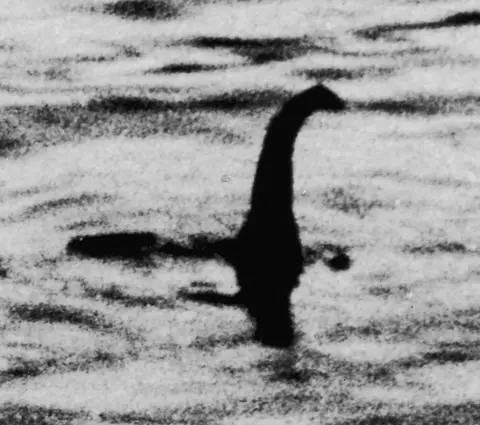
No country is more closely tied to the idea of a monster than Scotland. Since a newspaper report of an “enormous animal” in Loch Ness in 1933 – the year a new road opened along its north shore – the long-necked “Nessie” has become the world’s most famous cryptid, the subject of photographs, sonar sweeps, submarine searches and a 2018 environmental-DNA survey of the whole loch. The 1934 “Surgeon’s Photograph” turned out to be a hoax with a toy submarine, yet visitors still line the shore below Urquhart Castle hoping for a glimpse.
Cryptids reported in Scotland
 LAKE & SEA MONSTER · 1933
Loch Ness Monster
Loch Ness, near Inverness, Scottish Highlands
Scotland’s long-necked lake monster, reported in Loch Ness since 1933 – the world’s most famous cryptid, most searched-for loch and best-known hoax.
WIDELY REPORTED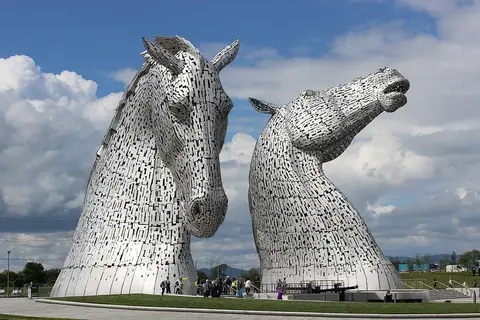 LAKE & SEA MONSTER · Pre-1759
Kelpie
Rivers and lochs throughout Scotland
The shape-shifting water horse of Scottish folklore, luring riders into lochs and rivers – honoured today by the giant Kelpies sculptures at Falkirk.
FOLKLORE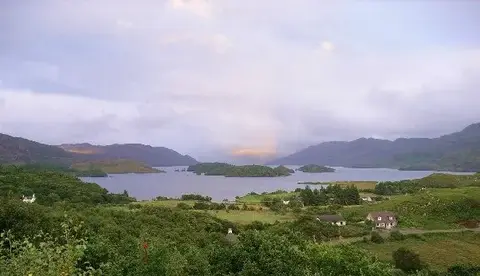 LAKE & SEA MONSTER · 1887
Morag
Loch Morar, near Mallaig, Lochaber
Nessie’s lesser-known cousin, said to haunt Loch Morar – Britain’s deepest lake – and famously reported to have rammed a fishing boat in 1969.
REGIONAL LEGEND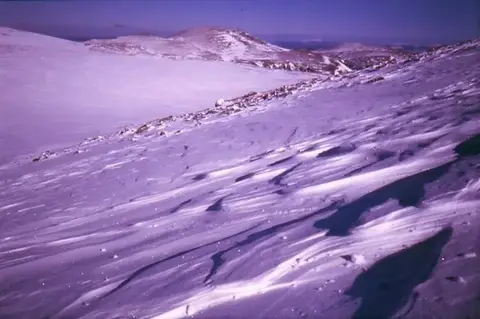 HUMANOID · 1925
Big Grey Man of Ben Macdhui
Summit plateau of Ben Macdui, Cairngorms
A towering grey figure – or just heavy footsteps in the mist – said to stalk Ben Macdui, Britain’s second-highest peak, in the Cairngorms.
REGIONAL LEGEND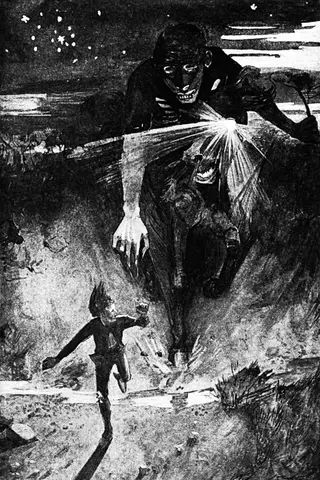 OTHER · 1891
Nuckelavee
Orkney Islands, northern Scotland
Orkney’s most dreaded sea demon: a skinless horse-and-rider monster blamed for blight, drought and plague, which could not cross running fresh water.
FOLKLORE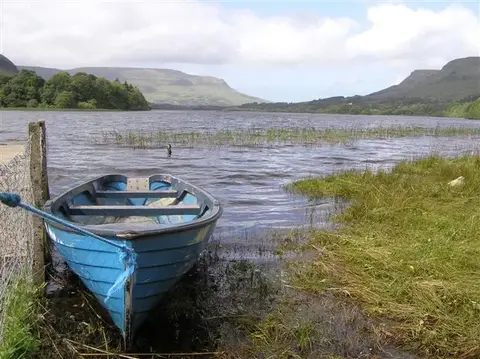 LAKE & SEA MONSTER · 1684
Dobhar-chú
Glenade Lough, County Leitrim
Ireland’s “water hound”: a giant otter-like beast said to have killed Grace Connolly at Glenade Lough in 1722 – a tale tied to a carved local gravestone.
REGIONAL LEGENDThe legends of Scotland
Nessie is only the best known of Scotland’s water beings. Older Gaelic and Scots folklore is full of shape-shifting water horses – the kelpie of the rivers and lochs, which lured riders to drown – while Orkney feared the Nuckelavee, a skinless horse-and-rider demon from the sea. Loch Morar, Britain’s deepest freshwater loch, has its own monster, Morag, which two men said struck their boat in 1969. And on the summit plateau of Ben Macdui in the Cairngorms, climbers since the 1920s have reported heavy footsteps and a looming presence in the mist known as the Big Grey Man.
Scotland’s monster trail runs from the Loch Ness Centre in Drumnadrochit to Andy Scott’s giant steel Kelpies at Falkirk, the silver sands of Morar, the Orkney Museum in Kirkwall and, for experienced hillwalkers, the high Cairngorm plateau. Reports of big cats and a few Irish-style water hounds add to a list that keeps growing.
Hotspots
The world’s most searched-for loch, with the Loch Ness Centre and the classic viewpoint at Urquhart Castle.
Britain’s deepest freshwater loch and home of Morag, near the end of the West Highland Line at Mallaig.
Britain’s second-highest mountain, haunted by the footsteps and shadow of the Big Grey Man.
Thirty-metre steel horse heads by Andy Scott at The Helix park, honouring the legendary water horse and Scotland’s working horses.
Islands of Norse-flavoured folklore where the Nuckelavee, selkies and trows are part of local storytelling.
Sightings timeline
- c. 1893Into the folk-tale anthologies Nuckelavee
George Douglas included the Nuckelavee in Scottish Fairy and Folk Tales, calling it the “Sea-Devil of the Orkney Islanders”. The book helped turn a local island terror into one of Scotland’s best-known monsters.
- 1925 (experience in 1891)Collie’s address to the Cairngorm Club Big Grey Man of Ben Macdhui
Professor J. Norman Collie described hearing giant footsteps following him in the mist during an 1891 ascent, and fleeing in terror. His account, told publicly decades later, launched the modern legend.
- May 2, 1933The Mackay sighting makes the papers Loch Ness Monster
The Inverness Courier reported that Aldie Mackay and her husband had watched a whale-like creature rolling and plunging in the loch in mid-April. The article, written by Alex Campbell, introduced the word “monster” and set off the modern legend.
- April 21, 1934The “Surgeon’s Photograph” Loch Ness Monster
The Daily Mail published a picture credited to London gynaecologist Robert Kenneth Wilson, showing a graceful neck and head rising from the water. In 1994 researchers David Martin and Alastair Boyd revealed, based on an account from the late Christian Spurling, that it showed a small model built on a toy submarine, staged by Spurling’s stepfather, big-game hunter Marmaduke Wetherell.
- October 1943Alexander Tewnion’s encounter Big Grey Man of Ben Macdhui
Tewnion said a huge shape emerged from the mist and he fired three shots from his revolver before running down the mountain. He published the story in The Scots Magazine in 1958.
- 1945Peter Densham’s experience Big Grey Man of Ben Macdhui
Densham, who worked on wartime mountain rescue, reported crunching noises and an overwhelming feeling of pressure and fear on the summit, which drove him to hurry away.
- April 23, 1960Tim Dinsdale’s film Loch Ness Monster
Aeronautical engineer Tim Dinsdale filmed a dark hump moving across the loch and leaving a wake; the footage was broadcast on BBC Panorama that June. It remained one of the strongest pieces of evidence for decades, though later enhancements suggest it shows a small boat.
- August 1969McDonell and Simpson’s encounter Morag
Duncan McDonell and William Simpson reported that a large creature struck their boat. McDonell fended it off with an oar and Simpson fired a single shot, after which the animal sank out of sight. It is the best-known Morag report.
- 1970The search widens to Loch Morar Morag
The Loch Ness Investigation Bureau extended its fieldwork to Loch Morar, and a dedicated survey team collected witness statements. Their findings appeared in The Search for Morag (1972).
- October 1987Operation Deepscan Loch Ness Monster
A flotilla of about two dozen boats fitted with echo sounders swept the loch in a line, organised by Adrian Shine of the Loch Ness Project. It logged three deep contacts that could not be relocated, but nothing that clearly indicated a large animal.
- 2013Holidaymakers’ sighting Morag
A visiting couple said they saw a solid black shape around six metres long several times over two days, once for about ten minutes. No photographs were published to confirm what they saw.
- June 2018The environmental DNA survey Loch Ness Monster
Neil Gemmell’s team from the University of Otago collected about 250 water samples to catalogue every species shedding DNA into the loch. Results released in September 2019 showed no reptile DNA, but eel DNA almost everywhere, leaving an outsized eel as the only “monster” candidate the data could not rule out.
Latest from Scotland
No recent cryptid headlines from Scotland. See all the latest cryptid news.
Videos
 ARCHIVE.ORG4:21
Loch Ness Monster 1960 News Report (BBC Panorama, 13 June 1960)
BBC Panorama (archive.org upload)The original television report from 1960, made in the wake of Tim Dinsdale’s famous film of a hump crossing the loch.
 ARCHIVE.ORG1:36
An American To Chase The Loch Ness Monster In A Submarine (1969 Newsreel)
Associated Press (archive.org upload)Period newsreel from the heyday of the 1960s hunts, when a small submarine was brought to the loch.
 ARCHIVE.ORG1:00
BBC Archive – On This Day 1987: a huge search for the Loch Ness monster is inconclusive
BBC ArchiveContemporary BBC news footage of Operation Deepscan’s line of sonar boats sweeping the loch.