COUNTRY FILE · EUROPE
Cryptids of France
What cryptids are in France? The best-known are Beast of Gévaudan and Tatzelwurm.
France’s most famous monster is not a lake serpent but a predator with a body count. Between 1764 and 1767, something stalked the shepherds of Gévaudan, the poor, high country of the Margeride in what is now Lozère and Haute-Loire. A careful modern study counted about 210 attacks and more than a hundred deaths, most of them children and young women tending animals alone. Louis XV sent dragoons, professional wolf-hunters and finally his own gun-bearer; one huge wolf was shot and displayed at Versailles in 1765, but the killings went on until a local hunter, Jean Chastel, shot a large canid on Mont Mouchet in June 1767.
Cryptids reported in France
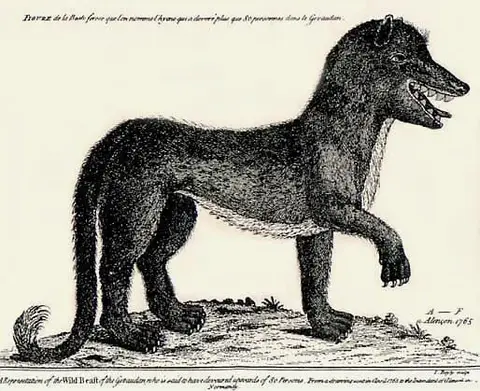 DOGMAN & CANINE · 1764
Beast of Gévaudan
Margeride Mountains, Gévaudan, south-central France
A man-eating predator that killed scores of peasants in south-central France in 1764–67, defying the king’s huntsmen and inspiring werewolf legends.
EXTINCT ANIMAL?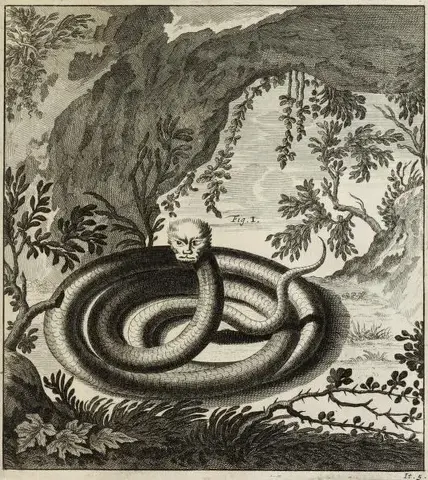 REPTILIAN · 1660
Tatzelwurm
The Alps of Switzerland, Austria and Bavaria
The “worm with paws” of the Alps: a stubby, cat-faced lizard said to lurk in mountain crevices, hiss, and kill with its poisonous breath.
REGIONAL LEGENDThe legends of France
Historians now generally blame several man-eating wolves, magnified by a sensational press and religious fear, but the Beast of Gévaudan has never lost its grip on the French imagination. It fed into much older traditions of the loup-garou, the werewolf, which French settlers later carried to Quebec and Louisiana, and it inspired Robert Louis Stevenson’s Travels with a Donkey in the Cévennes and the hit 2001 film Brotherhood of the Wolf.
France also has a share of the Alps and their legends: in the French Alps, the cat-headed mountain lizard known elsewhere as the Tatzelwurm was called the arassas. For visitors, the Margeride is a beautiful, little-visited region of granite plateaus and forests, where statues of the Beast and its heroes stand in village squares and a museum in Saugues retells the story scene by scene.
Hotspots
The upland region terrorised by the Beast in 1764–67, from Langogne to Saugues and Le Malzieu.
Home of the Musée fantastique de la Bête du Gévaudan, which recreates the story in 22 scenes.
The hill near La Besseyre-Saint-Mary where Jean Chastel killed the animal that ended the attacks in 1767.
Sightings timeline
- June 30, 1764The first official victim Beast of Gévaudan
Fourteen-year-old Jeanne Boulet was killed while tending animals. Her burial record names “the ferocious beast” as her killer, suggesting she may not have been the first person attacked.
- January 12, 1765The children of Villaret Beast of Gévaudan
Jacques Portefaix and six or seven other children drove off the Beast by sticking together and fighting back with sticks and blades. Louis XV rewarded them and paid for Portefaix’s education.
- August 11, 1765The Maid of Gévaudan Beast of Gévaudan
Marie-Jeanne Vallet, a priest’s servant, was said to have driven a spear into the Beast’s chest as it attacked a group of women, and was hailed as the “Maid of Gévaudan.”
- September 1765The wolf of Chazes Beast of Gévaudan
François Antoine, the king’s gun-bearer, killed a very large grey wolf and declared it the Beast. It was stuffed and sent to Versailles – but deadly attacks began again that winter.
- June 19, 1767Jean Chastel’s shot Beast of Gévaudan
During a hunt organised by a local marquis, Jean Chastel killed a large canid with unusual features. After this, no further fatal attacks were recorded and the Beast passed into legend.
Latest from France
No recent cryptid headlines from France. See all the latest cryptid news.