COUNTRY FILE · EUROPE
Cryptids of England
What cryptids are in England? The best-known are Beast of Exmoor, Black Shuck, Beast of Bodmin Moor and Spring-heeled Jack, among 7 on file.
England’s monsters are woven into an old, crowded landscape of churchyards, moors and coastlines, and many of them are dogs, cats and phantoms rather than lake beasts. The oldest is Black Shuck, the shaggy black hound of East Anglia, blamed for the violent storm of August 1577 that struck the churches of Bungay and Blythburgh in Suffolk – Blythburgh’s north door still bears scorch marks known as the “devil’s fingerprints.” In Victorian London, a leaping, fire-breathing figure called Spring-heeled Jack terrorised the outskirts of the city in 1837–38, becoming a star of penny dreadfuls.
Cryptids reported in England
 BIG CAT · 1970s
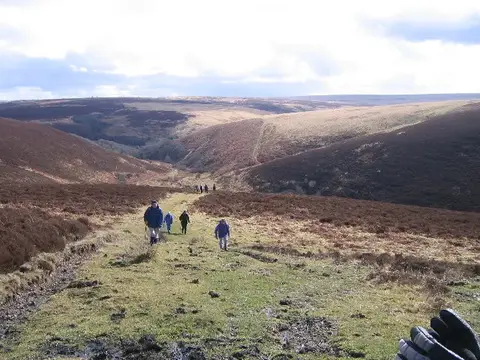
Beast of Exmoor
Exmoor, on the Devon–Somerset border
A phantom sheep-killer blamed on a puma or panther; in 1983 Royal Marine snipers were sent onto Exmoor to hunt it – and found nothing at all.
WIDELY REPORTED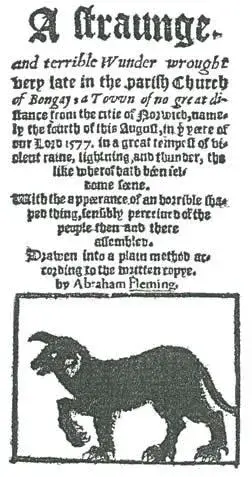 DOGMAN & CANINE · 1577
Black Shuck
Bungay and Blythburgh, Suffolk, and the coasts of East Anglia
East Anglia’s ghostly black hound, blamed for the deadly church storm of August 1577 in Bungay and Blythburgh and still said to roam the coast.
REGIONAL LEGEND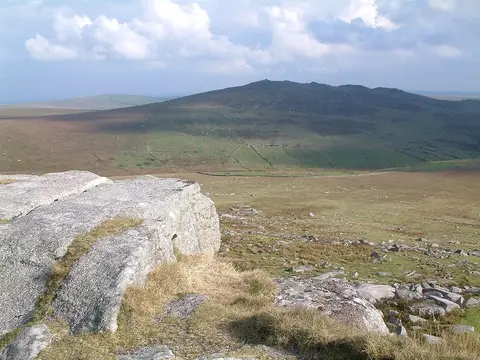 BIG CAT · 1978
Beast of Bodmin Moor
Bodmin Moor, Cornwall
A big black cat said to stalk Cornwall’s Bodmin Moor, investigated by the government in 1995 – days before a leopard skull turned up in a river.
WIDELY REPORTED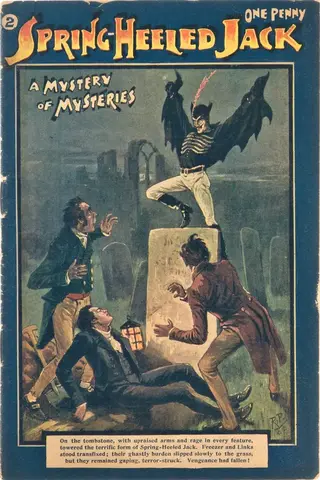 HUMANOID · 1837
Spring-heeled Jack
London’s outskirts, Aldershot and Liverpool
A leaping, fire-breathing phantom who terrorised Victorian London in 1838, later spotted at Aldershot and Liverpool – part prankster, part urban myth.
FOLKLORE LAKE & SEA MONSTER · 1975
Morgawr
Falmouth Bay and the Helford estuary, Cornwall
Cornwall’s long-necked “sea giant” of Falmouth Bay, made famous by the anonymous “Mary F” photographs of 1976 – widely suspected to be a hoax.
REGIONAL LEGEND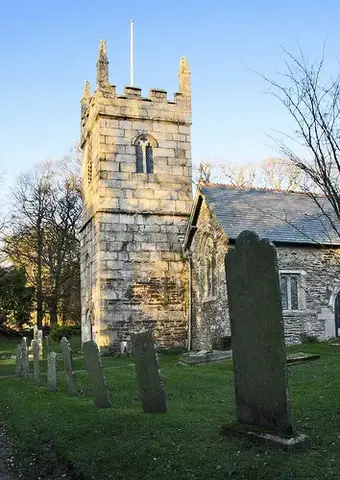 FLYING · 1976
Owlman
Mawnan church woods, near Falmouth, Cornwall
A man-sized, owl-like figure reported over Mawnan church in Cornwall in 1976 – a modern legend shadowed by the showman who first publicised it.
LOCAL LEGEND HUMANOID · 1820sTommyknockers
Gold and silver mines of Colorado’s Front Range, around Idaho Springs and Central City
Little mine spirits brought from Cornwall to the American West, said to knock in Colorado’s gold and silver mines – warning, teasing or guiding the miners.
FOLKLOREThe legends of England
Since the 1970s, England’s great obsession has been the “alien big cat.” The Beast of Exmoor, blamed for killing sheep on the moors of Devon and Somerset, was hunted by Royal Marine snipers in 1983, and the Beast of Bodmin Moor in Cornwall prompted the Ministry of Agriculture to commission an official investigation in 1995. Pumas and leopards released after the Dangerous Wild Animals Act 1976 tightened the rules on exotic pets are the favourite explanation, though no breeding population has ever been proved.
Cornwall is England’s monster capital. Besides the Bodmin beast, the county has Morgawr, the long-necked sea serpent of Falmouth Bay made famous by a set of anonymous photographs in 1976, and the Owlman, a winged, owl-like figure reported over the woods of Mawnan church that same year. A tour of England’s legends might run from the Suffolk churches of Black Shuck to Exmoor’s wild moorland, then on to Falmouth’s headlands and the lonely tors of Bodmin Moor.
Hotspots
Granite moorland where the Beast of Bodmin has been reported since the late 1970s and investigated by the government in 1995.
The moors where Royal Marines hunted the Beast of Exmoor in 1983.
The two churches struck in the 1577 storm blamed on Black Shuck, with the scorched north door at Blythburgh.
Sea-serpent waters of Morgawr and the churchyard woods where the Owlman was reported in 1976.
Sightings timeline
- March 1976The “Mary F” photographs Morgawr
The Falmouth Packet published two anonymous photographs of a long-necked animal, said to have been taken in February. The photographer was never identified.
- April 17, 1976The Melling sisters Owlman
Two young sisters on holiday, June and Vicky Melling, reported a huge winged figure hovering above the church tower. The account was publicised by Tony “Doc” Shiels.
- July 1976Fishermen off the Lizard Morgawr
Fishermen John Cock and George Vinnicombe reported a large creature near their boat, one of several reports in the wake of the photographs.
- July 3, 1976The campers’ sighting Owlman
According to Shiels, two 14-year-old girls, Sally Chapman and Barbara Perry, saw a man-sized “owl” with glowing eyes standing among the pines near the church.
- Summer 1978Renewed reports Owlman
Teenage visitors again described a feathered, owl-like creature flying up through the trees near Mawnan church, extending the legend.
- Spring 1983The South Molton sheep killings Beast of Exmoor
Farmer Eric Ley reported losing around 100 sheep in three months. The Daily Express offered a reward for footage and the story went national.
- 1983Royal Marines on the moor Beast of Exmoor
Royal Marine snipers were sent to watch for the animal over several nights. They saw nothing they could identify, and the search was called off.
- July 1995The government report Beast of Bodmin Moor
An ADAS investigation for the Ministry of Agriculture, Fisheries and Food found “no verifiable evidence” of a big cat and judged photographed animals to be domestic cats, while conceding it could not rule one out.
- Late July 1995The leopard skull Beast of Bodmin Moor
A boy found a leopard skull on the river bank. The Natural History Museum concluded it came from a leopard-skin rug and that the animal had not died in Britain.
- 2001A real lynx in London Beast of Exmoor
A young Eurasian lynx – dubbed the “Beast of Barnet” – was captured in north London, showing that escaped exotic cats do occasionally turn up.
- May 2014The Leiston Abbey dog Black Shuck
Archaeologists from DigVentures revealed that they had found the skeleton of an unusually large dog in a shallow grave at Leiston Abbey. The find drew worldwide headlines linking it to Black Shuck, though a monastic hunting dog was the sober explanation offered.
- January 2025Lynx released in the Highlands Beast of Exmoor
Four lynx, believed to have been illegally released, were caught near Kingussie, reviving debate about exotic cats loose in Britain.