FIELD FILE · LOCH-NESS-MONSTERLAKE & SEA MONSTERWIDELY REPORTED
Loch Ness Monster
Also known as Nessie, Niseag (Scottish Gaelic), <em>Nessiteras rhombopteryx</em> (proposed name, 1975)
Scotland’s long-necked lake monster, reported in Loch Ness since 1933 – the world’s most famous cryptid, most searched-for loch and best-known hoax.
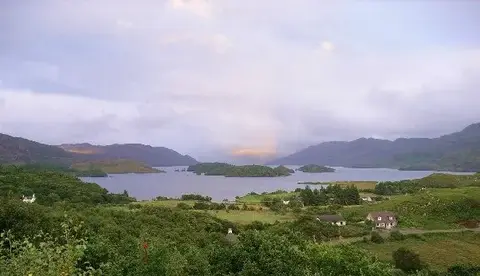
Loch Ness is a narrow, peat-dark trench of fresh water running about 37 kilometres (23 miles) along the Great Glen fault, southwest of Inverness. It reaches roughly 230 metres (750 feet) deep and holds more water than any other lake in Britain. Since the spring of 1933, thousands of people have reported seeing something large moving in it – humps, a wake with no boat, or a small head on a long neck – and the creature they describe, “Nessie”, has become the most famous cryptid on Earth.
Believers often trace the story back to the 7th-century Life of St Columba, written by the abbot Adomnán of Iona. It tells how, in about 565, Columba met mourners burying a man killed by a “water beast” in the River Ness, sent one of his companions into the water, and drove the creature away with the sign of the cross. Historians note that the episode is a saint’s miracle tale set in the river rather than the loch, and that Highland lochs were long associated with water horses and other folklore beings rather than a single living animal.
The modern legend begins in 1933. A new road – today’s A82 – had just been blasted along the north shore, opening clear views of the water, when the Inverness Courier reported on 2 May that local couple Aldie and John Mackay had seen an enormous animal rolling in the loch. The story was written by the paper’s Loch Ness correspondent, water bailiff Alex Campbell, and the word “monster” stuck. That summer George and Mrs Spicer described a long-necked beast lumbering across the road, and by the winter London newspapers were sending reporters and big-game hunters north. Nessie had become a national sensation in a matter of months.
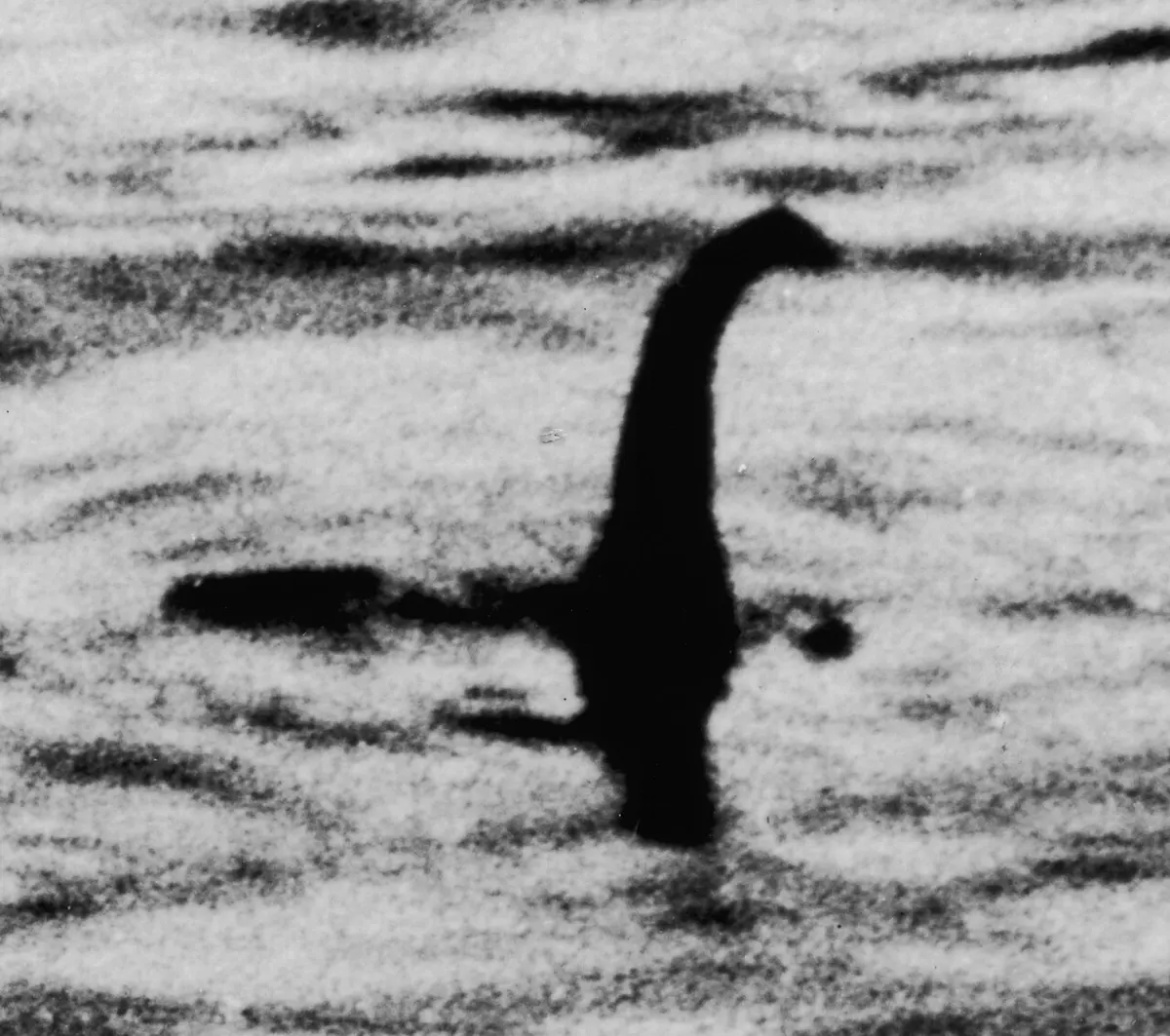
Two images fixed the creature’s look in the public mind: the “Surgeon’s Photograph” of 1934, showing a slender neck and head rising from the water, and Tim Dinsdale’s 1960 film of a hump crossing the loch. The photograph was revealed in 1994 to be a hoax built from a toy submarine, and many analysts now think Dinsdale filmed a boat. Yet the mystery fed decades of serious-minded fieldwork: the Loch Ness Investigation Bureau watched the loch with cameras from 1962 to 1972, American lawyer Robert Rines produced his famous underwater “flipper” photographs in 1972, and in 1987 Operation Deepscan swept the loch with a line of sonar boats.
Science has steadily narrowed the possibilities. The loch was scoured by glaciers and has only been a lake for about 10,000 years, it is too cold and food-poor to support a breeding population of large animals, and no carcass or bone has ever been found. In 2018 a team led by geneticist Neil Gemmell sampled the loch’s environmental DNA and found no trace of reptiles – but a great deal of eel DNA. Searches continue, most recently the August 2023 “Quest” organised by the Loch Ness Centre and Loch Ness Exploration, the biggest organised hunt in some fifty years.
Whatever lives in the loch, Nessie is very real as a cultural and economic force. She anchors tourism across the Great Glen – a 2018 estimate by Gary Campbell of the Official Loch Ness Monster Fan Club put her value to the local economy at around £41 million a year – and she has appeared in films, adverts, cartoons and countless souvenirs. Campbell’s online register logs new sightings every year, and webcams let people around the world keep watch from home.
- Status
- Widely reported
- First reported
- 1933
- Best-known location
- Loch Ness, near Inverness, Scottish Highlands
- Also called
- Nessie, Niseag (Scottish Gaelic), <em>Nessiteras rhombopteryx</em> (proposed name, 1975)
- Reported in
- Scotland
What witnesses describe
The classic description is a long, slender neck with a small head, a bulky body showing one or more humps, and sometimes flippers – a shape strongly reminiscent of a plesiosaur. Witnesses usually report a dark grey, brown or black animal between 6 and 15 metres long, though many reports are simply of humps, a V-shaped wake or a disturbance with no visible boat. It is almost always described as silent and quick to submerge.
Where and when it’s seen
Loch Ness itself, especially the stretches visible from the A82 between Drumnadrochit and Fort Augustus, around Urquhart Bay and Urquhart Castle, and the beach at Dores on the quieter south side. Most sightings happen on calm summer days, when the loch is busiest with visitors and still water makes wakes and ripples conspicuous.
Notable sightings
- c. AD 565St Columba and the water beast River Ness, near Inverness
Adomnán’s Life of St Columba, written over a century later, tells of a “water beast” that had killed a man in the River Ness and lunged at one of the saint’s followers before Columba banished it. It is the oldest story linked to Nessie, though it concerns the river and is a religious miracle tale.
- May 2, 1933The Mackay sighting makes the papers North shore near Abriachan / Drumnadrochit
The Inverness Courier reported that Aldie Mackay and her husband had watched a whale-like creature rolling and plunging in the loch in mid-April. The article, written by Alex Campbell, introduced the word “monster” and set off the modern legend.
- April 21, 1934The “Surgeon’s Photograph” Near Invermoriston
The Daily Mail published a picture credited to London gynaecologist Robert Kenneth Wilson, showing a graceful neck and head rising from the water. In 1994 researchers David Martin and Alastair Boyd revealed, based on an account from the late Christian Spurling, that it showed a small model built on a toy submarine, staged by Spurling’s stepfather, big-game hunter Marmaduke Wetherell.
- April 23, 1960Tim Dinsdale’s film Near Foyers
Aeronautical engineer Tim Dinsdale filmed a dark hump moving across the loch and leaving a wake; the footage was broadcast on BBC Panorama that June. It remained one of the strongest pieces of evidence for decades, though later enhancements suggest it shows a small boat.
- October 1987Operation Deepscan Length of Loch Ness
A flotilla of about two dozen boats fitted with echo sounders swept the loch in a line, organised by Adrian Shine of the Loch Ness Project. It logged three deep contacts that could not be relocated, but nothing that clearly indicated a large animal.
- June 2018The environmental DNA survey Sampling sites around the loch
Neil Gemmell’s team from the University of Otago collected about 250 water samples to catalogue every species shedding DNA into the loch. Results released in September 2019 showed no reptile DNA, but eel DNA almost everywhere, leaving an outsized eel as the only “monster” candidate the data could not rule out.
What could explain it?
- Hoaxes: the Surgeon’s Photograph (1934) was admitted in 1994 to be a toy submarine with a model head, and other famous images have been exposed as staged or retouched.
- Boat wakes and standing waves: the long, narrow loch lets wakes from passing vessels travel for kilometres and arrive long after the boat has gone, producing convincing “humps”.
- Misidentified animals: swimming deer, otters, cormorants, seals that occasionally enter from the sea, and large fish such as salmon or sturgeon have all been proposed for individual reports.
- Large eels: the 2018 eDNA survey found abundant eel DNA, and Neil Gemmell suggested unusually big eels could account for some sightings – though no giant eel has been confirmed.
- Biology and geology: the loch formed after the last Ice Age, is cold and nutrient-poor, and could not feed a breeding population of large reptiles; no remains have ever been found.
- Expectation and publicity: sightings rose sharply after the 1933 road opened and the press took up the story, and people who expect to see a monster interpret logs, debris and ripples accordingly.
Legend, culture and tourism
Nessie is one of Scotland’s best-known ambassadors. Drumnadrochit, on the north shore, is the hub of “monster tourism”, with the Loch Ness Centre in the former Drumnadrochit Hotel (where the Mackay sighting story began) and boat cruises on the loch, including the vessel Deepscan, named after the 1987 sonar sweep. The legend has inspired films from The Secret of the Loch (1934) to The Water Horse (2007), the 1980s cartoon The Family-Ness, a 2015 Google Doodle and countless toys and adverts. Gary Campbell’s Official Loch Ness Monster Sightings Register records new reports each year, and the annual tally is regularly covered by the press.
Places to visit
An immersive exhibition on the loch’s geology, the legend and the scientific searches, plus cruises aboard the Deepscan.
The ruined castle on Strone Point is the classic viewpoint over the loch and one of the most frequently cited spots for sightings.
Watch
 ARCHIVE.ORG4:21
Loch Ness Monster 1960 News Report (BBC Panorama, 13 June 1960)
BBC Panorama (archive.org upload)The original television report from 1960, made in the wake of Tim Dinsdale’s famous film of a hump crossing the loch.
 ARCHIVE.ORG1:36
An American To Chase The Loch Ness Monster In A Submarine (1969 Newsreel)
Associated Press (archive.org upload)Period newsreel from the heyday of the 1960s hunts, when a small submarine was brought to the loch.
 ARCHIVE.ORG1:00
BBC Archive – On This Day 1987: a huge search for the Loch Ness monster is inconclusive
BBC ArchiveContemporary BBC news footage of Operation Deepscan’s line of sonar boats sweeping the loch.
Where it’s reported
Scotland Highland
Loch Ness Monster in the news
No recent headlines about the Loch Ness Monster. Our news desk checks every day — see all cryptid news.
Sources
- Wikipedia: Loch Ness Monster
- PBS NOVA: The Legend – the Surgeon’s Photo
- BBC Science Focus: Operation Deepscan – the hunt for the Loch Ness Monster
- Associated Press (via KTVZ): With drones and webcams, volunteer hunters join a new search for the mythical Loch Ness Monster
- The Loch Ness Experience (Loch Ness Centre), Drumnadrochit
First published · Updated