FIELD FILE · MORAGLAKE & SEA MONSTERREGIONAL LEGEND
Morag
Also known as Mòrag, Loch Morar Monster
Nessie’s lesser-known cousin, said to haunt Loch Morar – Britain’s deepest lake – and famously reported to have rammed a fishing boat in 1969.
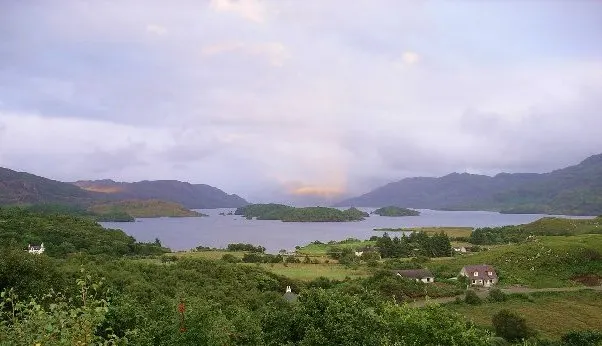
Loch Morar lies on the remote west coast of the Highlands, a few kilometres south of the fishing port of Mallaig. It is about 19 kilometres long and plunges to some 310 metres, making it the deepest body of fresh water in the British Isles. Its only road runs along a short stretch of the shore, so much of the loch is reached on foot or by boat – the kind of quiet, steep-sided water where a monster legend can flourish.
The creature said to live here is called Morag, a play on the loch’s name. In local tradition she was less an animal than an omen: older stories say her appearance foretold a death. Written reports of a large animal in the loch go back to the late 19th century, and by 1981 researchers had collected around three dozen incidents, many involving more than one witness.
Morag became famous in August 1969, when two men in a motor boat, Duncan McDonell and William Simpson, said a large animal struck their vessel. McDonell pushed at it with an oar and Simpson fired a shot before it slowly sank away. The story drew national attention, and in 1970 the Loch Ness Investigation Bureau extended its watch to Loch Morar; a team led by Elizabeth Montgomery Campbell and David Solomon later published The Search for Morag (1972).
Sightings have continued at a slower pace than at Loch Ness, including a 2013 report by holidaymakers who said they watched a large black shape on the water several times over two days. Morag remains a favourite of lake-monster enthusiasts precisely because the loch is so much quieter than its famous neighbour.
- Status
- Regional legend
- First reported
- 1887
- Best-known location
- Loch Morar, near Mallaig, Lochaber
- Also called
- Mòrag, Loch Morar Monster
- Reported in
- Scotland
What witnesses describe
Descriptions vary. The 1969 witnesses described a brown animal 7–9 metres long with rough skin, three humps rising out of the water and a snake-like head; others have reported a smooth black shape, humps, or simply a large unexplained wake.
Where and when it’s seen
The deep main basin of Loch Morar and its quiet bays, such as Meoble Bay on the south shore. Reports come mostly from anglers and boat users in the summer months.
Notable sightings
- 1887Earliest recorded reports Loch Morar
Collections of Morag reports, such as those compiled for the 1970s survey, list sightings back to the late 1880s. Earlier still, local lore treated the creature as a death omen rather than an animal.
- August 1969McDonell and Simpson’s encounter Loch Morar
Duncan McDonell and William Simpson reported that a large creature struck their boat. McDonell fended it off with an oar and Simpson fired a single shot, after which the animal sank out of sight. It is the best-known Morag report.
- 1970The search widens to Loch Morar Loch Morar
The Loch Ness Investigation Bureau extended its fieldwork to Loch Morar, and a dedicated survey team collected witness statements. Their findings appeared in The Search for Morag (1972).
- 2013Holidaymakers’ sighting Loch Morar
A visiting couple said they saw a solid black shape around six metres long several times over two days, once for about ten minutes. No photographs were published to confirm what they saw.
What could explain it?
- Swimming red deer, seals and otters, all present in the area, are often suggested for humps and wakes seen at a distance.
- Boat wakes and wind effects on a long, narrow loch can create lingering waves that look like moving humps.
- Large fish or eels have been proposed, though nothing of the reported size has been found.
- The older tradition of Morag as a death omen suggests the legend began as folklore before it was reinterpreted as a living animal in the age of Nessie.
Legend, culture and tourism
Morag is a quieter, more local legend than Nessie, but she is part of the identity of Morar and Mallaig, and she appears in most books about Scottish lake monsters. The loch’s silver sands and the scenic West Highland Line from Fort William to Mallaig bring visitors past its western end.
Where it’s reported
Scotland Highland
Morag in the news
No recent headlines about the Morag. Our news desk checks every day — see all cryptid news.
Sources
First published · Updated