COUNTRY FILE · ASIA & THE MIDDLE EAST
Cryptids of Japan
What cryptids are in Japan? The best-known are Kappa, Tsuchinoko, Issie and Kussie, among 6 on file.
Japan has one of the world’s richest traditions of strange creatures, the yōkai – a vast cast of spirits, shape-shifters and monsters catalogued by Edo-period artists and scholars and still beloved today. The most famous of them is the kappa, the child-sized river imp with a water-filled dish on its head, once blamed for drownings and now found on everything from river-safety signs to cucumber sushi rolls. Edo-period naturalists collected “kappa” reports and drawings in compilations such as Suiko Kōryaku (1820), and Yanagita Kunio’s Tōno Monogatari (1910) made the rivers of Tōno in Iwate synonymous with kappa lore.
Cryptids reported in Japan
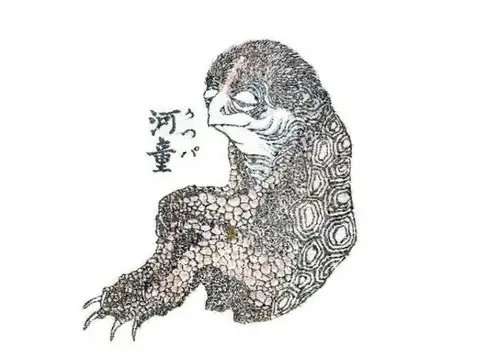 LAKE & SEA MONSTER · 1444
Kappa
Rivers, ponds and marshes throughout Japan
Japan’s child-sized river imp, with a water-filled dish on its head and a love of cucumbers and sumo – once feared for drownings, now a beloved mascot.
FOLKLORE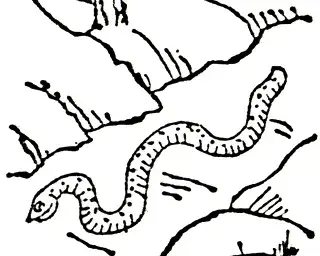 REPTILIAN · 1972
Tsuchinoko
Mountain villages of central and western Japan
A fat-bodied, short-tailed snake said to leap, roll and even speak – Japan’s favorite cryptid, hunted every spring for prizes worth millions of yen.
REGIONAL LEGEND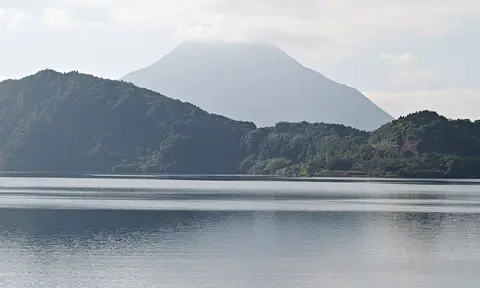 LAKE & SEA MONSTER · 1978
Issie
Lake Ikeda, Ibusuki, Kagoshima
The “Nessie” of southern Kyushu, seen as dark humps in Lake Ikeda, a deep volcanic crater lake that really is home to enormous eels nearly two meters long.
REGIONAL LEGEND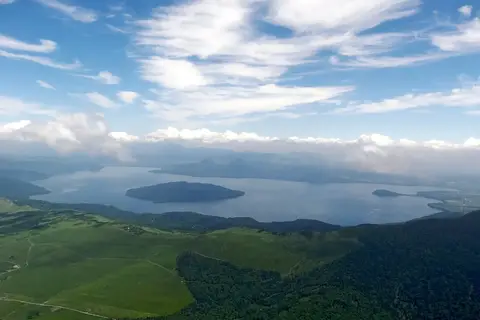 LAKE & SEA MONSTER · 1972
Kussie
Lake Kussharo, Teshikaga, eastern Hokkaido
Hokkaido’s answer to Nessie: a humped creature reported in Lake Kussharo, Japan’s largest caldera lake, during a wave of sightings in the 1970s.
REGIONAL LEGEND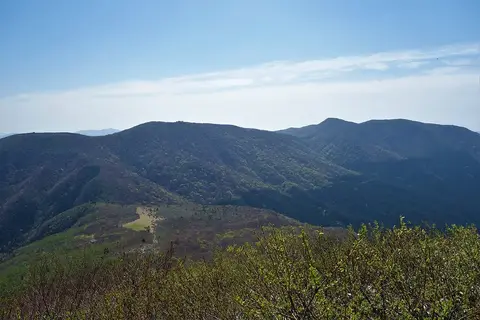 HOMINID · 1970
Hibagon
Mount Hiba, Saijō (now Shōbara), Hiroshima
A gorilla-like ape-man reported around Mount Hiba in Hiroshima in the early 1970s – so many calls came in that the town hall opened an “ape section.”
REGIONAL LEGEND LAKE & SEA MONSTER · 2000sNingen
Southern Ocean off Antarctica
A pale, whale-sized humanoid said to haunt Antarctic waters – an internet-age legend born on a Japanese message board and spread by a paranormal magazine.
FOLKLOREThe legends of Japan
Modern Japan added a new generation of mystery animals in the 1970s, when a booming media and leisure culture met remote countryside. The ape-like Hibagon was reported around Mount Hiba in Hiroshima from 1970; a humped beast nicknamed Kussie drew crowds to Hokkaido’s Lake Kussharo from the early 1970s; the tsuchinoko, a fat, leaping snake, became a national craze in 1972–1974; and in 1978 schoolchildren’s reports put a “Nessie” called Issie into Lake Ikeda, the deep volcanic crater lake of southern Kyushu. Most recently the Ningen, a pale, humanoid giant of Antarctic waters, was born on Japanese internet message boards in the 2000s.
Japanese communities have embraced their monsters with real affection. Saijō in Hiroshima turned Hibagon into a mascot, Ibusuki put up an Issie statue on the shore of Lake Ikeda, and the village of Higashishirakawa in Gifu holds an annual Tsuchinoko Festa with prize money for anyone who can catch one. Tōno sells “kappa fishing licences” for its Kappabuchi pool – perhaps the best place in the country to start a monster-hunting tour.
Hotspots
The “home of Japanese folklore”, where visitors can try for a kappa with a cucumber at the Kappabuchi pool behind Jōken-ji temple.
Mountain village that holds the Tsuchinoko Festa, a spring hunt for Japan’s legendary leaping snake.
Kyushu’s largest lake, a volcanic caldera at the foot of Mount Kaimon and home of Issie – and of real giant eels.
Japan’s largest caldera lake, where Kussie sightings drew crowds in the 1970s.
Mountain district around Mount Hiba where the ape-man Hibagon was reported from 1970 and is now a local mascot.
Sightings timeline
- December 16, 1978A white shape surfaces Issie
On an otherwise calm day, witnesses reported the middle of the lake suddenly churning as a white creature rose to the surface. A photograph from this period, attributed to a local man named Matsubara, is said to show Issie’s back.
- August 1, 1984Footprints in Tsushima Kappa
A fisherman reported strange, slimy footprints after seeing small figures by a river at night. The case was reported by the Japanese press as a modern kappa sighting.
- 1988–1990The Shimokitayama expedition Tsuchinoko
Village councilor Kazuo Nozaki offered 1 million yen for a live tsuchinoko and 300,000 yen for a skin. About 200 searchers took part over two years and found nothing; a Tsuchinoko Park opened in 2023 to commemorate the event.
- August 25, 1990Two humps toward Mount Kaimon Issie
A creature with two clear humps about 4–5 meters apart was seen swimming 200–300 meters offshore. The official record notes it may have been two or more dolphins.
- February 16, 1991A five-meter form Issie
One of several sightings that winter described a 5-meter shape in the middle of the lake. Eleven days later the Issie Countermeasures Council was established.
- March 16, 1991The tatami-raft watch Issie
A special search party built a raft of 40 tatami mats and 40 metal barrels and kept watch for nine days, while an Issie exhibition drew 26,432 visitors. Three days later a black shape surfaced 200 m offshore – resembling, by the official account, a dolphin mother and calf.
- June 30, 1991Wet footprints in a house Kappa
A couple reported finding dozens of small, wet footprints inside their home. No explanation was found, and the incident was widely linked to kappa lore.
- June 22, 1997Two creatures and a tail Kussie
Fire-department staff reported two creatures 10–15 m long, one of which dove to show a finned tail. It was one of the last widely publicized sightings.
- April 2007The hay-bale snake Tsuchinoko
A dead snake said to resemble a tsuchinoko was reportedly found in imported hay on a farm. Japanese snake specialists suggested it may have been an Australian death adder, since the hay came from Australia.
- November 2007<em>Mu</em> magazine’s “Antarctic humans” Ningen
The paranormal magazine published a satellite-map screenshot showing a pale, vaguely human-shaped object in the sea, presenting it as a possible Ningen. The image spread widely online.
- January 6, 2010The legend goes global Ningen
The English-language blog Pink Tentacle profiled the “humanoid sea creatures of the Antarctic” in a series on Japanese urban legends, introducing the story to a large Western audience.
- May 3, 2023The Tsuchinoko Festa returns Tsuchinoko
After a four-year pandemic pause, more than 2,500 people hunted for the creature with sake and dried squid as bait. The 1.31-million-yen prize went unclaimed.
Latest from Japan
No recent cryptid headlines from Japan. See all the latest cryptid news.
Videos
 ▶ VIDEO
Who Is This Japanese Yōkai That Is Obsessed With Your Butt?
Storied (PBS) – MonstrumFolklorist Dr. Emily Zarka and Japanese studies scholar Yoshiko Okuyama trace the kappa from feared river demon to cute mascot.
 ▶ VIDEO
毎年恒例「つちのこ」本気捜索 賞金は134万円 岐阜・東白川村
中京テレビNEWS (Chūkyō TV News)Japanese-language TV news report from the annual tsuchinoko hunt in Higashishirakawa, Gifu, with its 1.34-million-yen prize.
 ▶ VIDEO
見つかった?幻の生き物「つちのこ」探し 2500人が集結 賞金は134万円 岐阜県東白川村
メ〜テレニュース (Nagoya TV News)Another Japanese news report showing the crowds of searchers at the village festival.
 ▶ VIDEO
【あのニュース】鹿児島 「池田湖のイッシー」 は今?発見から30年超経過も捜索続ける人々…理由は?
サン!シャイン公式ch. (Fuji TV)Japanese-language TV feature revisiting the Issie craze and the people still watching the lake decades later.
 ▶ VIDEO
【北海道のUMA】50年前屈斜路湖で目撃された「クッシー」はいま 記者が現地で見たものは…
HTB北海道ニュース (HTB Hokkaido News)Japanese-language TV report revisiting Kussie fifty years after the 1970s sightings.
 ▶ VIDEO
「ヒバゴン」目撃から55年 企画展開催 広島・庄原市
広テレ!NEWS (Hiroshima TV)Japanese-language local news report on the 55th-anniversary Hibagon exhibition in Shōbara.