FIELD FILE · ISSIELAKE & SEA MONSTERREGIONAL LEGEND
Issie
Also known as Isshii, Isshi, Isshī
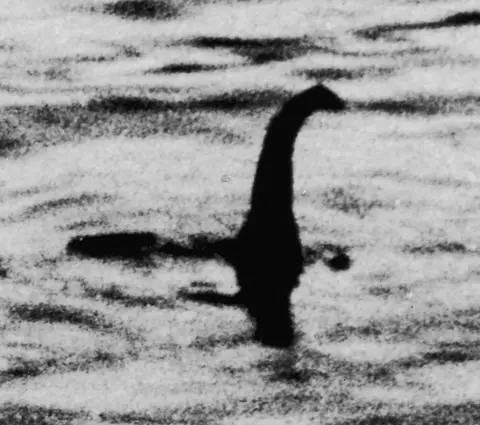
The “Nessie” of southern Kyushu, seen as dark humps in Lake Ikeda, a deep volcanic crater lake that really is home to enormous eels nearly two meters long.
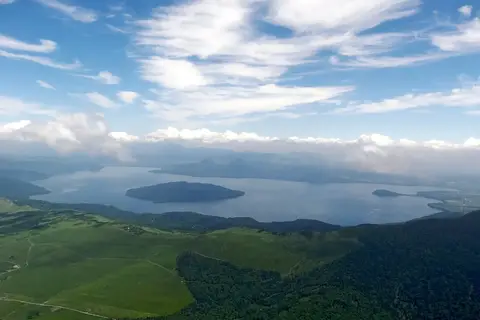
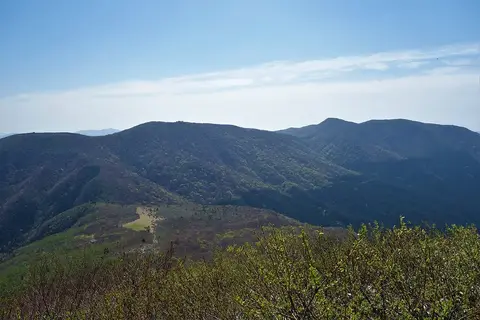
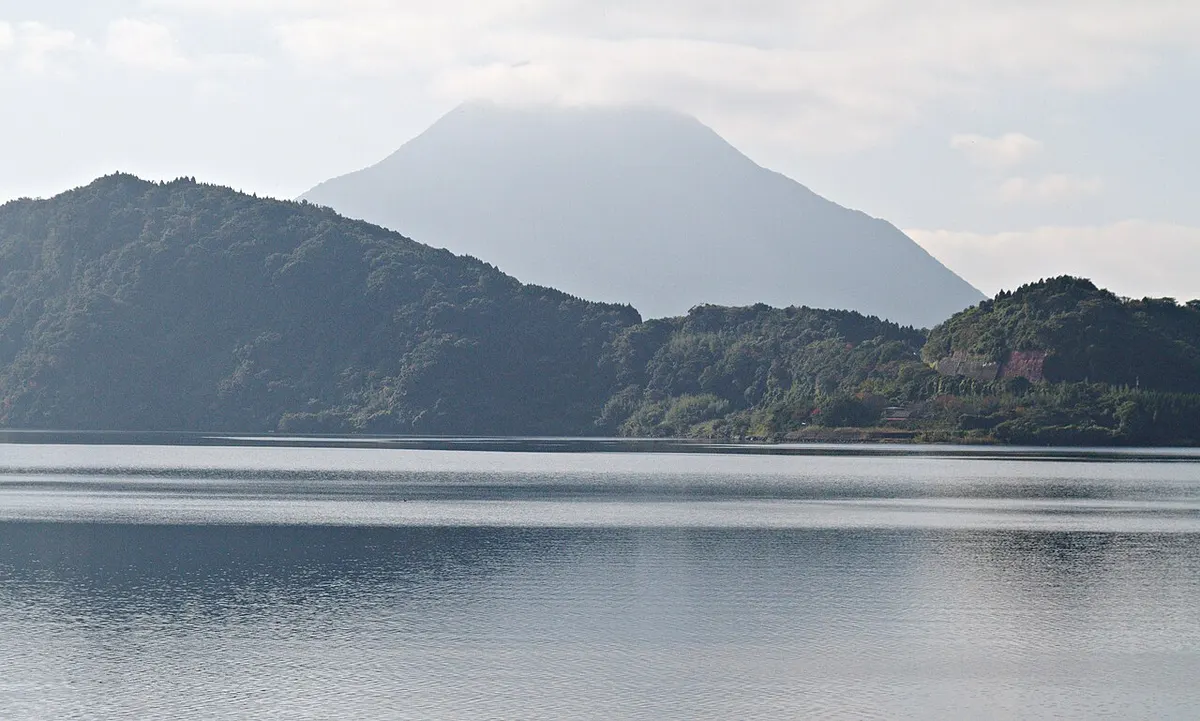
Issie is the lake monster of Lake Ikeda, a round caldera lake at the southern tip of Kyushu, in Ibusuki, Kagoshima Prefecture. The lake formed roughly 5,500–5,700 years ago when a volcanic eruption collapsed the ground; it is about 4 km across, the largest lake on Kyushu and, at 233 meters, one of the deepest in Japan. Its perfect cone-shaped neighbor, Mount Kaimon, makes it one of the region’s most photographed landscapes.
A local legend predates the monster. It tells of a white mare that lived by the lake with her foal; when a samurai took the foal away, the grieving mare threw herself into the water and became a great beast that still rises to search for her child. Older Shinto tradition also treated the lake as a sacred place of origins.
The modern Issie dates from September 3, 1978, when about twenty schoolchildren in the lakeside Ikezaki district heard a strange splash and saw something moving roughly 300 meters offshore. Reports of a dark creature with two humps about 5 meters apart followed, a photograph taken that winter was said to show its back, and the name “Issie” – modeled on Scotland’s “Nessie” – stuck immediately. Ibusuki’s tourism association set up a response committee and installed an unmanned camera station by the lake.
A second wave of sightings in 1990–1991 turned Issie into a full-blown local phenomenon. The city formed an Issie task force and a “countermeasures council,” built a raft from tatami mats and oil drums for a nine-day watch, and staged a “Let’s Play with Issie-kun” event that drew more than 26,000 visitors. Official tourism texts today wryly suggest that visitors who don’t see Issie may still spot one of the lake’s real giants: its colony of huge eels.
- Status
- Regional legend
- First reported
- 1978
- Best-known location
- Lake Ikeda, Ibusuki, Kagoshima
- Also called
- Isshii, Isshi, Isshī
- Reported in
- Japan
What witnesses describe
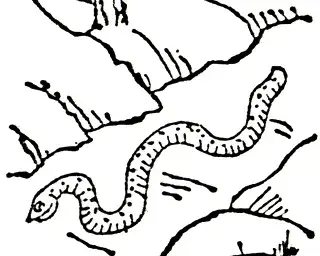
Usually described as a dark, fast-moving object showing one or two humps, each several meters long, sometimes with something like a head or tail. Estimates of its total length range from 5 m to well over 10 m. One 1978 report described a white form surfacing in the middle of the lake.
Where and when it’s seen
The open water of Lake Ikeda, a 233 m-deep caldera lake, with many reports from the Ikezaki shore and Yasuragi Park. Most sightings came in 1978 and 1990–1991.
Notable sightings
- September 3, 1978The schoolchildren’s sighting Ikezaki, Lake Ikeda
About twenty fifth-grade students heard a mysterious splash some 300 meters offshore and reported a creature moving through the water. News coverage made Issie a national story and brought crowds of tourists.
- December 16, 1978A white shape surfaces Center of Lake Ikeda
On an otherwise calm day, witnesses reported the middle of the lake suddenly churning as a white creature rose to the surface. A photograph from this period, attributed to a local man named Matsubara, is said to show Issie’s back.
- August 25, 1990Two humps toward Mount Kaimon Lake Ikeda
A creature with two clear humps about 4–5 meters apart was seen swimming 200–300 meters offshore. The official record notes it may have been two or more dolphins.
- February 16, 1991A five-meter form Center of Lake Ikeda
One of several sightings that winter described a 5-meter shape in the middle of the lake. Eleven days later the Issie Countermeasures Council was established.
- March 16, 1991The tatami-raft watch Lake Ikeda shore
A special search party built a raft of 40 tatami mats and 40 metal barrels and kept watch for nine days, while an Issie exhibition drew 26,432 visitors. Three days later a black shape surfaced 200 m offshore – resembling, by the official account, a dolphin mother and calf.
What could explain it?
- Lake Ikeda’s giant mottled eels, protected as a natural monument since 1969, reach about 1.8 m in length and 50 cm around – a plausible source of large dark shapes and swirls.
- Even the city’s own records suggest some sightings may have been dolphins or other swimming animals, wakes and boats.
- Wind slicks, wave interference and floating debris on a large, deep lake can create convincing moving “humps.”
- The legend grew in the shadow of Loch Ness, and the tourism boom it brought gave local organizations good reason to keep it alive.
Legend, culture and tourism
Issie is a cheerful local icon. An Issie statue stands on the lakeshore, Issie appears on souvenirs and signs around Ibusuki, and the 1991 campaign even gave it an official emblem. Visitors combine the lake with Ibusuki’s famous hot-sand baths and views of Mount Kaimon.
Places to visit
A scenic caldera lake with an Issie statue, lakeside viewpoints toward Mount Kaimon and giant eels.
The official city site for the hot-spring town that manages the lake area.
Watch
 ▶ VIDEO
【あのニュース】鹿児島 「池田湖のイッシー」 は今?発見から30年超経過も捜索続ける人々…理由は?
サン!シャイン公式ch. (Fuji TV)Japanese-language TV feature revisiting the Issie craze and the people still watching the lake decades later.
Where it’s reported
Japan Kagoshima
Issie in the news
No recent headlines about the Issie. Our news desk checks every day — see all cryptid news.
Sources
First published · Updated