FIELD FILE · BEAST-OF-GEVAUDANDOGMAN & CANINEEXTINCT ANIMAL?
Beast of Gévaudan
Also known as La Bête du Gévaudan, La Bèstia de Gavaudan (Occitan)
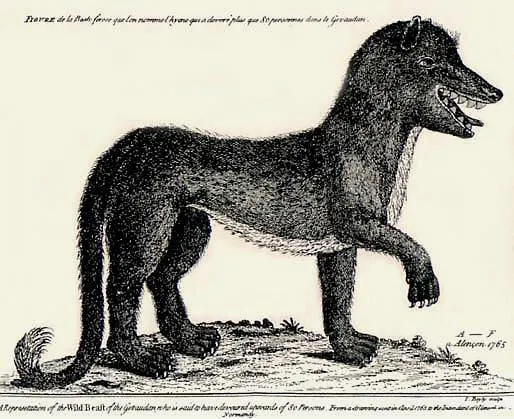
A man-eating predator that killed scores of peasants in south-central France in 1764–67, defying the king’s huntsmen and inspiring werewolf legends.
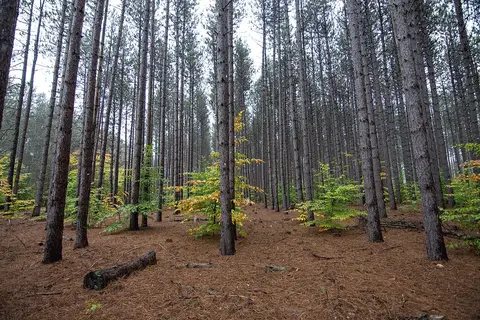
Gévaudan was an old province of south-central France, roughly today’s Lozère and part of Haute-Loire: a high, poor country of granite plateaus, pine forests and pastures in the Margeride Mountains. In the summer of 1764, its shepherds – often children and young women watching cattle alone – began to be attacked by an animal that witnesses said was “like a wolf, yet not a wolf.” The first officially recorded victim, 14-year-old Jeanne Boulet, was killed near Langogne on June 30, 1764.
Over the next three years the killings spread across an area of roughly 90 by 80 kilometres. Counts vary, but one careful 1987 study listed about 210 attacks, 113 deaths and 49 injuries. Victims were usually seized by the head or throat. The Bishop of Mende declared the Beast a scourge sent by God; survivors such as the boy Jacques Portefaix, who fought it off with other children in January 1765, were rewarded by Louis XV.
The affair became a national and even international sensation, fuelled by newspapers such as the Courrier d’Avignon, which had just come through the Seven Years’ War and needed stories. The crown sent dragoons under Captain Duhamel, then the Normandy wolf-hunters d’Enneval, then the king’s own gun-bearer, François Antoine, who in September 1765 shot a huge wolf at the Abbey of Chazes and had it stuffed and displayed at Versailles. The attacks resumed within months.
They finally ended after June 19, 1767, when a local farmer and hunter, Jean Chastel, killed a large canid on the slopes of Mont Mouchet. What exactly the Beast was – one wolf, several wolves, a wolf–dog hybrid or something more exotic – has been argued over ever since, and the story has become one of France’s most enduring legends, half history and half werewolf tale.
- Type
- Dogman & canine
- Status
- Extinct animal?
- First reported
- 1764
- Best-known location
- Margeride Mountains, Gévaudan, south-central France
- Also called
- La Bête du Gévaudan, La Bèstia de Gavaudan (Occitan)
- Reported in
- France
What witnesses describe
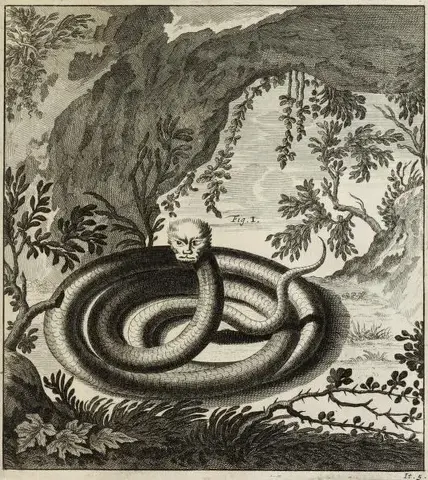
Contemporary witnesses described an animal as big as a calf, with a tawny or reddish coat, dark stripes or a dark streak along the back, a broad chest, a large head with formidable teeth, and a long tail ending in a tuft. It was said to bound enormous distances and, in rumour, to walk on its hind legs and shrug off bullets.
Where and when it’s seen
Forests, pastures and hamlets of the Margeride and the Mercoire Forest, from Langogne in the east to Saugues and Le Malzieu in the north – an upland region where people worked alone with livestock far from villages.
Notable sightings
- June 30, 1764The first official victim Les Hubacs, near Langogne
Fourteen-year-old Jeanne Boulet was killed while tending animals. Her burial record names “the ferocious beast” as her killer, suggesting she may not have been the first person attacked.
- January 12, 1765The children of Villaret Chanaleilles parish
Jacques Portefaix and six or seven other children drove off the Beast by sticking together and fighting back with sticks and blades. Louis XV rewarded them and paid for Portefaix’s education.
- August 11, 1765The Maid of Gévaudan Near Paulhac
Marie-Jeanne Vallet, a priest’s servant, was said to have driven a spear into the Beast’s chest as it attacked a group of women, and was hailed as the “Maid of Gévaudan.”
- September 1765The wolf of Chazes Abbey of Chazes
François Antoine, the king’s gun-bearer, killed a very large grey wolf and declared it the Beast. It was stuffed and sent to Versailles – but deadly attacks began again that winter.
- June 19, 1767Jean Chastel’s shot Mont Mouchet, near La Besseyre-Saint-Mary
During a hunt organised by a local marquis, Jean Chastel killed a large canid with unusual features. After this, no further fatal attacks were recorded and the Beast passed into legend.
What could explain it?
- Most historians believe the killings were the work of several wolves, possibly including unusually large animals, that had learned to prey on vulnerable people – man-eating wolves were a real danger in 18th-century France.
- A wolf–dog hybrid has been suggested to explain the odd colouring and size described by witnesses and the animal Chastel killed.
- Some writers have proposed an escaped exotic animal, such as a striped hyena or a young lion, but there is no record of one escaping in the region.
- Sensational newspaper coverage, rewards for kills and religious fear probably caused unrelated wolf attacks and rumours to be blamed on a single “Beast,” inflating its legend.
- Werewolf and silver-bullet stories, along with theories that Chastel trained the animal himself, are later embellishments – the silver bullet was added by 20th-century writers.
Legend, culture and tourism
The Beast is a fixture of French popular culture, from Robert Louis Stevenson’s travel book Travels with a Donkey in the Cévennes (1879), which called it “the Napoleon Bonaparte of wolves,” to the hit 2001 film Brotherhood of the Wolf (Le Pacte des loups). Statues of the Beast and of heroes such as Marie-Jeanne Vallet and Jean Chastel stand in local villages, and the Musée fantastique de la Bête du Gévaudan in Saugues retells the story in a series of staged scenes.
Places to visit
A small museum that tells the story of the 1764–67 attacks through 22 staged scenes.
Where it’s reported
France Lozère Haute-Loire
Beast of Gévaudan in the news
No recent headlines about the Beast of Gévaudan. Our news desk checks every day — see all cryptid news.
Sources
First published · Updated