COUNTRY FILE · AFRICA
Cryptids of Cameroon
What cryptids are in Cameroon? The best-known are Mokele-mbembe, Olitiau and Emela-ntouka.
Cameroon’s place in cryptid history begins with a German officer: in 1913 Captain Ludwig Freiherr von Stein zu Lausnitz, surveying the colony of Kamerun, wrote down descriptions of a great long-necked animal in its rivers – the earliest detailed source for what would later be called the Mokele-mbembe. His report was never published, but quotations from it launched a century of speculation.
Cryptids reported in Cameroon
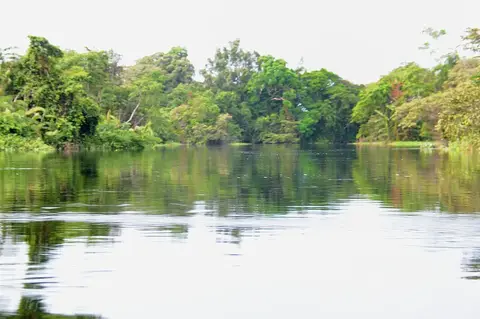 REPTILIAN · 1913
Mokele-mbembe
Likouala swamps and Lake Télé, Republic of the Congo
A long-necked, elephant-sized river beast of Congo Basin lore, hunted since 1980 by expeditions hoping to find a living sauropod in the Likouala swamps.
REGIONAL LEGEND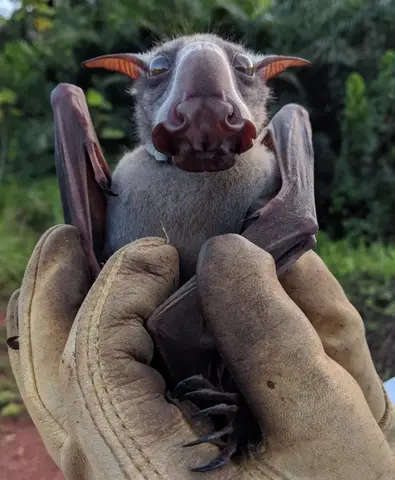 FLYING · 1932
Olitiau
Assumbo Mountains, north of Mamfe, Cameroon
A huge black, toothy bat-winged flyer that swooped at naturalist Ivan Sanderson in Cameroon’s Assumbo Mountains in 1932 – and sent local hunters running.
LOCAL LEGEND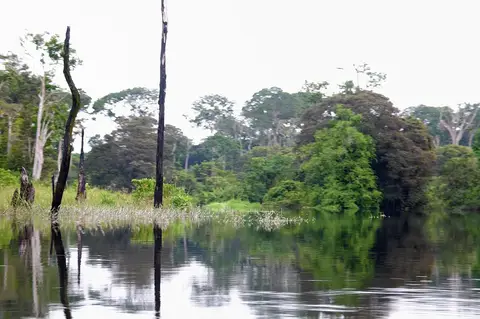 OTHER · 1954
Emela-ntouka
Likouala swamps, northern Republic of the Congo
A one-horned, elephant-sized swamp beast of the northern Congo, said to gore elephants and buffalo – pegged by some as a surviving horned dinosaur.
LOCAL LEGENDThe legends of Cameroon
Two decades later, in 1932, the naturalist Ivan Sanderson was collecting animals in the forested Assumbo hills north of Mamfe when, by his account, a huge black flyer with pointed teeth swooped at him over a river. Local hunters named it the olitiau and fled the camp. From 2004, French investigator Michel Ballot led repeated expeditions to Cameroon, collecting accounts of river monsters and, in 2005, wooden carvings of a horned beast that supporters link to the emela-ntouka.
The south-east’s rivers and rainforests, bordering the Republic of the Congo and the Central African Republic, form part of the same great forest block as the Likouala swamps, while the west of the country rises into steep, misty hills near the Nigerian border. Both landscapes are rich in real wildlife – forest elephants, gorillas and Africa’s largest fruit bats among them.
Hotspots
Site of Ivan Sanderson’s 1932 olitiau encounter on a forest river at dusk.
A south-eastern rainforest river from which Mokele-mbembe sightings were reported to cryptozoologists around 2000.
Sightings timeline
- 1913Von Stein zu Lausnitz’s survey notes Mokele-mbembe
Captain Ludwig Freiherr von Stein zu Lausnitz recorded descriptions of a huge, long-necked river animal while leading a survey in the colony. His report was never published; its description became widely known through Willy Ley’s 1941 book, though the earlier quotation by Wilhelm Bölsche noted that von Stein himself doubted the animal was real.
- 1932Sanderson and Russell’s river encounter Olitiau
While collecting hammer-headed and other fruit bats along a river at dusk, Ivan Sanderson and Gerald Russell were twice swooped at by a large black flyer with pointed teeth. Local hunters named it olitiau and fled the camp when told where it had been seen.
- 1937“Animal Treasure” published Olitiau
Sanderson’s account of the expedition appeared in print, including the olitiau episode. It became the foundation of every later retelling, as no other first-hand report has been published.
- 2005Carvings in Cameroon Emela-ntouka
Investigator Michel Ballot, who led several expeditions to Cameroon from 2004, reported finding two similar wooden carvings of a horned animal with small frilly ears. Supporters see them as independent depictions; skeptics note that artworks show what people imagine, not what exists.
Latest from Cameroon
No recent cryptid headlines from Cameroon. See all the latest cryptid news.
Videos
 ARCHIVE.ORG0:42
Mokele-Mbembe 1992 Footage
Tokyo Broadcasting System (archived copy)The famous blurry aerial footage of a wake on Lake Télé – the clip most often cited as evidence.
 ARCHIVE.ORG2:53
CNN mokele-mbembe report (1987)
CNN (archived copy)A short late-1980s news report interviewing a would-be Mokele-mbembe hunter, a snapshot of the expedition boom.