FIELD FILE · EMELA-NTOUKAOTHERLOCAL LEGEND
Emela-ntouka
Also known as Emeula-ntouka, Killer of elephants, Irizima (DR Congo variant)
A one-horned, elephant-sized swamp beast of the northern Congo, said to gore elephants and buffalo – pegged by some as a surviving horned dinosaur.
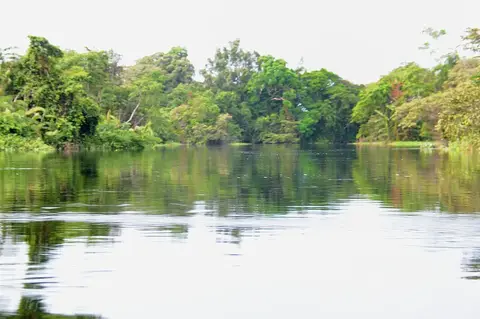
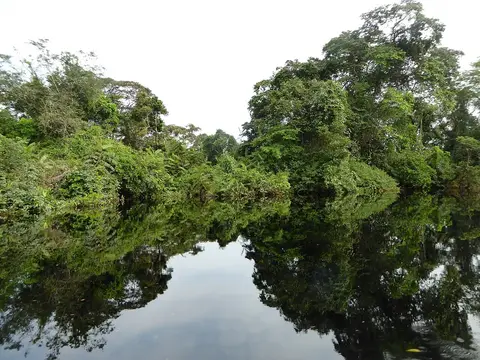
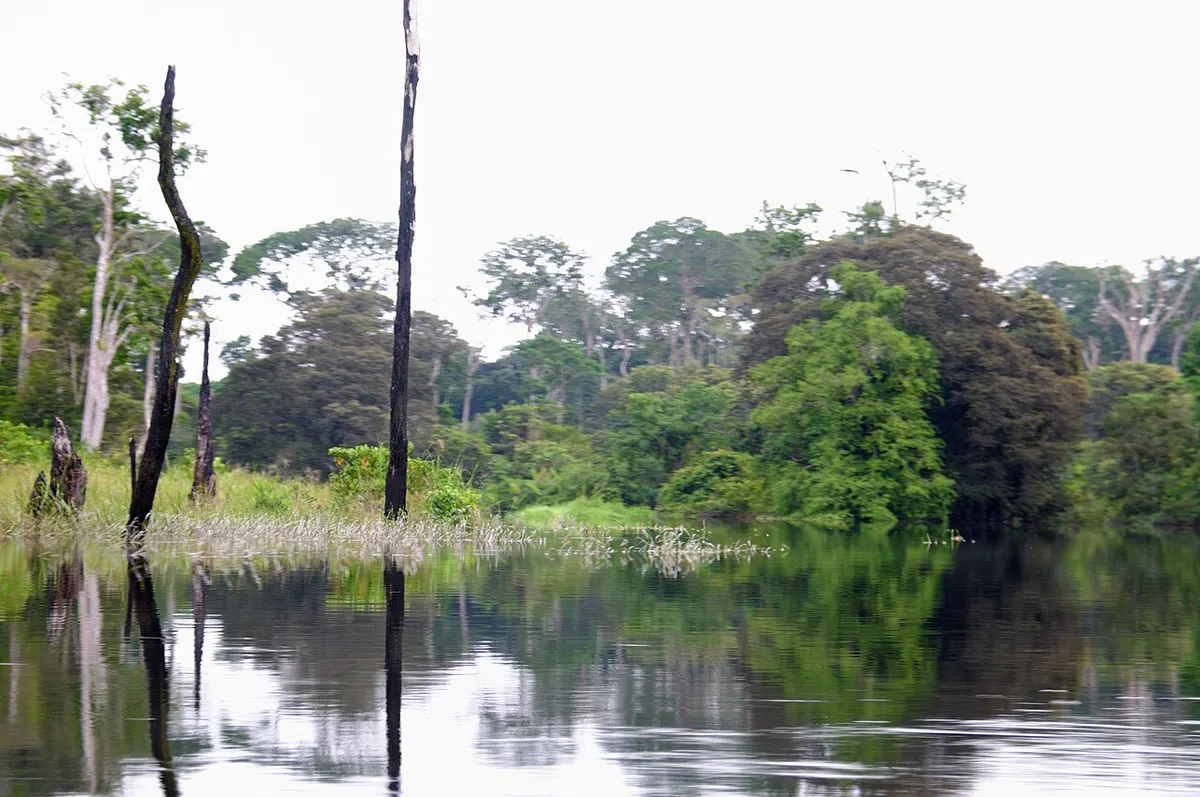
Emela-ntouka – usually rendered as “killer of elephants” in Lingala – is a large, semi-aquatic animal said to live in the lakes and swamp forests of the Likouala region in the northern Republic of the Congo, the same waterlogged country that gave the world the Mokele-mbembe. It is described as at least as big as an elephant, with a heavy tail and a single long horn on its snout, and it is said to spend much of its time submerged.
Unlike most cryptids, it is not usually described as a predator. In the stories, it eats waterside plants but is fiercely territorial: elephants, buffalo or hippos that wander into its water are said to be gored and disembowelled. That reputation for violence, rather than hunger, gives the animal its name.
The name entered print in 1954, in an article by Lucien Blancou, a former game inspector in the Likouala, published in the French zoological journal Mammalia. Blancou recorded local descriptions of a horned animal larger than a buffalo living throughout the swamps. Cryptozoologists later linked it to the chipekwe of the Bangweulu and Mweru lakes further south, and to a horned water animal reportedly speared on the Luapula River in J.E. Hughes’s 1933 memoir Eighteen Years on Lake Bangweulu.
Roy Mackal gathered further testimony during his 1980–1981 Congo expeditions and cautiously suggested that the animal might be a surviving ceratopsian – a horned dinosaur. Others, including the zoologist and writer Karl Shuker, have noted that informants describe frilly ears and other mammal-like features, pointing instead to a rhinoceros or some unknown large mammal. French researcher Michel Ballot later documented wooden carvings in Cameroon showing a horned animal that local carvers linked to the stories.
- Type
- Other
- Status
- Local legend
- First reported
- 1954
- Best-known location
- Likouala swamps, northern Republic of the Congo
- Also called
- Emeula-ntouka, Killer of elephants, Irizima (DR Congo variant)
- Reported in
- Republic of the Congo Cameroon
What witnesses describe
Elephant-sized or larger, with smooth or wrinkled grey-brown hairless skin, stout pillar-like legs, a long heavy tail and a single long, ivory-like horn on the snout. Some informants describe small frilly ears. It is said to make loud growls or roars.
Where and when it’s seen
Lakes, slow rivers and flooded swamp forest of the Likouala, especially in remote areas away from villages. It is said to stay mostly underwater by day.
Notable sightings
- 1933A horned animal on the Luapula Luapula River, Northern Rhodesia (Zambia)
In Eighteen Years on Lake Bangweulu, the hunter J.E. Hughes recounted a story of local people killing a large horned water animal on the Luapula. Later writers suggested it was the same kind of creature, though the book never used the name emela-ntouka.
- 1954Blancou’s article in Mammalia Likouala, French Equatorial Africa (Republic of the Congo)
Former game inspector Lucien Blancou published the first printed use of the name, describing a horned beast larger than a buffalo that was said to kill elephants, buffalo and hippos if disturbed.
- 1980–1981Mackal’s interviews Likouala region, Republic of the Congo
During his two expeditions in search of the Mokele-mbembe, Roy Mackal also collected descriptions of the emela-ntouka and later proposed, with caution, that it could be a horned dinosaur. No animal or remains were found.
- 2005Carvings in Cameroon Cameroon
Investigator Michel Ballot, who led several expeditions to Cameroon from 2004, reported finding two similar wooden carvings of a horned animal with small frilly ears. Supporters see them as independent depictions; skeptics note that artworks show what people imagine, not what exists.
What could explain it?
- Rhinoceroses: black rhinos once lived in parts of Central Africa, and memories of a fierce, single-horned (at a glance) animal could easily survive in oral tradition after the animals themselves disappeared.
- Other real animals: aggressive hippos, which kill more people than almost any other large African animal, and forest elephants or buffalo seen in deep water may contribute to the stories.
- Cryptozoological inflation: the ceratopsian identification comes from outside investigators, not from the communities who tell the stories; ceratopsians died out about 66 million years ago and were not aquatic.
- Overlap with the Mokele-mbembe: the two creatures share habitat, behaviour and even a horn in some accounts, suggesting overlapping or confused traditions rather than two separate unknown species.
Legend, culture and tourism
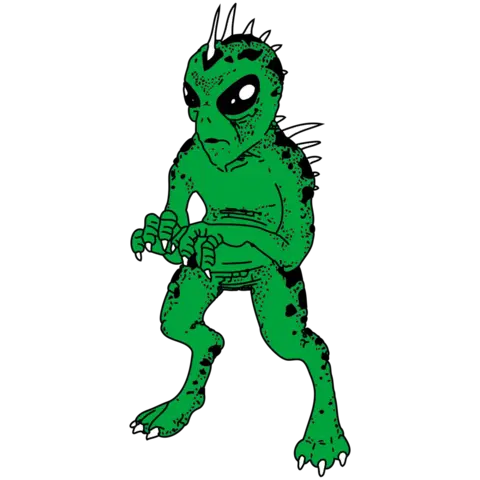
Emela-ntouka belongs to the rich river lore of the Likouala, where powerful water beings explain danger, enforce caution and mark certain lakes as places to avoid. In the West it is mostly known through cryptozoology books, dinosaur-themed games and TV, where it is often drawn as a Triceratops-like swimmer – an image far removed from the descriptions local people actually give.
Places to visit
The swamp forest where the emela-ntouka is said to live is protected as a community reserve; travel is by river and requires permits and local guides.
Where it’s reported
Republic of the Congo Cameroon Likouala
Emela-ntouka in the news
No recent headlines about the Emela-ntouka. Our news desk checks every day — see all cryptid news.
Sources
First published · Updated