FIELD FILE · OLITIAUFLYINGLOCAL LEGEND
Olitiau
Also known as Sanderson’s giant bat, Granddaddy of all bats
A huge black, toothy bat-winged flyer that swooped at naturalist Ivan Sanderson in Cameroon’s Assumbo Mountains in 1932 – and sent local hunters running.
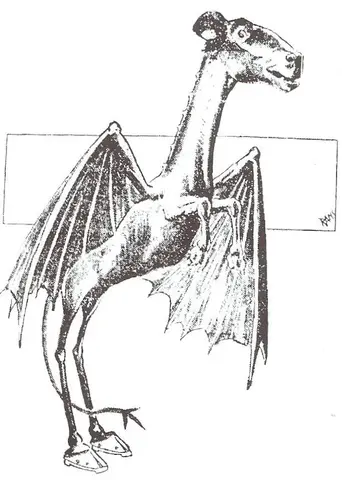
The olitiau is a large, black, bat-like flying animal known from a single dramatic encounter in the forested Assumbo hills of what was then the British Cameroons, today the Southwest Region of Cameroon. Its fame rests on the account of the Scottish-born naturalist Ivan T. Sanderson, who was collecting animals in the region in 1932 and later became one of the founders of cryptozoology.
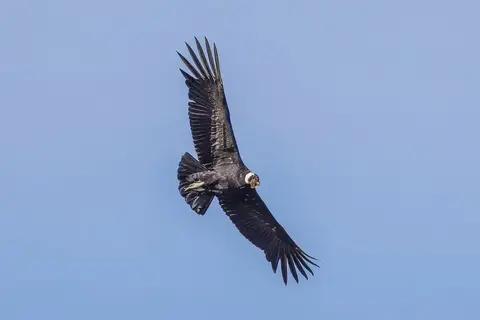
In his 1937 book Animal Treasure, Sanderson described wading along a river at dusk with his companion Russell – “George Russell” in the book, Gerald Russell in most later accounts – shooting fruit bats for the expedition’s collection. After falling into the current, he looked up to see “a black thing the size of an eagle” flying straight at him a few feet above the water, its lower jaw hanging open to show a semicircle of pointed white teeth. He ducked under the water; before dark the creature returned, teeth chattering, swept at Russell and vanished into the night.
Back at camp, Sanderson asked a group of local hunters what kind of black bat had wings as wide as his outstretched arms. One of them cried “Olitiau!”, and after a hurried discussion in their own language the hunters grabbed their guns and left, abandoning the game they had brought to sell. The next day the village chief came to ask, uneasily, whether the expedition really needed to camp at that spot. Sanderson never saw the animal again.
That reaction suggests the olitiau was – and perhaps still is – something feared in local tradition, though whether the word named an animal, a spirit or something else is unclear; one later suggestion is that it is connected with a horned dance mask representing a dangerous being. Cryptozoologists have since grouped the olitiau with Zambia’s kongamato as an “African pterosaur”, but Sanderson himself described a bat.
- Type
- Flying
- Status
- Local legend
- First reported
- 1932
- Best-known location
- Assumbo Mountains, north of Mamfe, Cameroon
- Also called
- Sanderson’s giant bat, Granddaddy of all bats
- Reported in
- Cameroon
What witnesses describe
Black, roughly the size of an eagle, with great dark membranous wings – Sanderson later spread his arms to show their width – and a gaping lower jaw lined with widely spaced, pointed white teeth. It flew low over the water with a hissing rush of air and chattering teeth.
Where and when it’s seen
Forested river gorges of the Assumbo hills north of Mamfe, near the Nigeria border, flying low along rivers at dusk among feeding fruit bats.
Notable sightings
- 1932Sanderson and Russell’s river encounter Assumbo hills, British Cameroons (Southwest Region, Cameroon)
While collecting hammer-headed and other fruit bats along a river at dusk, Ivan Sanderson and Gerald Russell were twice swooped at by a large black flyer with pointed teeth. Local hunters named it olitiau and fled the camp when told where it had been seen.
- 1937“Animal Treasure” published New York (Viking Press)
Sanderson’s account of the expedition appeared in print, including the olitiau episode. It became the foundation of every later retelling, as no other first-hand report has been published.
What could explain it?
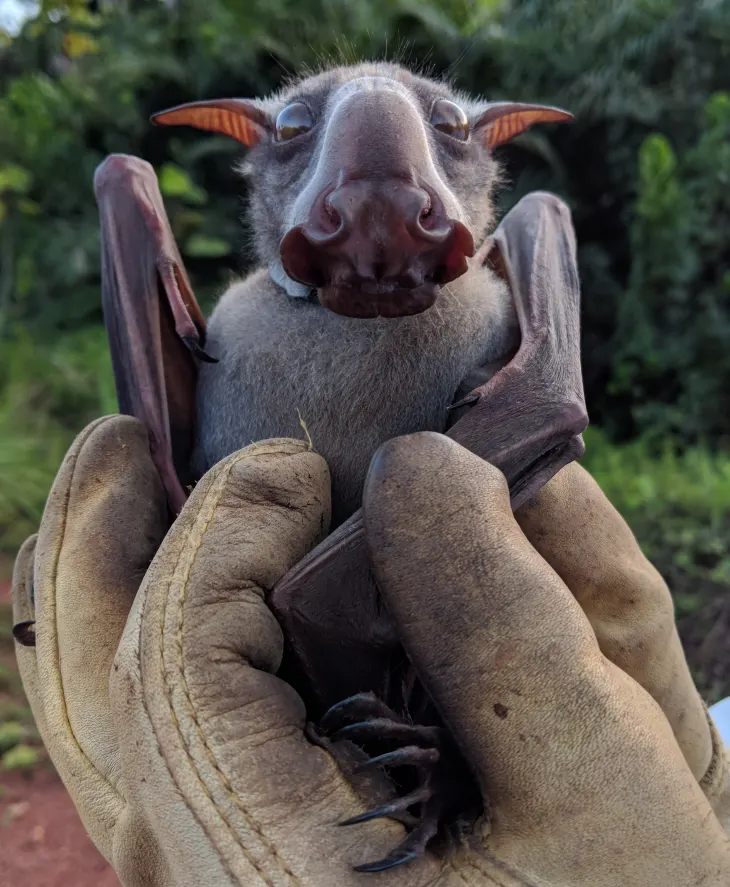
- A hammer-headed bat: Hypsignathus monstrosus, the largest bat in mainland Africa, was being shot at the same spot that evening; males have a heavy, grotesque head and wingspans approaching a metre, and one swooping at a man in the water at dusk could seem much larger.
- Misjudged size: a brief, startling glimpse of a dark flying animal at close range, in failing light, is a classic recipe for overestimating size.
- An undiscovered giant bat is not impossible in principle, but no specimen, bones or photograph have been produced in the ninety years since.
- Cultural meaning: the hunters’ alarm shows the name carried weight locally, but it may refer to a feared being or omen rather than a distinct species.
Legend, culture and tourism
The olitiau is a small but much-loved story in cryptozoology, retold in encyclopaedias and documentaries as one of the earliest modern “monster” encounters by a trained naturalist. It also illustrates a recurring pattern in which a local word, spoken in alarm, becomes the name of a cryptid in the outside world. The Assumbo region itself is rich in real wildlife, from fruit bats to great apes.
Where it’s reported
Cameroon Southwest Region
Olitiau in the news
No recent headlines about the Olitiau. Our news desk checks every day — see all cryptid news.
Sources
First published · Updated