FIELD FILE · MOKELE-MBEMBEREPTILIANREGIONAL LEGEND
Mokele-mbembe
Also known as Mokèlé-mbèmbé, Congo dinosaur, Living dinosaur of Lake Télé
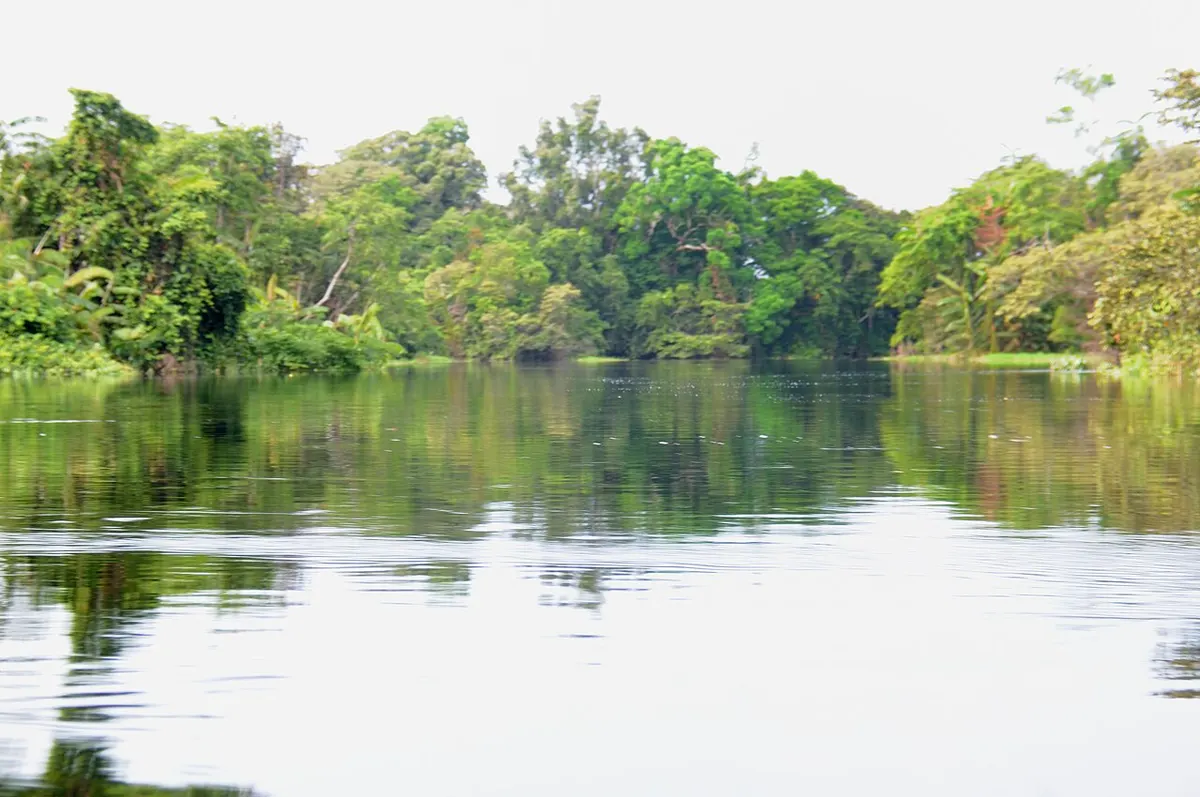
A long-necked, elephant-sized river beast of Congo Basin lore, hunted since 1980 by expeditions hoping to find a living sauropod in the Likouala swamps.
Mokele-mbembe is the name given to a large, semi-aquatic animal said to live in the rivers, lagoons and flooded forests of the Congo Basin, above all in the Likouala region of the northern Republic of the Congo and the neighbouring borderlands of Cameroon. In its best-known modern form it is described as an elephant-sized creature with a small head, a long flexible neck and a long tail – a description that has made it the most famous “living dinosaur” in cryptozoology. The name is often translated as “one who stops the flow of rivers”, although that gloss is disputed, and the stories gathered under it vary widely from village to village.
For the peoples of the swamp forest – Bantu-speaking fishing communities and forest peoples such as the Aka and Baka – the river world has long been home to powerful and dangerous beings, some of them animals, some closer to spirits. Researchers who have collected these accounts note that a single name can cover a water spirit, a remembered animal and a warning to stay away from certain stretches of water. Those traditions belong to the communities that tell them, and they do not need a dinosaur to be meaningful.
The dinosaur interpretation is a European and North American addition. Sauropod skeletons such as the Carnegie Diplodocus became celebrities in the early 1900s, and in 1909 the German animal dealer Carl Hagenbeck published claims that hunters had heard of a huge “half elephant, half dragon” in the African interior. In 1913 Captain Ludwig Freiherr von Stein zu Lausnitz, surveying German Kamerun, recorded local descriptions of a large river animal; his report was never published, and survives only in passages quoted by Wilhelm Bölsche (1929) and Willy Ley (1941). Skeptoid’s Brian Dunning points out that Bölsche recorded von Stein’s own opinion that the creature probably existed only in local imagination – a caveat later writers quietly dropped.
Bernard Heuvelmans’s books of the 1950s turned these fragments into a cryptozoological case, and in 1980 and 1981 the University of Chicago biologist Roy Mackal led two expeditions into the Likouala, the first with the herpetologist James Powell. Mackal’s 1987 book A Living Dinosaur? and the publicity around the rival 1981 trip of engineer Herman Regusters made Lake Télé – a shallow, almost round lake in the swamp forest – the world’s most famous place to look for a dinosaur. Dozens of expeditions followed, many of them organised by young-Earth creationists who hoped a living sauropod would undermine evolutionary timelines.
Not one of these expeditions has produced a body, bone, clear photograph or verified track. What they have produced is a well-documented pattern: visitors showing picture books of dinosaurs to villagers, interpreters and officials encouraging cooperation, and testimony that changes with each retelling. In 2018 a Danish team that searched Lake Télé with a DNA scientist found no monster – but did identify a species of green alga new to science.
Today the Lake Télé area lies within the Lac Télé Community Reserve, one of the largest swamp forests on Earth and home to remarkable densities of western lowland gorillas. For many visitors the real discovery is the place itself: a vast, hard-to-reach wetland whose living animals are more than enough reason to protect it.
- Type
- Reptilian
- Status
- Regional legend
- First reported
- 1913
- Best-known location
- Likouala swamps and Lake Télé, Republic of the Congo
- Also called
- Mokèlé-mbèmbé, Congo dinosaur, Living dinosaur of Lake Télé
- Reported in
- Republic of the Congo Cameroon DR Congo
What witnesses describe
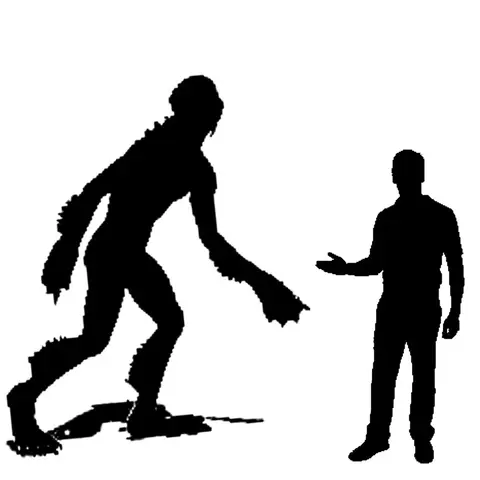
Usually described as roughly elephant- or hippo-sized, with smooth reddish-brown to grey skin, a long neck carrying a small head, a long muscular tail and stout legs. Some accounts add a single horn or long tooth, or a frill on the head; others describe something more like a large reptile or a rhinoceros.
Where and when it’s seen
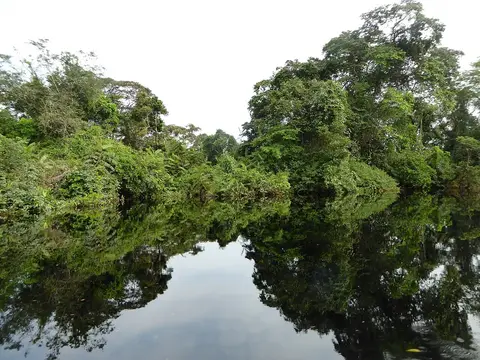
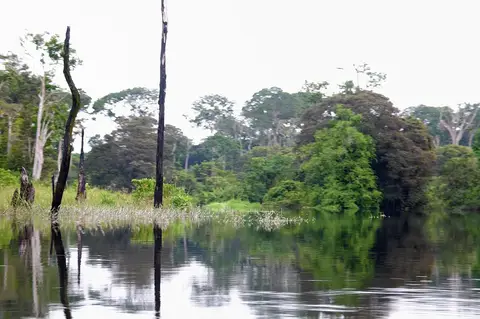
Slow rivers, oxbow lagoons and flooded swamp forest of the Likouala region, especially around Lake Télé and the Likouala-aux-Herbes River, with related stories along the Sangha and in south-eastern Cameroon. It is said to keep to deep pools and to feed on riverside plants.
Notable sightings
- 1776Abbé Proyart’s missionary tracks Kingdom of Loango (coastal Republic of the Congo)
In his Histoire de Loango, Kakongo, et autres royaumes d’Afrique, the French priest Liévin-Bonaventure Proyart relayed that missionaries passing a forest had seen the trail of an unseen, very large animal with clawed prints about three feet in circumference. Cryptozoologists later claimed it as the first Mokele-mbembe report, but the account is second-hand, names no creature, and fits a rhinoceros or hippopotamus at least as well.
- 1913Von Stein zu Lausnitz’s survey notes German Kamerun (today’s Cameroon and northern Congo)
Captain Ludwig Freiherr von Stein zu Lausnitz recorded descriptions of a huge, long-necked river animal while leading a survey in the colony. His report was never published; its description became widely known through Willy Ley’s 1941 book, though the earlier quotation by Wilhelm Bölsche noted that von Stein himself doubted the animal was real.
- 1980–1981Roy Mackal’s expeditions Likouala region, Republic of the Congo
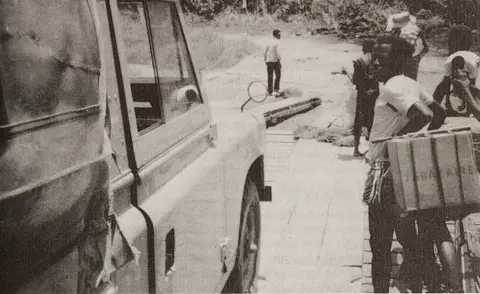
Biologist Roy Mackal travelled into the Likouala with James Powell in 1980 and returned in 1981 with a team including J. Richard Greenwell and Congolese zoologist Marcellin Agnagna. They collected many interviews and heard a large animal plunge into the water on the Likouala-aux-Herbes, but found nothing more than ambiguous tracks.
- 1981The Regusters expedition to Lake Télé Lake Télé, Republic of the Congo
American aerospace engineer Herman Regusters and his wife Kia reached Lake Télé and later said they had seen a long-necked animal in the lake, photographed it and recorded its call. The images were never judged convincing, and even fellow investigators remained unpersuaded.
- 1983Marcellin Agnagna’s lake sighting Lake Télé, Republic of the Congo
Leading a Congolese expedition, zoologist Marcellin Agnagna reported watching a head and neck rise from the lake roughly 275 metres away. He said he filmed it, but no usable footage resulted – he first blamed a forgotten lens cap, later a wrong camera setting – and critics note the details of his account shifted over time.
- 1992The Japanese aerial footage Lake Télé, Republic of the Congo
A Tokyo Broadcasting System crew filming from an aircraft over Lake Télé captured a blurry object leaving a V-shaped wake. Believers still cite it; skeptics think it most likely shows people in a dugout canoe.
What could explain it?
- Known animals: the black rhinoceros once ranged through parts of Central Africa, and hippos, elephants, crocodiles and large monitor lizards can all produce frightening glimpses, tracks and splashes. In a 2001 BBC series, Biaka informants identified the animal from a field guide as a rhinoceros.
- Leading questions and contamination: for more than a century, visitors have shown local people pictures of dinosaurs and asked if they recognise them, so “identifications” of sauropods tell us more about the questioner than the animal.
- Folklore and translation: the name may cover water spirits, cautionary tales and half-remembered animals, and the popular translation “one who stops the flow of rivers” is itself contested.
- A colonial-era dinosaur craze: early “surviving brontosaurus” tales grew out of the sauropod fossil boom of the early 1900s and stereotypes of Africa as an unchanging “prehistoric” continent – a point made by historians and palaeontologists such as Edward Guimont and Darren Naish.
- Biology: the swamp-dwelling, tail-dragging sauropod people expect to find is an outdated reconstruction, and no sauropod fossils younger than about 66 million years are known; a breeding population of giant animals in a populated region would also leave bones and trails.
- Motivated searching: many expeditions have been led or funded by young-Earth creationists hoping to discredit evolution, and none has produced verifiable physical evidence.
Legend, culture and tourism
Mokele-mbembe has inspired films such as Disney’s Baby: Secret of the Lost Legend (1985), countless books and TV episodes (MonsterQuest, National Geographic’s Beast Hunter) and a steady stream of expeditions. In the Congo it remains part of a living body of river lore told by fishing and forest communities, who have often been frustrated by outsiders more interested in dinosaurs than in their own stories or needs. The Lake Télé area is now a community reserve where conservation of gorillas, forest elephants and wetlands is the main story.
Places to visit
A vast, remote swamp-forest reserve around Lake Télé, co-managed by the Congolese government and the Wildlife Conservation Society; access requires permits and local guides.
Watch
 ARCHIVE.ORG0:42
Mokele-Mbembe 1992 Footage
Tokyo Broadcasting System (archived copy)The famous blurry aerial footage of a wake on Lake Télé – the clip most often cited as evidence.
 ARCHIVE.ORG2:53
CNN mokele-mbembe report (1987)
CNN (archived copy)A short late-1980s news report interviewing a would-be Mokele-mbembe hunter, a snapshot of the expedition boom.
Where it’s reported
Republic of the Congo Cameroon DR Congo Likouala
Mokele-mbembe in the news
No recent headlines about the Mokele-mbembe. Our news desk checks every day — see all cryptid news.
Sources
- Skeptoid: Mokele-Mbembe (Brian Dunning)
- Contingent Magazine: Hunting Dinosaurs in Central Africa (Edward Guimont)
- Scientific American, Tetrapod Zoology: Misreading the Mokele-mbembe (Darren Naish)
- University of Chicago Magazine: Roy Mackal’s wild speculation
- Internet Archive: Proyart, Histoire de Loango, Kakongo, et autres royaumes d’Afrique (1776)
- Wikipedia: Mokele-mbembe
First published · Updated