COUNTRY FILE · AFRICA
Cryptids of DR Congo
What cryptids are in DR Congo? The best-known are Mokele-mbembe, Kasai Rex and Kongamato.
The Democratic Republic of the Congo spans most of the Congo Basin, the second-largest rainforest on Earth, and its rivers and swamps have long fed outsiders’ imaginations about what might survive in the forest. In the early twentieth century, colonial-era hunters, traders and journalists traded stories of “brontosaurus” sightings and giant water beasts from Katanga to the Kasai – tales that Frank Melland, writing in 1923, already treated with suspicion.
Cryptids reported in DR Congo
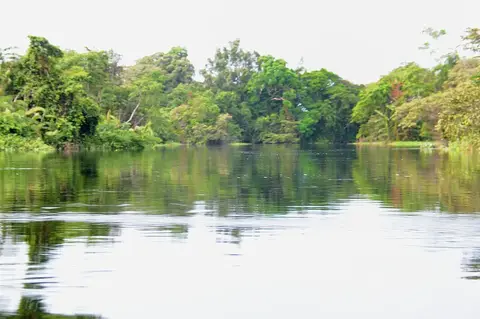 REPTILIAN · 1913
Mokele-mbembe
Likouala swamps and Lake Télé, Republic of the Congo
A long-necked, elephant-sized river beast of Congo Basin lore, hunted since 1980 by expeditions hoping to find a living sauropod in the Likouala swamps.
REGIONAL LEGEND REPTILIAN · 1932
Kasai Rex
Kasai River valley, Democratic Republic of the Congo
A 1932 tale of a giant predatory reptile devouring a rhino in the Belgian Congo, backed by a crudely faked photo – the “living T. rex” that wasn’t.
HOAX / DEBUNKED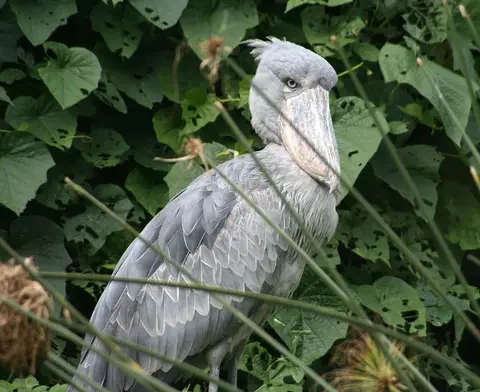 FLYING · 1923
Kongamato
Jiundu swamp, Mwinilunga district, Zambia
A red, leathery-winged flyer feared at river fords in north-western Zambia, made famous in 1923 when Kaonde men picked it out of a book of pterodactyls.
REGIONAL LEGENDThe legends of DR Congo
The most notorious of them is the Kasai Rex: a 1932 story of a Swedish planter watching a gigantic reptile devour a rhinoceros in the Kasai valley, accompanied by an obviously pasted-together photograph. Stories of long-necked river animals in the north-west, along the borders with the Republic of the Congo, are counted by cryptozoologists as part of the Mokele-mbembe tradition, and the 1956 kongamato report that put Zambia’s flying “pterosaur” back in the news came from a traveller driving home from Kasenga on the Luapula River.
Behind the legends lies one of the world’s great storehouses of real, and in some cases recently described, wildlife – the okapi and the Congo peafowl were both unknown to Western science until the twentieth century, a fact cryptid hunters have often cited as a reason for optimism.
Hotspots
The setting of the 1932 Kasai Rex story and its faked photograph.
A swampy frontier region linked to kongamato and Bangweulu-area monster stories.
Sightings timeline
- 1932Johnson’s Kasai valley story Kasai Rex
A Swedish planter named John Johnson or Johanson reportedly described a giant reptile killing and eating a rhinoceros while he and a servant watched. Later versions date the encounter to February 1932, but no original diary or independent witness has ever surfaced.
- 1932The Rhodesia Herald account and photograph Kasai Rex
A first-person story in the Rhodesia Herald described a 16-yard lizard tearing at a rhino in a swamp, and the photograph linked to it shows a crudely cut-out lizard. The picture has been regarded as an obvious fake ever since.
Latest from DR Congo
No recent cryptid headlines from DR Congo. See all the latest cryptid news.
Videos
 ARCHIVE.ORG0:42
Mokele-Mbembe 1992 Footage
Tokyo Broadcasting System (archived copy)The famous blurry aerial footage of a wake on Lake Télé – the clip most often cited as evidence.
 ARCHIVE.ORG2:53
CNN mokele-mbembe report (1987)
CNN (archived copy)A short late-1980s news report interviewing a would-be Mokele-mbembe hunter, a snapshot of the expedition boom.