Field file · Lake & sea monster · Folklore
Nyaminyami
Also known as Nyami Nyami, Zambezi river god
The serpent-bodied Zambezi river god of the Tonga, linked by tradition to the floods that struck the Kariba Dam site in the 1950s.
Nyaminyami (often spelled Nyami Nyami) is the river god of the Tonga people of the Zambezi Valley, usually pictured as a serpent-like being with the head of a fish. He is the protector and provider of the Tonga, and tribal elders and spirit mediums have the duty of speaking to him when he is angered. Tradition says he lived in a rock in the Kariba gorge, called Kariwa, a name that may mean ‘trap’ and gave the lake its name, and that anyone who went near it could be pulled underwater.
The god became widely known through the building of the Kariba Dam. Survey work began in the late 1940s and construction in the mid 1950s; the dam was completed in 1958 or 1960 depending on the source, at a cost of dozens of lives. Many Tonga were moved from their homes by the lake that rose behind the wall. Floods repeatedly damaged the works, including one in the 1957–58 rainy seasons that engineers described as a once-in-a-thousand-years (some sources say ten-thousand-years) event, and the Tonga said Nyaminyami was angry at the dam for separating him from his wife.
A frequently told story says that when workers vanished in the floods, Tonga elders called for a sacrifice, a black calf was set adrift on the river, and the workers’ bodies were found where the calf had been three days later. The calf’s disappearance is easily explained by crocodiles, but the return of the bodies has never been satisfactorily explained. Tonga tradition also attributes the small earth tremors in the Kariba area to the god trying to reach his wife.
Nyaminyami is a living part of Tonga spiritual life, not a monster, and the stories are told here with respect. Many Tonga have never accepted the dam as a victory over him, and the god’s image appears on carvings and walking sticks sold throughout Zimbabwe and Zambia.
What does Nyaminyami look like?
A serpent-like river being with a fish’s head, said to be about three metres wide; legend says the water turns red when he swims by.
Where is Nyaminyami seen?
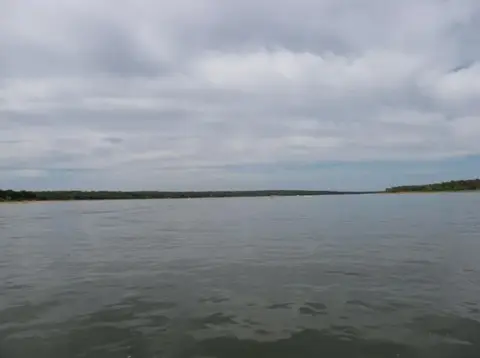
The Zambezi River gorge at Kariba and the lake behind the dam, where the Kariwa rock now lies deep under water.
Nyaminyami sightings
- February 15, 1950A cyclone flood Zambezi Valley
One local history says that a cyclone-driven storm raised the river by seven metres in a single night and a survey team died in a landslide; sources differ on this account.
- December 24, 1955Flood damages the coffer dam Kariba gorge
A record flood was said to have washed away the foundations of the coffer dam and a pontoon bridge.
- January 1958The ‘once-in-ten-thousand-years’ flood Kariba gorge
A flood described as extraordinarily rare damaged the suspension bridge, collapsing its north tower; some accounts date similar floods to 1957.
- 1960Power station switched on Kariba
The generators were switched on in 1960 according to Wikipedia; Tonga tradition says that Nyaminyami withdrew from the world of people once the dam was finished.
Is Nyaminyami real? What could explain it
- The Zambezi is one of Africa’s great flood rivers, and the dam’s builders were working in the gorge in the wet season; heavy rain can explain the flood damage.
- Crocodiles would explain the calf that vanished from the river; the recovery of bodies in the same place is likely a retelling over time.
- Tremors at Kariba are an example of reservoir-induced seismicity, caused by the weight of stored water pressing on the Earth’s crust and varying with the lake level.
Legend, culture and tourism
Nyaminyami is a symbol of Tonga identity and of the many Tonga families moved from their homes by the lake. Carved Nyami Nyami figures and walking sticks are sold throughout Zimbabwe and Zambia, and a statue of the god stands near the dam wall.
Places to visit
The concrete arch dam whose building is tied to the Nyaminyami story; there is a viewing point on both sides.
One of the world’s largest reservoirs, with houseboat trips and wildlife-viewing on its shores.
Where it’s reported
Sources
First published · Updated