FIELD FILE · KONGAMATOFLYINGREGIONAL LEGEND
Kongamato
Also known as Overwhelmer of boats, African pterodactyl
A red, leathery-winged flyer feared at river fords in north-western Zambia, made famous in 1923 when Kaonde men picked it out of a book of pterodactyls.
The kongamato is a dangerous flying creature from the river and swamp lore of north-western Zambia, best known from the Jiundu swamp in Mwinilunga district, close to the borders with Angola and the Democratic Republic of the Congo. Its name was recorded as meaning something like “overwhelmer of boats”: among the Kaonde people it was blamed for sudden floods at fords and for capsizing canoes, and travellers carried a protective charm, muchi wa kongamato, made from the root of the mulendi tree.
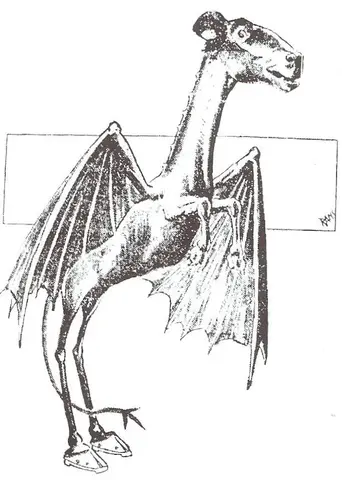
The creature reached the outside world through Frank Melland, a British colonial magistrate who published In Witch-Bound Africa in 1923. Asking about the river-crossing charm, he was told that the kongamato was “not really a bird” but more like a lizard with bat-like wings, red in colour, with a wingspan of four to seven feet and perhaps teeth in its beak. When Melland showed his informants pictures of pterodactyls from two books, he wrote, they picked it out at once – and that single scene launched a century of “living pterosaur” speculation.
Melland himself was more cautious than the legend that followed. He recorded that nobody claimed to have seen a kongamato close up and lived, that no one would guide him to one or produce any remains, and that local people regarded it as a terrible but natural animal, like a man-eating lion. He also dismissed earlier “brontosaurus” rumours from Lake Bangweulu and Katanga on the grounds that no local tradition supported them.
Later colonial-era stories pushed the kongamato east towards the Bangweulu swamps, where in the 1950s an engineer reported long-tailed flyers at dusk and a hospital patient was said to have sketched a pterosaur-like attacker. Expeditions by creationist groups and cryptozoologists have since searched Bangweulu without finding anything unexpected – except, perhaps, one of Africa’s most extraordinary real birds.
- Type
- Flying
- Status
- Regional legend
- First reported
- 1923
- Best-known location
- Jiundu swamp, Mwinilunga district, Zambia
- Also called
- Overwhelmer of boats, African pterodactyl
What witnesses describe
Described as a reddish or dark flyer with leathery, featherless, bat-like wings spanning roughly 1.2–2.1 metres (4–7 ft), a long beak or snout said to hold teeth and, in some accounts, a long tail. It is said to swoop at people in canoes or at fords.
Where and when it’s seen
Dense swamp forest, river crossings and papyrus swamps of north-western and northern Zambia, especially the Jiundu swamp near Mwinilunga and, in later reports, the Bangweulu wetlands. Reported at dusk and over water.
Notable sightings
- 1911Deaths on the Mutanda River Mutanda River near Lufumatunga village, Northern Rhodesia (Zambia)
Melland recorded a local belief that a kongamato had killed two men and two women at a crossing in 1911. He noted that skeptics pointed out the river was in flood at the time and that nobody actually witnessed how the four died.
- 1923Melland’s “In Witch-Bound Africa” Kaonde country, Mwinilunga district, Zambia
Frank Melland’s ethnography of the Kaonde included a short chapter on the kongamato. His informants, including a headman from the Jiundu country, identified a picture of a pterodactyl as the creature, giving cryptozoology its first “African pterosaur”.
- 1925A story told to the Prince of Wales’s party Southern Rhodesia (Zimbabwe)
The journalist G. Ward Price, travelling with the future Edward VIII, later wrote that the party heard of a man injured by a strange creature in a swamp, who reacted with terror when shown a picture of a pterosaur. The account is anecdotal and second-hand.
- 1956J.P.F. Brown’s dusk sighting Near Fort Rosebery (Mansa), west of Lake Bangweulu, Zambia
An engineer driving back to Salisbury from Kasenga in the Belgian Congo reported two long-tailed creatures with narrow heads and wingspans of about a metre flying slowly overhead at around 6 p.m. The account appeared in the Rhodesia Herald in 1957.
- 1957The Bangweulu hospital patient Fort Rosebery (Mansa), Zambia
A man with a chest wound reportedly told hospital staff that a great bird had attacked him in the Bangweulu swamps and, asked to draw it, sketched something resembling a pterosaur. No independent record of the case has been published.
What could explain it?
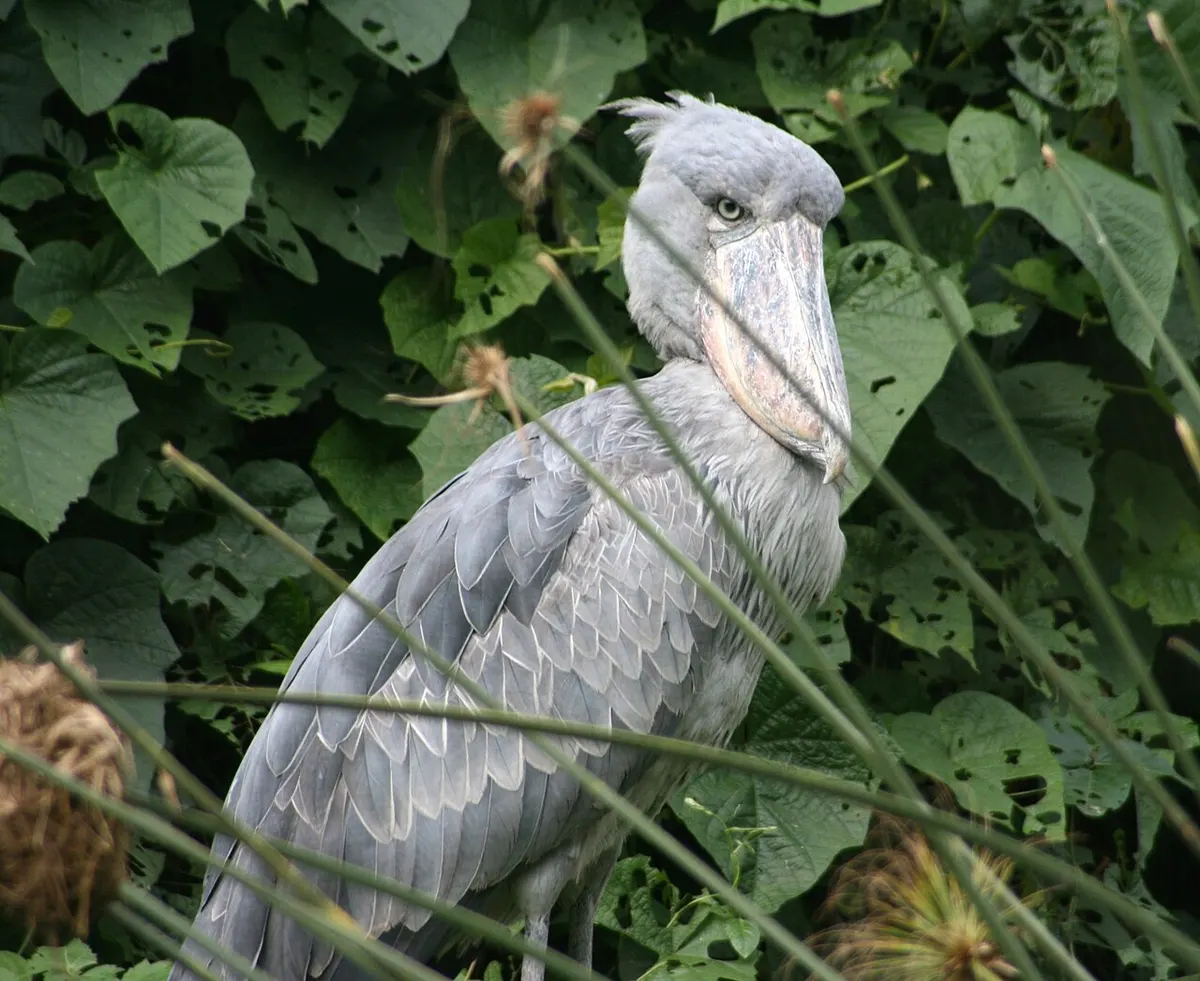
- Shoebills: the shoebill (Balaeniceps rex) of the Bangweulu swamps is a huge, grey, prehistoric-looking bird with a wingspan over 2 metres and a massive hooked bill; museum director Reay Smithers suggested it in 1957, and zoologist Maurice Burton agreed.
- Other large birds and bats: saddle-billed and marabou storks defend nests aggressively, and Africa’s large fruit bats can look alarming at dusk.
- Leading questions: showing people a picture of a pterodactyl and asking whether it matches a feared creature invites a “yes”, especially when the questioner is a colonial official.
- Folklore: the kongamato’s original powers – raising floods, holding canoes still, eating only fingers, toes and ears – mark it as a river spirit or cautionary being as much as an animal.
- No pterosaur fossils are known from after the end of the Cretaceous, about 66 million years ago, and a population of large flyers would leave bones that have never been found.
Legend, culture and tourism
The kongamato belongs to Kaonde and neighbouring traditions of dangerous river places, protective charms and respect for water crossings. In the wider world it became the founding story of the “living pterosaur” idea that later attached itself to the ropen of Papua New Guinea and to American “thunderbird” tales. Today the Bangweulu wetlands are better known for their real shoebills and black lechwe, protected in a community-owned area that welcomes birdwatchers.
Places to visit
A community-owned wetland managed with African Parks, and one of the best places in Africa to see the shoebill often proposed as the real kongamato.
Where it’s reported
DR Congo Zambia North-Western Province Luapula Province
Kongamato in the news
No recent headlines about the Kongamato. Our news desk checks every day — see all cryptid news.
Sources
First published · Updated