Field file · Lake & sea monster · Regional legend
Lukwata
Also known as Lokwata, Luquata, Balukwata (plural)
A lake serpent of the Baganda and Luo peoples of Lake Victoria, said to overturn canoes; reported by colonial officials who wondered if it was a python.
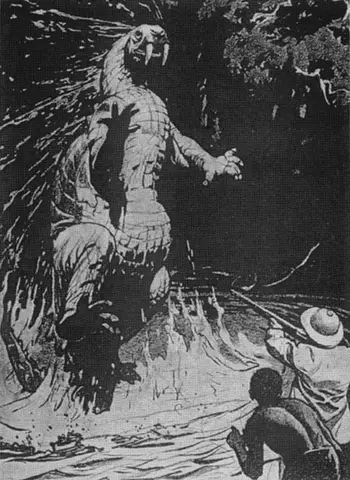
Lukwata is the Luganda word for a ‘sea serpent’, a creature of the lore of the Baganda and other peoples living on Lake Victoria. It is said to be a huge dark animal of the open water, 20–30 feet long, with smooth skin and a rounded head, that attacks fishermen and their canoes. It is also linked to whirlpools in the lake. Stories of it were told on both the Ugandan and Kenyan shores, from Uganda to the Winam (Kavirondo) Gulf.
The belief had a religious side. According to one account, the Baganda, Kavirondo and Wasoga of the lake’s north shore sacrificed livestock to it, and the creature’s pieces were thought to have magical properties and were revered as relics. Some stories say that its disappearance coincided with the sleeping-sickness epidemic in the early 20th century, which was blamed on Europeans having killed it. Scholars suggest the stories may be tied to spirits and deities of canoes and fishing.
British colonial writers brought the Lukwata to a wider audience. The administrator C. W. Hobley wrote in 1913 that people on both the east and west shores of the lake told stories of it and that the Luo said it attacked their fishing canoes; he was unsure whether large pythons or some unknown animal lay behind the tales. The creature was later discussed in William Hichens’s 1937 article ‘African Mystery Beasts’ in the magazine Discovery, and in 1977 Michael G. Kenny’s paper ‘The Powers of Lake Victoria’ treated it mainly as a cultural phenomenon.
There is no scientific evidence for a large unknown animal in the lake. Lake Victoria is, however, a living water world with Nile crocodiles, large fish and a long history of changes in its ecology, and the Lukwata remains part of the cultural identity of Baganda and neighbouring lakeshore communities.
What does Lukwata look like?
A dark, smooth-skinned lake animal 20–30 ft long with a rounded head, sometimes pictured with a lizard-like head on a long neck or as a giant fish.
Where is Lukwata seen?
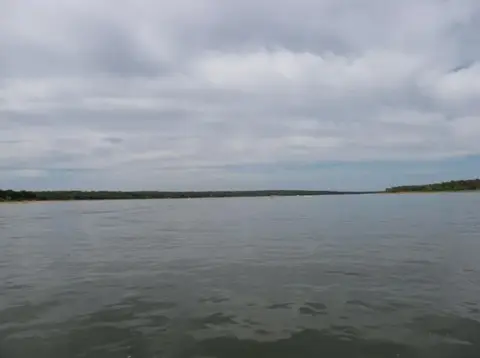
The open waters, whirlpools and gulfs of Lake Victoria, in Uganda, Kenya and Tanzania.
Lukwata sightings
- 1913Hobley records the tales Lake Victoria
C. W. Hobley wrote that people on both sides of the lake told of the Lukwata and that the Luo said it attacked canoes; he wondered about large pythons or an unknown animal.
- 1937‘African Mystery Beasts’ Lake Victoria region
William Hichens’s article in Discovery kept alive the idea that the Lukwata might be a real, undescribed animal.
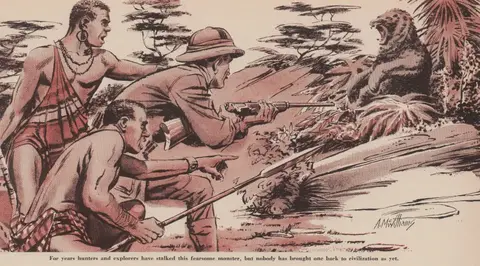
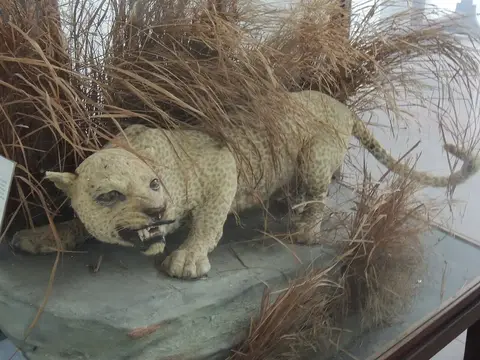
- 1948H. Bell’s turtle-like specimen Semliki River and Lake Albert, western Uganda
H. Bell’s book Witches & Fishes describes shooting a creature on Uganda’s western border that a local boy called a small lukwata; he thought it was an unusual turtle.
- 1977Anthropological study Lake Victoria
Michael G. Kenny’s ‘The Powers of Lake Victoria’ in Anthropos treated the Lukwata as a cultural, religious phenomenon.
Is Lukwata real? What could explain it
- Hobley’s own suggestion was a large python or other known animal; Nile crocodiles, giant lungfish and big Nile perch could explain glimpses of dark shapes in the water.
- The link with whirlpools and canoe disasters suggests the Lukwata also personifies the real dangers of storms and currents on Lake Victoria.
- More recent scholarship treats the creature as part of Baganda religion and social history, not as a zoological mystery.
Legend, culture and tourism
The Lukwata is part of Baganda and Luo oral tradition and has been discussed by colonial writers and cryptozoologists. A Baganda folktale tells of a friendship between a lukwata and a monkey, in which the monkey escapes the lukwata’s king who wanted its heart.
Places to visit
A beautiful group of lake islands, reached by ferry from Entebbe or Kasenyi, that gives a feel for the lake’s size and moods.
Where it’s reported
Sources
First published · Updated