FIELD FILE · MBIELU-MBIELU-MBIELUREPTILIANLOCAL LEGEND
Mbielu-mbielu-mbielu
Also known as Animal with planks growing out of its back, Congo stegosaur
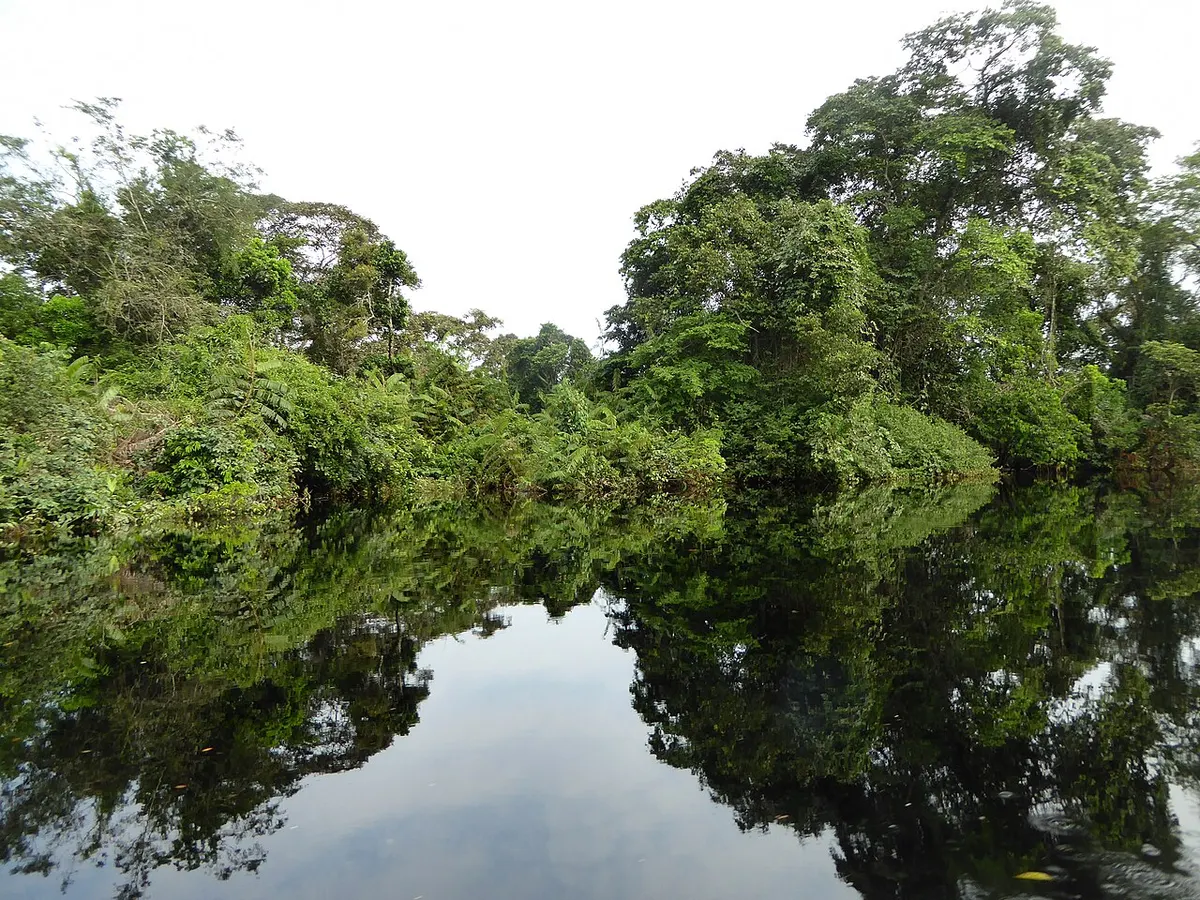
A river creature of the Likouala said to show only its back – a row of algae-covered “planks” – which some cryptozoologists have linked to a stegosaur.
Mbielu-mbielu-mbielu is one of the more obscure animals reported from the Likouala swamps of the northern Republic of the Congo. Its name is usually glossed as “the animal with planks growing out of its back”, and that is almost all anyone claims to have seen of it: a large back breaking the surface of a river or lake, topped with flat, plank-like projections often green with algae.
The creature is known almost entirely through the work of Roy Mackal, the University of Chicago biologist who searched the Likouala for the Mokele-mbembe in 1980 and 1981. In his 1987 book A Living Dinosaur? he described how a woman from the village of Bouanila, Odette Gesonget, picked a picture of Stegosaurus from the books he showed her as the animal her parents and grandparents had told her about. She had never seen it herself.
From that single interview grew the idea of a “living stegosaur” in the Congo – an idea Mackal himself did not endorse. He considered a giant monitor lizard more likely and called the animal an enigma. Later compilations place a reported first sighting at a spot called Ikeikesse near Epena, but the evidence remains a handful of second-hand descriptions.
- Type
- Reptilian
- Status
- Local legend
- First reported
- 1980
- Best-known location
- Likouala-aux-Herbes River, northern Republic of the Congo
- Also called
- Animal with planks growing out of its back, Congo stegosaur
- Reported in
- Republic of the Congo
What witnesses describe
Only the back is described: large and broad, with a row of flat, plank-like plates or ridges, frequently covered with green algae. The head, legs and tail have never been described. It is said to be harmless and to feed on plants.
Where and when it’s seen
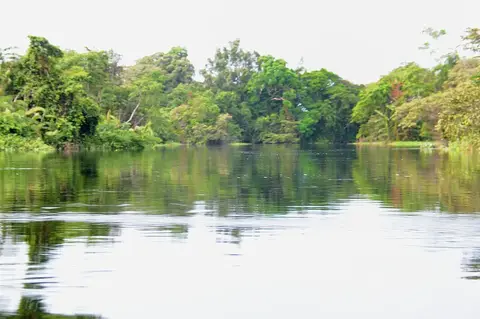
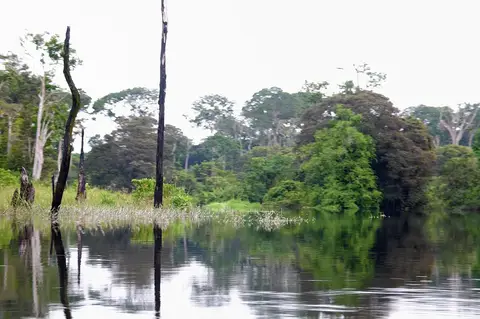
Slow rivers and lakes of the Likouala-aux-Herbes basin, where it is said to lie mostly submerged with only its back above water, most active in the afternoon.
Notable sightings
- 1980The Bouanila interview Bouanila, Likouala, Republic of the Congo
During Roy Mackal’s first Congo expedition, villager Odette Gesonget chose an illustration of a Stegosaurus as the creature described to her by her elders. It remains the core of the stegosaur identification.
- 1987Publication in “A Living Dinosaur?” Likouala region, Republic of the Congo
Mackal’s book brought the name to an international audience, alongside the Mokele-mbembe and emela-ntouka. He favoured a giant monitor lizard over a dinosaur, while admitting it would be unlike any known species.
What could explain it?
- The last well-known stegosaurs lived in the Early Cretaceous, more than 100 million years ago, so a surviving stegosaur is even less plausible than a surviving sauropod.
- Known animals and objects: a large crocodile’s ridged back, a turtle, a floating log or a mat of vegetation seen briefly in murky water could all suggest a plated back.
- Picture-book identifications: when people are shown dinosaur illustrations and asked to pick one, the choice reflects the options offered, not necessarily anything they have seen.
- Very thin evidence: almost everything known about the creature traces back to a small number of second-hand informants interviewed by one expedition.
Legend, culture and tourism
The mbielu-mbielu-mbielu is a footnote in the Mokele-mbembe saga, but a popular one: it appears in cryptozoology encyclopaedias, games and dinosaur-themed fiction as the Congo’s “stegosaur”. In the Likouala itself it is one of several water beings in a landscape where rivers are both the main highways and a constant source of danger.
Where it’s reported
Republic of the Congo Likouala
Mbielu-mbielu-mbielu in the news
No recent headlines about the Mbielu-mbielu-mbielu. Our news desk checks every day — see all cryptid news.
Sources
First published · Updated