Field file · Other · Extinct animal?
Surviving Moa
Also known as Moa sightings, Fiordland moa
Claims that giant moa outlived their extinction around 1445 in the remote South Island, from 1820s tales to Alice McKenzie’s Fiordland sighting.
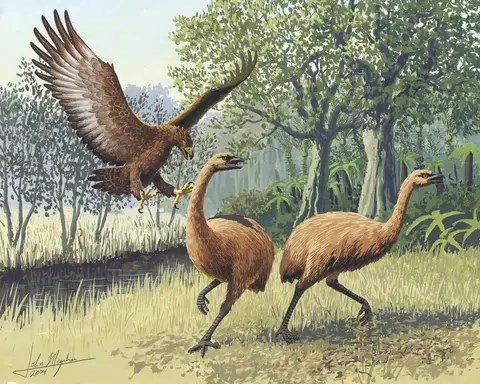
The moa were nine species of flightless bird endemic to New Zealand, the biggest standing about 3.6 m tall and weighing around 230 kg. They were the main land herbivores until the arrival of Māori before about 1300. The evidence points to rapid extinction: radiocarbon dating of middens suggests that all moa were gone by about 1445, within about a century of settlement, mostly from hunting.
Yet there are stories that some survived. Accounts list a George Pauley claim in the 1820s, an 1850s report by a Lieutenant Impey of two emu-like birds, and an 1861 report in the Nelson Examiner of three-toed footprints about 36 cm long. In 1878 the Otago Witness published an account from a farmer and his shepherd. Most famous is Alice McKenzie (1873–1963), who said she saw a large bird in the bush and on the beach at Martin’s Bay in Fiordland, in an account that she dated variously from 1876 to 1887.
Scientists are doubtful. In a 1989 paper in the New Zealand Journal of Ecology, Atholl Anderson reviewed the evidence from Fiordland, including the McKenzie sighting and Takahē Valley rockshelter finds, and said it was not enough to show that moa survived after the 18th century. Robert Falla, who thought a small upland moa might explain McKenzie, later came to believe that there were probably no moa left. Hoaxes have complicated the record, including a 1919 newspaper hoax and the ‘Great Moa Hoax’ of the early 1950s, in which footprints were made in river sand.
The rediscovery of the takahē in 1948, after none had been seen since 1898, is often cited as a reason for hope, but the takahē is much smaller and was found by its tracks. A 1993 report from the Department of Conservation in the end showed a red deer.
What does Surviving Moa look like?
Described as a large, blue-grey flightless bird, taller than a person in some accounts; footprints were reported as about 36 cm long and three-toed.
Where is Surviving Moa seen?
Remote, forested and mountain country of Fiordland and the southern South Island; early claims also came from Otago and the Nelson region.
Surviving Moa sightings
- 1820sGeorge Pauley’s Otago claim Otago
George Pauley was said to have seen a moa in Otago; the claim is unverified.
- 1861Footprints near Tākaka Between Tākaka and Riwaka, Nelson
The Nelson Examiner reported three-toed footprints about 36 cm long found by a surveying party.
- 1878Farmer and shepherd Otago
The Otago Witness published an account of a sighting by a farmer and his shepherd.
- c. 1880 (disputed)Alice McKenzie at Martin’s Bay Fiordland
Alice McKenzie said she saw a moa as a child; accounts date it from 1876 to 1887, and she repeated the story in a 1959 interview.
- 1989Anderson’s review University of Otago
Atholl Anderson concluded in a 1989 paper that the evidence did not show moa survived into European times.
- 1993A blurry photograph New Zealand
A photograph reported to the Department of Conservation was identified as a red deer.
Is Surviving Moa real? What could explain it
- Radiocarbon dating suggests moa were hunted to extinction within about 100 years of Polynesian settlement; they would have had to go unnoticed for more than 500 years.
- Large birds seen at a distance may be takahē, introduced emus or deer, and hoaxers have faked footprints.
- Some Māori reports of moa hunting in the 1770s may refer to a lost ritual and not real hunts.
Legend, culture and tourism
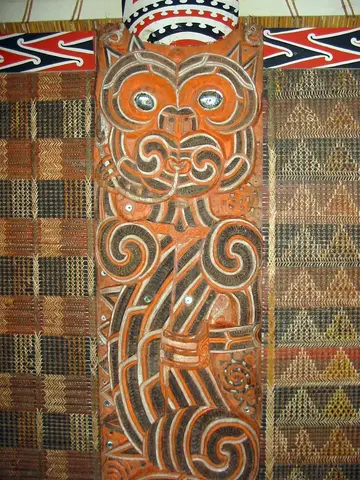
Moa are a major part of New Zealand’s natural history and Māori heritage. The Alice McKenzie story is remembered in museum and radio archives, such as the 1972 Spectrum documentary at Ngā Taonga Sound & Vision, which covers the sightings and hoaxes.
Places to visit
New Zealand’s national museum, with moa skeletons and exhibits on extinct birds.
A vast wilderness of fiords and rainforest at the centre of the moa-survival stories.
Where it’s reported
Sources
First published · Updated