FIELD FILE · TANIWHALAKE & SEA MONSTERFOLKLORE
Taniwha
Also known as Ngārara (reptile-like taniwha), Kaitiaki (as tribal guardians)
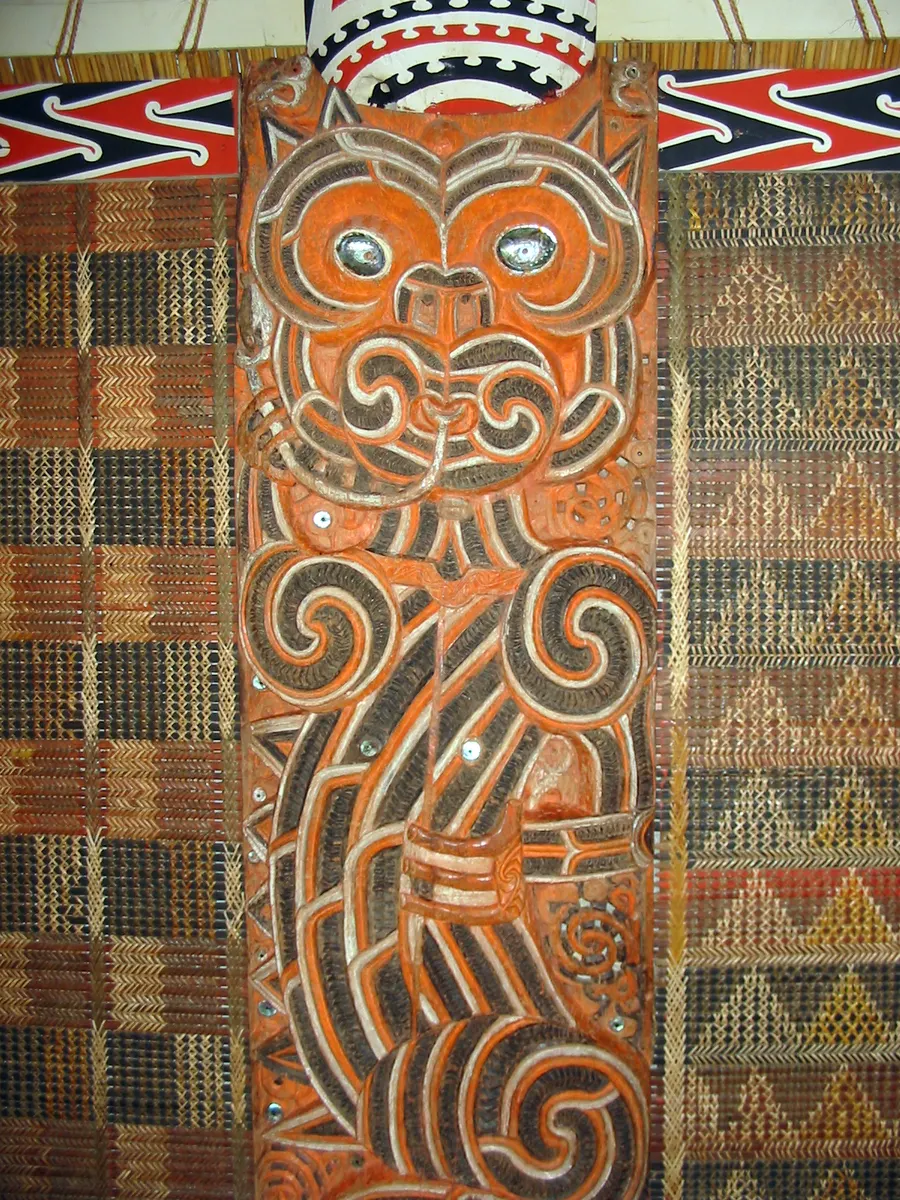
Powerful water beings of Māori tradition – guardians to some iwi, man-eaters in other tales – said to dwell in deep pools, caves and harbour mouths.
Taniwha are supernatural beings of Māori tradition, and they are not a single creature so much as a whole category of them. Their forms and natures differ from iwi (tribe) to iwi: some are pictured as enormous lizards or winged, dragon-like reptiles, others take the shape of sharks, whales, octopuses or even floating logs, and some can move between forms. Most live in or near water – deep river pools, dark caves, dangerous channels and harbour entrances – in lairs known as rua taniwha, the kinds of places people were wise to avoid.
Many taniwha are kaitiaki, guardians bound to a particular hapū or iwi. Traditions describe them arriving with the voyaging canoes from Hawaiki, escorting and protecting the ancestors on their way to Aotearoa. The navigator Kupe is said to have placed his guardian Tuhirangi in Cook Strait to guide canoes, and in the far north the female taniwha Āraiteuru is credited with arriving alongside the Māmari canoe; her eleven sons, digging their way inland, are said to have carved out the branches of the Hokianga Harbour. Travellers passing a guardian’s lair would recite a karakia and leave an offering, often a green twig.
Other taniwha are terrifying. In the stories of the Kāingaroa Plains and Rotorua, Hotupuku and Pekehaua devoured travellers until heroes led by Pitaka trapped and killed them; when such monsters were cut open, the tales say, they were found to hold the bodies, weapons, cloaks and greenstone of their victims. The reptilian Ngārara Huarau of Hawke’s Bay was crushed by falling trees, and Tūtaeporoporo of the Whanganui River – once a pet shark – was slain from the inside by the taniwha-slayer Ao-kehu, who had himself swallowed while sealed inside a hollow log.
Taniwha also stand for great chiefs. A well-known Waikato proverb, Waikato taniwha rau, he piko he taniwha – “Waikato of a hundred taniwha, at every bend a taniwha” – can be read as a description of the river’s many guardians or of its many powerful leaders, and laments for dead chiefs speak of a taniwha withdrawn from its lair.
The tradition is a living one, not a relic. In 2002 the Ngāti Naho hapū objected that a new section of State Highway 1 near Meremere would destroy the lair of their taniwha Karutahi, and Transit New Zealand agreed to partly reroute the road. The case, and a similar dispute over a prison at Ngāwhā in Northland, sparked national argument – some critics called it opportunism, while Māori commentators pointed out that taniwha encode real knowledge about dangerous water and sacred places. Researchers today also study taniwha traditions as possible records of floods, rockfalls and other natural hazards.
Taniwha are not cryptids in the Western sense – no one is mounting expeditions to photograph Karutahi – and this site includes them as part of New Zealand’s living lore, to be understood on the terms of the iwi and hapū who hold the stories.
- Status
- Folklore
- First reported
- Pre-colonial
- Best-known location
- Rivers, lakes, harbours and coastal waters of Aotearoa New Zealand
- Also called
- Ngārara (reptile-like taniwha), Kaitiaki (as tribal guardians)
- Reported in
- New Zealand
What witnesses describe
Highly varied. Many are described as giant reptiles like a huge tuatara or gecko with a spiny crest; others as sharks, whales, octopuses or a log moving strangely against the current. Some accounts give them wings, claws and shark’s teeth. Guardians are sometimes said to show themselves as a particular animal, such as a large white eel or a dolphin.
Where and when it’s seen
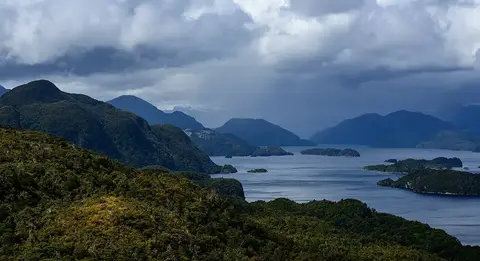
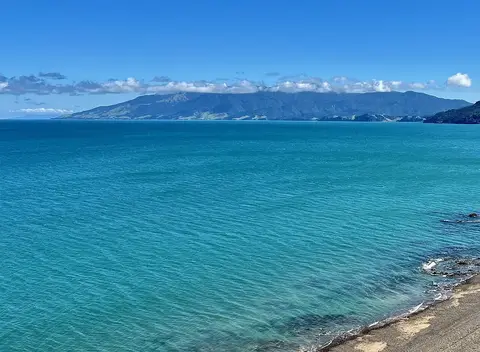
Deep river pools, waterfalls, caves, springs, lakes, harbour mouths and stretches of coast with dangerous currents throughout Aotearoa – famously the Waikato River, the Hokianga and Wellington harbours, Cook Strait and the Whanganui River.
Notable sightings
- December 20, 1876The Waipapa waterhole Waipapa, East Coast, North Island
The Ngāti Porou elder Mohi Tūrei wrote to the Māori-language newspaper Te Waka Maori o Niu Tirani about a girl, Mereana, who slipped into a waterhole known as the lair of the taniwha Tāminamina after sucking nectar from a sacred rātā tree. Her companions saw the water whirl where she fell; an elder believed she had been taken as punishment.
- c. 1888–1912Pelorus Jack escorts the ships French Pass, Marlborough Sounds
A Risso’s dolphin began meeting ships near French Pass around 1888 and was given legal protection by an Order in Council in 1904. In some Māori traditions the dolphin was seen as a manifestation of a guardian taniwha of the strait; it was last seen in 1912.
- 2002Karutahi and State Highway 1 Meremere, Waikato
The Ngāti Naho hapū said a planned new section of State Highway 1 would destroy the lair of their taniwha Karutahi. Transit New Zealand agreed to partially reroute the highway, a decision that drew both support and ridicule.
- 2005Ngāwhā prison opens Ngāwhā, near Kaikohe, Northland
Local hapū had opposed the Northland Region Corrections Facility because it lay on the path of Takauere, a log-shaped taniwha associated with Lake Ōmāpere and the Ngāwhā hot springs. The objections failed and the prison opened in 2005.
What could explain it?
- Taniwha traditions are best understood as cultural knowledge rather than reports of unknown animals: they mark dangerous rivers, rips and pools, sacred sites and tribal boundaries, and they express relationships between people, ancestors and places.
- Some taniwha forms clearly draw on real animals – sharks, whales, eels, octopuses and tuatara – and the word itself is related to Polynesian words for large sharks.
- Stories of taniwha carving harbours, lakes and river channels may preserve memories of floods, landslides, earthquakes and other natural hazards, an idea now explored by New Zealand hazard researchers.
- Modern disputes over taniwha lairs are about the protection of sacred places as much as belief in a creature; Māori opinion on them is itself diverse.
Legend, culture and tourism
Taniwha remain central to the identity of many iwi and hapū, appearing in carving, whakataukī (proverbs), waiata, place names such as Ruataniwha and in modern literature – Witi Ihimaera, author of The Whale Rider, has spoken of his own guardian taniwha in the Waipāoa River. Carved taniwha guard meeting houses, the Northland provincial rugby team is called the Taniwha, and the 2021 description of New Zealand–China relations as “a taniwha and a dragon” by Foreign Minister Nanaia Mahuta shows how familiar the image is in public life.
Places to visit
The carved Ngāti Maru house Hotunui includes the guardian taniwha Ureia among its carvings.
New Zealand’s longest river, “of a hundred taniwha”, best seen from the riverside walks of Hamilton and Ngāruawāhia.
The harbour said to have been carved by the sons of the taniwha Āraiteuru, whose lair lies at the south head.
Where it’s reported
New Zealand Waikato Northland Wellington Bay of Plenty Hawke’s Bay
Taniwha in the news
No recent headlines about the Taniwha. Our news desk checks every day — see all cryptid news.
Sources
First published · Updated