FIELD FILE · WAITOREKEOTHERREGIONAL LEGEND
Waitoreke
Also known as New Zealand otter, South Island otter, Kaurehe
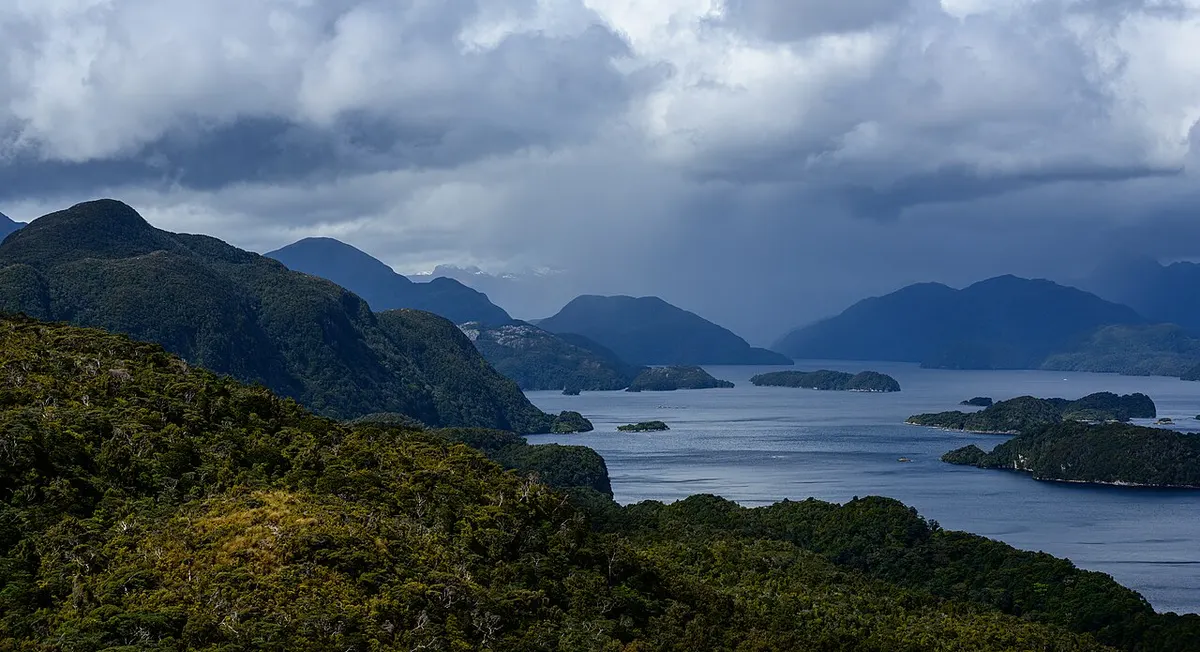
A small, otter-like swimmer reported in South Island rivers since Captain Cook’s day, in a country whose only native land mammals are bats.
The waitoreke is New Zealand’s quietest mystery: not a monster but a modest, otter-like animal, about the size of a cat, said to swim in the rivers and lakes of the South Island. What makes it remarkable is where it is reported. Before people arrived, New Zealand had no land mammals at all apart from a few species of bat – so a native otter, beaver or anything like one would overturn a basic fact of the country’s natural history.
The name comes from early colonial records. The missionary Richard Taylor, compiling a list of Māori words in the 1840s, glossed waitoreke as “otter (uncertain, perhaps the seal)”. Later Māori dictionaries left the word out, and some scholars have questioned whether it was ever a genuine Māori animal name, so its origin is itself part of the puzzle. The naturalist Walter Mantell recorded a description from a southern chief of a brown, short-legged animal with a bushy tail that ate fish and lizards, and settlers in the 1840s even claimed to have seen beaver-like dams.
The best-known early evidence came from Julius von Haast, the Canterbury geologist and explorer, who wrote in 1861 that on the upper Ashburton River, high in the foothills of the Southern Alps, he had repeatedly seen tracks like those of a European otter, only a little smaller. Haast’s report was published by his colleague Ferdinand von Hochstetter and gave the waitoreke a respectable scientific footing for a time. Yet no one ever produced a body.
Reports never quite stopped. The researcher G. A. Pollock gathered accounts in the 1970s, leading to searches around Lakes Waihola and Waipori in Otago in the 1980s, and in 2013 the Invercargill naturalist and self-described “cold, hard sceptic” Lloyd Esler told the Otago Daily Times he had interviewed 11 people who had seen something small, fast and otter-like in southern waterways between 1929 and 2011 – ten of them within 25 kilometres of the small Southland town of Otautau. Television crews have since gone to Otautau to look for themselves, without success.
Most zoologists think the answer lies in misidentification and introduced animals: brushtail possums swimming rivers, stoats and ferrets, escaped pets, or young seals far upstream. But the waitoreke endures as a pleasingly unresolved footnote to New Zealand’s natural history – a story with no bones, no photographs and no shortage of witnesses.
- Type
- Other
- Status
- Regional legend
- First reported
- 1773
- Best-known location
- Rivers and lakes of the South Island, especially western Southland
- Also called
- New Zealand otter, South Island otter, Kaurehe
- Reported in
- New Zealand
What witnesses describe
Usually described as roughly cat-sized, about 60 cm long including a long tail, with short legs, a flattish head and brown or grizzled fur. Witnesses say it swims well and vanishes quickly into water; one account describes a cream-coloured, whiskery face.
Where and when it’s seen
Streams, rivers and lakes of the South Island, from Fiordland’s Dusky Sound to the Canterbury high country, with most modern reports from waterways around Otautau and the Waiau and Aparima rivers in western Southland. Sightings are typically brief glimpses at the water’s edge.
Notable sightings
- 1773Cook’s crew at Dusky Sound Dusky Sound (Tamatea), Fiordland
During Captain James Cook’s stay in Dusky Sound on his second voyage, crew members reported glimpsing an unfamiliar four-footed animal on a beach. It was never caught, and later naturalists suggested a dog or another misidentified animal.
- 1861Haast’s otter tracks Upper Ashburton River, Canterbury
Julius von Haast wrote that he had often seen tracks resembling a European otter’s, only slightly smaller, high on the upper Ashburton. His letter, published by Ferdinand von Hochstetter, remains the most cited evidence for the animal.
- 1954Under the glass-bottomed boat Dusky Sound area, Fiordland
A paua fisherman reported that an animal he took to be an otter swam beneath his glass-bottomed boat – one of the accounts later collected by Lloyd Esler.
- December 10, 2013Eleven witnesses near Otautau Western Southland
The Otago Daily Times reported that Lloyd Esler had gathered 11 sightings dating from 1929 to 2011, ten within 25 km of Otautau, and appealed for more witnesses and a photograph.
What could explain it?
- New Zealand has no native land mammals other than bats, and no fossil or bone of an otter-like animal has ever been found – a serious obstacle for any surviving native species.
- Introduced mammals that swim, such as brushtail possums, stoats, ferrets and rats, can easily be mistaken for something stranger in a brief glimpse.
- Fur seal pups and young seals sometimes travel up rivers and could account for some early reports and for Taylor’s note that the word might mean “seal”.
- Some 19th-century reports may involve introduced Australian animals such as quolls, which were released in a few places and later died out; one old pelt linked to the story resembled a quoll’s skin.
- The word waitoreke is not in later standard Māori dictionaries, which suggests it may have been a misunderstanding by early collectors rather than an established Māori animal name.
Legend, culture and tourism
The waitoreke has a small but loyal following in southern New Zealand, where it features in local history talks, newspaper features and TV segments – TVNZ’s Seven Sharp sent a reporter to Otautau to hunt for it in 2018. It is also discussed in the bulletin of the IUCN Otter Specialist Group, an unusual honour for a creature that may never have existed.
Places to visit
The small farming town at the centre of most modern reports, beside the Aparima River.
Remote fiord where Cook’s crew reported the first mystery animal in 1773, reachable by cruise or charter.
Where it’s reported
New Zealand Southland Canterbury Otago
Waitoreke in the news
No recent headlines about the Waitoreke. Our news desk checks every day — see all cryptid news.
Sources
First published · Updated