Field file · Reptilian · Folklore
Mester Stoor Worm
Also known as Stoor Worm, Stoorworm, Assipattle’s Worm
Orkney’s sea-dragon: a world-wrapping serpent killed by a farm boy, Assipattle, whose teeth became Orkney, Shetland and the Faroes.
The Mester Stoor Worm is the giant sea serpent of Orcadian folklore. In the tale, it is so vast that its tail can circle the world, its movements cause tremors and it surfaces to devour people. A king whose land is threatened is told by a sorcerer that the monster will demand a weekly sacrifice of seven maidens, and later the princess herself. The king offers his kingdom, his daughter and the magic sword Sickersnapper to anyone who can slay it.
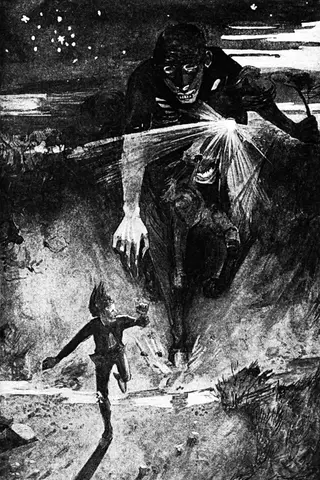
The hero is Assipattle, the youngest, dreamiest son of a farmer, who sits by the hearth and is mocked by his family. Name and character resemble the Norwegian Askeladden (“Ash Lad”) of Norse folk tales. He takes his father’s horse, tricks a boat guard, sails into the serpent’s mouth with a smouldering peat and sets its liver alight. Choking, the dying worm tosses its teeth into the sea: they become Orkney, Shetland and the Faroe Islands, while its body forms Iceland and its tongue the Baltic.
The story was preserved by Walter Traill Dennison, a farmer and antiquarian from Sanday, who published two versions, the shorter in The Scottish Antiquary in 1891 and a fuller one reprinted in George Douglas’s Scottish Fairy and Folk Tales around 1893. The Orcadian writer Ernest Marwick later produced a composite telling.
Scholars treat it as a Norse-influenced dragon-slayer story, often compared with the Midgard Serpent Jörmungandr of Norse myth. Several authors have noted parallels with the rescue of Hesione from a sea monster in Greek myth.
What does Mester Stoor Worm look like?
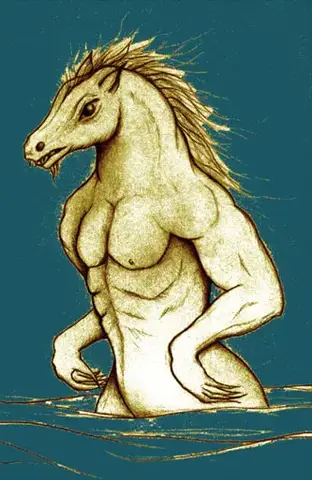
A colossal, serpent-like sea creature, whose tail is long enough to wrap around the world.
Where is Mester Stoor Worm seen?
The sea around Orkney, according to tale; its remains are the islands of the North Atlantic.
Mester Stoor Worm sightings
- 1891Dennison’s short version Sanday, Orkney
Walter Traill Dennison published an English retelling of Assipattle and the Stoor Worm in The Scottish Antiquary.
- c. 1893A fuller Orkney text Scotland
A longer version in the Orkney dialect, with Dennison’s notes, was reprinted in George Douglas’s Scottish Fairy and Folk Tales.
Is Mester Stoor Worm real? What could explain it
- The story explains the shape of the North Atlantic’s islands in myth, in the same way that tales of giants account for stones and hills.
- Folklorists see a strong Norse influence: Assipattle resembles the Ash Lad figure and the serpent resembles Jörmungandr.
- The hero’s sword and boat motifs follow a well-worn dragon-slayer pattern known across Europe, not an animal that was ever observed.
Legend, culture and tourism
The Stoor Worm remains a favourite in Orkney storytelling, school projects and children’s picture books, and it appears in Amy Liptrot’s memoir The Outrun and in the film based on it, where the main character recounts the tale. Orcadians treat it as part of the living inheritance of the islands.
Where it’s reported
Sources
First published · Updated